
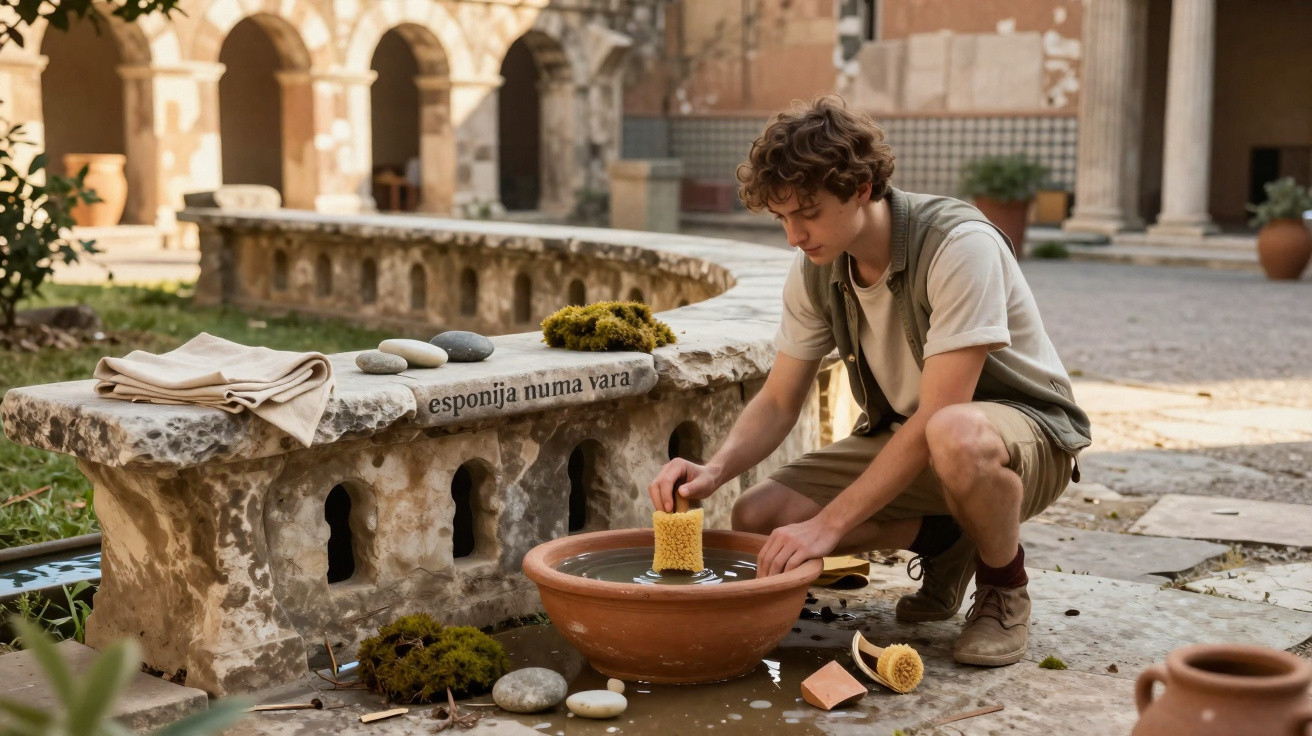
Ancient civilisations approached intimate hygiene in ways that feel far removed from today, and the much-discussed sponge on a stick is only one detail in a larger picture. In shared lavatories, drainage layouts, running water and whatever materials were readily available all shaped how people cleaned themselves after using latrines. The object draws the curiosity, but the real story sits with sanitation infrastructure and everyday cleaning customs.
What existed before toilet paper?
Toilet paper as a disposable, everyday product is a very recent development when set against the long history of hygiene. Across different regions, ancient peoples relied on water, cloth, plant fibres, smooth stones, broken pottery, leaves, wool and sponges-choices that reflected local climate, access to water and the kind of sanitary installation in use.
Looking across the history of hygiene, it is clear there was never one standard solution. In towns with public latrines, routines could include shared implements and washing with water. In domestic settings or rural areas, people more often used whatever was close at hand, with less consistency and very little of what we would now call comfort.
Was the sponge on a stick really used by the Romans?
The sponge on a stick, often referenced in studies of the Roman world as the xylospongium or tersorium, frequently appears in discussions of communal latrines. The conventional reading is that it was used for intimate cleaning after defecation, then rinsed in water-sometimes with vinegar-before being used again.
Researchers also note, however, that this interpretation is not entirely settled. Some scholarship argues the implement may instead (or also) have been used to clean the latrine itself. That shifts the emphasis: it becomes less like an ancient equivalent of a soft roll and more like a tool tied to maintenance, reuse and the practical sanitation routines of shared spaces.
What materials appeared in other cleaning practices?
Beyond the major Roman cities, approaches differed widely, which helps explain why the history of hygiene is so closely linked to physical surroundings and local customs. A number of materials recur in historians’ accounts and in archaeological evidence:
- water for direct washing
- leaves and plant fibres
- pottery fragments or smoothed stones
- cloth, wool or reused rags
- natural sponges in urban contexts
These decisions were driven by very practical conditions:
- whether there was a latrine or a pit
- reliability of the water supply
- the cost of materials
- religious and social habits
- the level of privacy available in the toilet
What does scientific research say about hygiene and sanitary risk?
Focusing only on the implement creates a distorted picture. The subject becomes more revealing when you consider the connections between public toilets, sewers, communal bathing and the spread of disease. The history of hygiene is not only about cleaning, but about how ancient societies tried to manage odour, waste and contamination without the microbiological knowledge we have today.
According to the review Sustainability of Water, Sanitation, and Hygiene: From Prehistoric Times to the Present Times and the Future, published in the scientific journal Water, Ancient Rome operated public toilets supplied by running water and used the spongia or tersorium-a sponge attached to a handle-rinsed after use. The same paper notes that studies of ancient faeces from more than 50 archaeological sites raise questions about the real public-health effect of this arrangement, because intestinal parasites remained widespread. Put simply, there was meaningful sanitary engineering, but it did not ensure cleanliness at anything like today’s standards.
Why does this subject say so much about urban infrastructure?
Ancient civilisations treated post-toilet cleaning as one part of a broader system. The latrine, drainage, reused water, shared seating, ventilation and waste disposal formed a connected technical chain. Where a city had aqueducts, channels and upkeep, the experience could be markedly different from that of settlements without circulating water.
That is why the sponge on a stick attracts so much attention in news stories and on social media. It acts as a vivid symbol of something bigger: the gap between modern comfort and older sanitation solutions. It may look strange, yet it fits within a routine of public baths, shared cleaning practices and continuous management of human waste.
What does this reveal about body care over time?
The history of hygiene suggests that personal care has never depended on goodwill alone. It has always been shaped by available technology, supply systems, architecture and perceptions of risk. Our toilet paper solves part of the convenience problem, but the underlying sanitary logic remains familiar: remove residue, reduce contact and make the toilet environment less conducive to contamination.
When you look at how ancient civilisations made use of water, fibres, pottery, textiles and even the sponge on a stick, it becomes clear that each method grew out of very specific material conditions. Rather than being mere historical curiosity, this helps frame the development of latrines, sewers and intimate hygiene as central chapters in urban organisation and public health.




Comments
No comments yet. Be the first to comment!
Leave a Comment