

For years, countless households have pursued plush, hotel-style towels using expensive detergents and fabric softeners, with few people stopping to question the habit.
Yet an everyday cupboard ingredient is now disrupting that approach, offering softer towels without relying on the familiar array of chemical products.
Why towels become stiff
When towels no longer feel soft and airy, people often put it down to their age or “cheap quality”. More often, however, the issue is residue build-up.
With every wash, small amounts of detergent, hard-water minerals and fabric-softener residue remain on the fibres. Gradually, these deposits create a fine layer that leaves towels stiff and reduces their ability to absorb water.
That slightly scratchy, cardboard-like feel is often a sign of too much product, not too little.
Although fabric softeners are marketed as a route to fluffier laundry, they can make matters worse. Many contain oils, silicones and fragrances that coat each fibre. A towel may initially seem smoother, but its loops become less able to soak up water.
Tumble dryers can compound the issue. Intense heat effectively bakes the residue further into the material, leaving rough towels that appear beyond saving unless they are replaced.
The kitchen staple changing towel care
The ingredient attracting attention is ordinary white vinegar – the same bottle commonly used in salad dressings or tipped down the drain during cleaning.
When used properly in the wash, distilled white vinegar can lift mineral deposits, break down detergent build-up and help cotton fibres regain their natural feel.
Vinegar does not coat your towels. It strips away what shouldn’t be there so the fabric can do its job again.
Cleaning professionals and some textile experts have recommended this approach quietly for years. But as it gains traction on social media and eco-living forums, manufacturers of conventional softeners and “specialist” laundry boosters are beginning to take notice.
How vinegar helps towels feel softer
White vinegar is mildly acidic, which allows it to counteract the alkaline residue typically left by laundry detergents.
As that residue is broken down, fibres can separate more freely and feel less stiff. Vinegar may also dissolve limescale traces from hard water that become lodged deep within the fabric.
It can help with odours, too. Towels that retain a persistent damp gym-bag smell often contain trapped soap alongside bacteria. Vinegar supports a more thorough rinse of these residues.
Step-by-step: using vinegar instead of fabric softener
This technique is straightforward and does not mean overhauling your usual washing routine.
- Use your normal detergent, keeping to the recommended amount or using slightly less.
- Do not add commercial fabric softener to this wash.
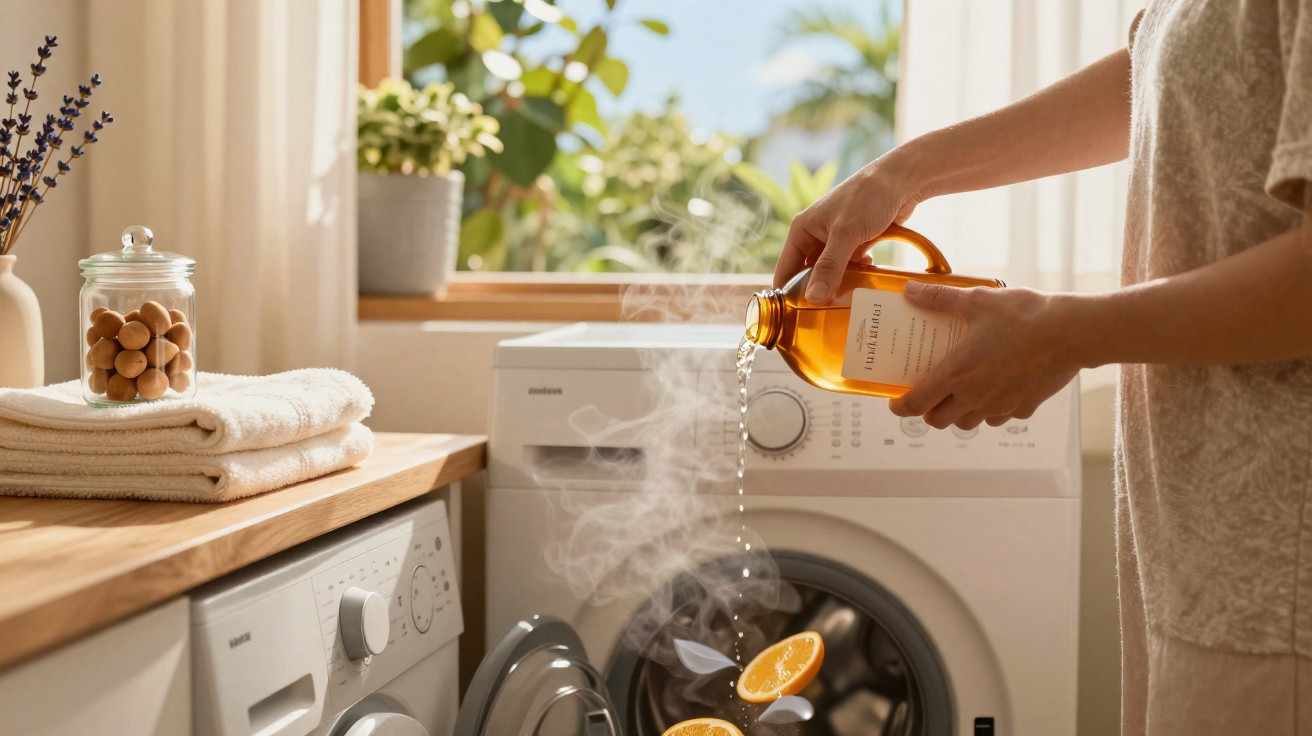
- Put around 1/2 to 1 cup of distilled white vinegar in the fabric-softener compartment.
- Wash the towels on a warm or hot setting, following their care-label instructions.
- Dry on a medium setting, giving the towels a shake before they go into the tumble dryer.
Many people see a change after one or two washes. Very old or particularly rigid towels can require several cycles before years of residue are released.
Why some experts object
This easy substitution has caused friction within parts of the textile and cleaning industries. Fabric-softener sales are highly lucrative, supported by extensive marketing around scent, colour protection and “advanced” softness technologies.
If consumers reach for a 99p bottle of vinegar instead of a branded softener, that entire model looks less convincing.
Some fabric-care experts caution against adding excessive vinegar to every wash, saying this could gradually affect elastic or harm certain synthetic fibres. Environmental groups argue that occasional use, particularly for cotton-only loads, is much gentler than continual contact with fragranced chemicals.
Manufacturers also stress that vinegar is not a universal answer: it cannot repair damaged fibres, remove bleach marks or improve poor-quality fabric. Still, this kitchen staple’s growing popularity prompts awkward questions about how much of the laundry aisle is truly necessary.
Does vinegar leave a smell?
The most obvious concern is understandable: nobody wants their bath towels to smell like a chip shop.
In reality, vinegar’s sharp aroma seldom remains after the rinse and spin. Once the towels have dried completely, most people cannot smell it at all.
Anyone especially sensitive to scents can begin with a smaller quantity or dilute the vinegar with water before use. A brief tumble with wool dryer balls, or drying towels outside on a line, can help remove any remaining odour.
Vinegar versus commercial softeners: how they compare
| Feature | White vinegar | Fabric softener |
|---|---|---|
| Softness effect | Removes build-up so natural softness returns | Coats fibres for a smoother feel |
| Absorbency of towels | Typically improves absorbency | Often reduces absorbency over time |
| Fragrance | Neutral, disappears after drying | Strong, long-lasting perfumes |
| Cost per load | Generally low | Higher, especially for premium brands |
| Environmental footprint | Simple formula, fewer additives | More complex chemicals, perfumes, dyes |
When vinegar is not suitable
There are circumstances in which experts do not recommend regularly adding vinegar directly to the washing machine.
Rubber seals and hoses in certain older machines may not respond well to repeated acidic washes. Using it occasionally is unlikely to create problems, but adding large amounts to every cycle could reduce the lifespan of some parts.
Delicate fabrics, including silk and wool, as well as clothes with specialist finishes, should be cleaned as directed on their labels and without homemade additions. Vinegar is best suited to robust textiles such as cotton towels, bedding and everyday clothing.
Other chemical-free ways to keep towels soft
Vinegar is only one element of keeping towels soft. Several basic habits can extend their softness, whether you use it or not.
- Do not overfill the washing machine, allowing water and detergent to move around properly.
- Use less detergent rather than more, as most people add too much, particularly in soft-water areas.
- Shake towels before tumble drying them to loosen and separate the fibres.
- Choose medium heat for drying; excessively high temperatures can scorch fibres and leave them rough.
- Avoid dryer sheets, as they can leave coatings similar to those created by fabric softeners.
Soft towels are often the result of less product, not extra bottles on the shelf.
The science explained simply
Laundry products are often described in technical language: surfactants, conditioners and optical brighteners. The underlying principle is straightforward. Detergent removes dirt and oils, softener smooths the fibre surface, and fragrances cover unpleasant smells.
Vinegar works more like a reset. It adds nothing elaborate; instead, it lowers remaining alkalinity and breaks down the minerals that make fabric rigid. It is comparable to removing limescale from a kettle, but applied to a towel.
This explains why a vinegar wash can leave towels feeling lighter and more absorbent. Without the invisible coating, the fibres can move more freely and take in water more effectively.
Real-life situations where this trick helps
Households in hard-water areas are often among those who experience the most noticeable results. Calcium and magnesium minerals adhere stubbornly to fabrics, and a monthly vinegar wash can remove part of that build-up.
It can also benefit families with athletes, swimmers or regular gym-goers. Sports towels and microfibre cloths frequently hold on to body oils and deodorant residue. Vinegar can help remove them, making the items feel fresher and less waxy.
Students and flat-sharers using ageing machines in rented homes may live with hard, scratchy towels without understanding why. A low-cost bottle of distilled vinegar and a few focused washes can make years-old linen feel nearer to new without the need to replace it.
Risks, limits and sensible use
There is a difference between a useful household solution and overdoing it. Heavy vinegar doses in every wash may alter the balance within the machine’s components and could invalidate some warranties.
Most appliance technicians advise using it periodically – perhaps once every few weeks for towels and bedding – instead of every day. For ordinary clothing, many people keep vinegar for troublesome loads, such as musty gym kit, sour-smelling dishcloths or towels that have plainly become stiff again.
People with sensitive skin should remain mindful as well. Although vinegar is almost entirely rinsed away, it is sensible to trial any changed laundry routine with a small load. If irritation develops, reduce the quantity or concentrate on improving the rinse with water alone.
For many households, the most significant change is psychological: choosing a clear liquid from the cupboard instead of a brightly coloured product from the cleaning aisle. That decision raises a wider question about weekly routines: which ones are genuinely useful, and which simply keep a profitable cycle moving?


Comments
No comments yet. Be the first to comment!
Leave a Comment