
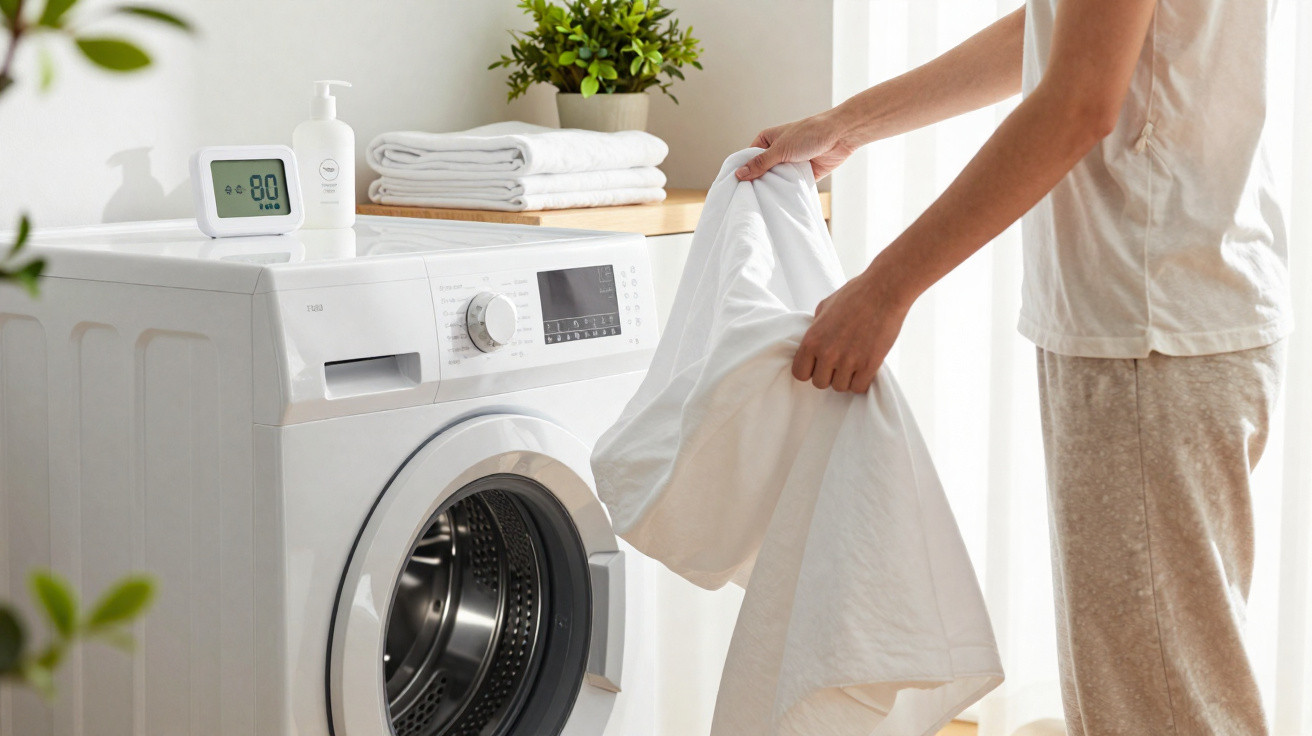
New research suggests using your washing-machine dial more wisely.
Plenty of households still turn the temperature right up, believing that hygiene demands almost-boiling water. However, modern appliances and enzyme-packed detergents offer another approach. Selecting the correct detergent and programme can produce hygienic laundry without damaging fibres and colours or inflating your energy costs.
Why bedsheets need more care than most of us realise
Every night, sheets absorb sweat, shed skin cells and collect natural oils. This combination provides food for bacteria and dust mites. The warm, mildly humid conditions around a mattress accelerate their growth. Leaving bedding unwashed for too long can often worsen allergy symptoms.
Public-health laboratories have found that microbial levels rise sharply after bedding has been used continuously for seven to ten days. Pillows and pillowcases tend to carry the greatest load, as they are positioned close to the mouth and nose. This is particularly relevant for anyone with asthma or sensitive skin.
Fresh bedding supports sound sleep, calmer airways and fewer morning sniffles.
The 90°C habit and why it persists
The idea of boil-washing dates back to a time when cotton was coarser and detergents contained neither enzymes nor oxygen bleach. Heat had to perform most of the cleaning work. That is no longer the case. Current detergent formulations break down proteins and fats at lower temperatures, while newer machines control agitation and water movement far more accurately than older appliances.
Today, choosing 90°C comes with significant drawbacks. It consumes considerably more electricity, fades colours and reduces the elasticity of fitted sheets. Repeated scalding washes can even make cotton shrink or become rough to the touch.
- Greater energy consumption: an almost-boiling wash may use well over twice the energy of a standard warm cycle.
- Damage to fabrics: high temperatures weaken fibres and reduce the lifespan of pillowcases and fitted sheets.
- Colour running: hot water encourages dyes to bleed and can make whites look dull when mixed loads slip in.
- Increased microfibre release: more aggressive, hotter washing sends extra lint and microfibres into wastewater.
What washing temperature actually works for sheets
For regular sheet washing, 40°C is the ideal balance. Use a good biological detergent containing enzymes, select a full-length cotton programme and avoid overfilling the drum. Together, these steps remove body soils, reduce odours and lower everyday bacterial levels.
A 40°C wash with an enzymatic detergent cleans deeply, reduces bacterial counts and protects colours while trimming energy use.
Independent testing indicates that 40°C delivers substantial reductions in common household bacteria when enzymes and oxygen bleach are included. Modern detergents remain active throughout the wash, meaning boiling water is not necessary for hygienic outcomes. Heat supports enzyme activity, but the main cleaning work comes from time and detergent chemistry.
When 60°C remains useful
Increase the setting to 60°C when someone has flu or a stomach bug. Doing so can help interrupt transmission within the household. Those with a diagnosed dust-mite allergy may also benefit from an occasional 60°C wash. Washing pillow protectors and mattress protectors hot once a month complements this approach.
Homes with newborn babies or immunocompromised people can use a mixed routine: wash most sheets at 40°C, then run one 60°C load each week for the items with the closest contact. Ensure every item dries completely, as folding damp laundry can encourage mould in hems and seams.
Is cold water or 30°C enough?
Sheets with only light soiling can be washed successfully at 30°C if the detergent is suitable. Choose a product containing enzymes and an oxygen-bleach activator designed for lower temperatures. Where allergies are an issue, reserve 30°C for guest bedding or summer toppers, and keep normal bed linen at 40–60°C.
Get better results from your washing routine
Prepare properly before starting the machine. A few small adjustments can make a substantial difference to hygiene and fabric durability.
- Apply a small amount of liquid detergent to pillowcase edges and collars before washing to loosen oils.
- Avoid stuffing the drum: leave roughly a hand’s width at the top so the laundry can move effectively.
- Match the detergent dose to the water hardness and degree of soiling, preventing residue and biofilm.
- When hygiene matters, use a longer cotton programme rather than a rapid setting.
- Use a 1200–1400 rpm spin to shorten drying time and reduce the chance of mildew.
- Whenever possible, dry outdoors in sunlight; UV light assists with whitening and odour control.
- Keep the appliance fresh by running an empty 60°C maintenance wash each month.
| Item | Suggested temperature | Typical frequency |
|---|---|---|
| Standard cotton sheets | 40°C | Weekly |
| Sheets for allergy sufferers | 60°C | Every 1–2 weeks |
| Post-illness bedding | 60°C | After symptoms clear |
| Pillow protectors | 60°C | Monthly |
| Light duvets/synthetic quilts | 30–40°C delicate | End of season |
| Silk or linen sheets | Cold to 30°C delicate | Every 1–2 weeks |
Cost and carbon: savings from lowering the heat
Heating the water is the most expensive element of any wash. Moving from 90°C to 40°C dramatically reduces energy demand. Certain laboratory comparisons put the reduction in laundry electricity at 35% or more when homes make warm cycles their standard and keep hot washes for exceptional circumstances.
Each warm wash can avoid hundreds of grams of CO₂ compared with a hot cycle, with no drop in day-to-day hygiene.
In active households, the savings soon add up. Pillowcases, sheets and protectors may be laundered several times each month. Cooler washing also preserves seams and elastic, reducing how often replacement bedding is needed. This brings an additional, less obvious financial benefit alongside lower energy bills.
Risks, exceptions and myths worth remembering
Extremely hot water may set protein stains and yellow body-oil marks into white cotton. Deal with stains beforehand, then choose a warm wash. Conversely, washing at low temperatures with insufficient detergent can leave smells and residue behind, so use the right amount. Scent is not proof of cleanliness: effective mechanical action, sufficient time and the correct chemistry are what matter.
Heat and friction increase microfibre loss. Wash synthetic items on a gentle setting and consider using a laundry bag intended to capture fibres. Hard water requires a higher detergent dose, whereas soft water requires less. If you are uncertain, consult your water supplier’s hardness map and adjust accordingly.
Smart additions for hygiene at every temperature
For whites and pale colours, consider an enzymatic powder containing oxygen bleach. Liquid detergents work well for coloured fabrics and for pre-treating oily stains. During periods of illness, a sanitising additive may be useful. Steam-refresh programmes can limit odours between full washes, but bedding still needs regular proper cycles.
Create an uncomplicated schedule: keep two sheet sets for each bed, wash one set every weekend at 40°C, clean pillow protectors at 60°C monthly and run the machine’s maintenance wash at the same time. This routine keeps the drum fresher and may help make bedroom air feel calmer.
The goal is consistent, low-stress hygiene: warm for most loads, hot when risk rises, and gentle care that preserves fabric life.
For a closer comparison, try warm-wash routines for one month and check the cost through your meter or app. Keep a diary of sleep and allergy observations. Many households report fewer overnight sniffles, fresher-smelling bed linen and lower bills-without using the 90°C setting.

Comments
No comments yet. Be the first to comment!
Leave a Comment