
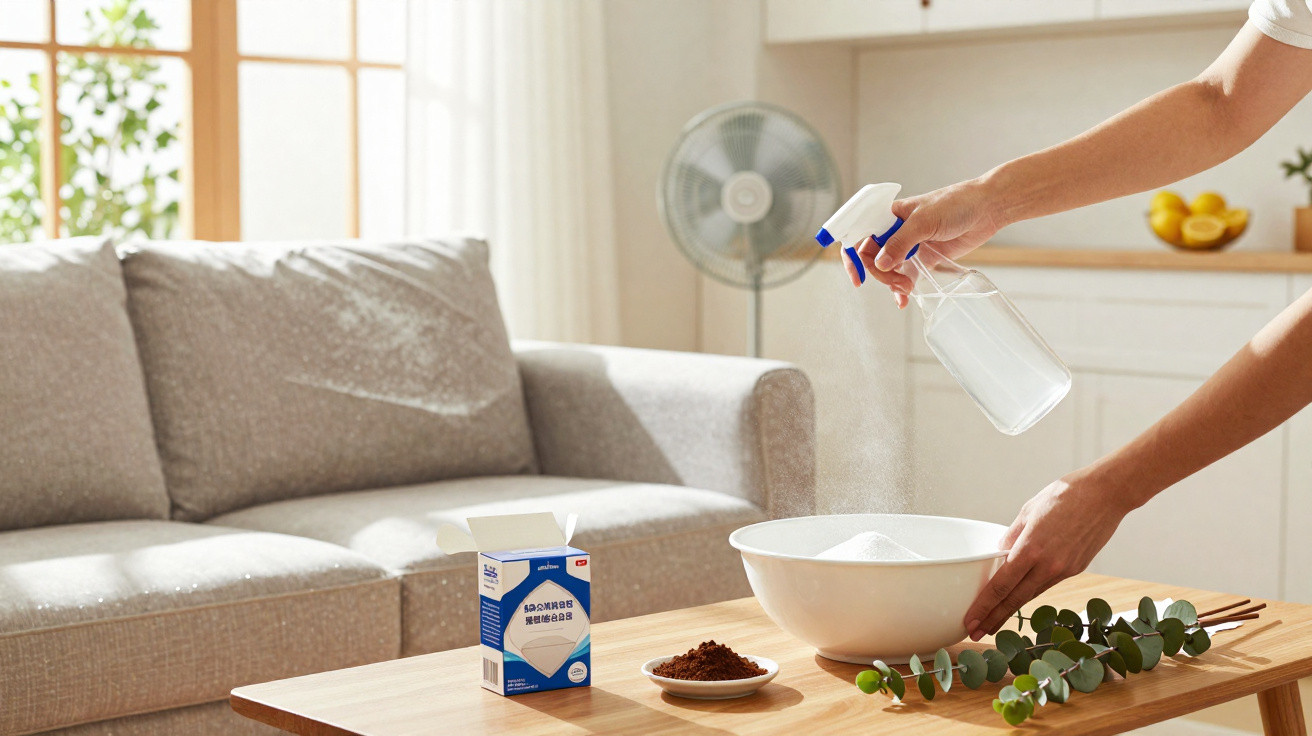
The smell cannot be seen in a photograph, but it takes over the room.
The window is barely ajar, and the curtain is still holding on to smoke from last night’s party. The poor sofa looks as though it smoked alongside everyone else. You walk in that morning with a coffee in hand and are hit by the heavy stench of an ashtray left on the table. From a distance, everything appears fine. Up close, the room screams “late-night bar”.
Anyone living in a small flat knows the problem. Cigarette smell clings to walls, hair and clothes draped over a chair. You open every window, switch on the fan and give surfaces a quick wipe, yet the air seems unchanged. An invisible haze remains, stuck to the home and your thoughts: a quiet reminder that somebody smoked there.
The good news is that this smell is not a life sentence. It is simply stubborn. And there is a quick way to clear that cloud away.
Why cigarette smell seems to never go away
Cigarette smoke does not disappear when the final drag is over. It hides. Microscopic particles work their way into gaps, fabrics and cracks in the walls. We notice the odour in the air, but what is actually retaining it is the sofa, curtain, pillow and living-room rug. The whole space becomes a silent sponge.
The issue is worse in enclosed spaces: a sitting room with poor airflow, a bedroom where the window barely opens, or a car kept in a garage. Air is replaced slowly, leaving the smell with nowhere to go. Trying to cover it with scented spray can make matters almost cruelly worse, creating a mix of “flowers” and ashtray. Air freshener does not clean; it merely competes with the odour on the surface.
Everyone has had that visitor who says, “it doesn’t smell that bad”, while you experience the complete opposite. Your nose gets used to it. The room does not. That is when many people give up and assume they must simply live with it.
Research from the National Cancer Institute shows that cigarette smoke releases thousands of substances that settle on surfaces. In hotels that allow smoking rooms, cleaning teams report that the smell lingers even after fresh linen, vacuuming and hours of wide-open windows. Some private-hire drivers admit they avoid taking fares after a passenger has smoked because the next customer is likely to complain.
In practical terms, this means one simple thing: cigarette smell is not only in the air; it is attached to everything. That is why so many people say that “nothing works”. They quickly wipe down a surface, spray on a random product and expect a miracle within 15 minutes. When it fails to happen, the myth that the odour is unbeatable begins. It is not. It simply needs a more direct, and slightly more patient, approach.
The reality is less glamorous than viral hacks suggest. What genuinely reduces cigarette smell is a combination of three things: ventilation, absorption and targeted cleaning. Opening windows alone is helpful, but it does not do the hard work. Leaving a small bowl of vinegar in the corner has an effect too, but it will not work magic in 15 minutes. The difference comes when air moves through the space, fabrics are “decontaminated”, and substances that truly neutralise the odour absorb it rather than merely disguising it.
Practical methods to remove cigarette smell quickly
When the need is urgent - guests are on their way, you have a video meeting or your night’s sleep is at risk - the plan must be straightforward. First, open everything: windows, doors and bathroom vents. Create a through-draught by aiming fans outwards, as though you are pushing the smell outside. Then tackle the source by removing cigarette ends, ashtrays, cans or any objects used around the smoke. It sounds obvious, but many people leave a full ashtray sitting on the table.
Next, use genuine neutralisers. Bowls of white vinegar placed around the room work better than many supposed “magic formulas”. Baking soda in a shallow dish also helps absorb the smell, especially near sofas and rugs. Notice that these are inexpensive kitchen methods, not miracle solutions in costly bottles. For an immediate boost, wiping hard surfaces with a damp cloth dipped in a water-and-vinegar mixture can change the air within minutes.
This is where the usual mistakes appear. The most common is relying only on air freshener: the pleasant spray used before visitors arrive. It creates an initial impression of cleanliness, but the cigarette smell remains underneath, waiting for the fragrance to evaporate. Another mistake is pouring strong disinfectant directly onto fabrics in the hope of “killing” the odour. The result is cigarette smell plus intense chemicals, and often an allergic reaction. Let us be honest: nobody deep-cleans every day, nor do they need to. The trick is to respond quickly and focus on the affected areas when the smell appears, without declaring war on the entire home.
“Cigarette smell is like a visitor who does not want to leave: unless you show it the door, it stays,” jokes a cleaner who works exclusively on intensive cleans in rented properties.
- Put white vinegar in open bowls at the most critical points in the room.
- Sprinkle baking soda over upholstery, leave it to work, then vacuum it up.
- Immediately change bed linen, towels and cushion covers exposed to smoke.
- Use activated charcoal or dedicated filters in small bedrooms or wardrobes.
- Wash curtains more often in homes where people smoke indoors.
When the smell leaves the air but stays in the memory
There is a curious point in this process: the day cigarette smell finally starts to fade. The house feels lighter, clothes no longer carry that bar-like undertone, and the pillow stops recalling a smoking-area balcony. Even so, the nose sometimes keeps searching for traces, as if constantly testing the space. Our relationship with smell is emotional too. Many people link cigarettes to particular moments: arguments, sleepless nights, anxiety or parties that went on too long.
Cleaning the space is only part of the story. Keeping the smell outdoors, whether by banning smoking inside the home or creating a designated smoking spot on a balcony or in an outside area, makes an enormous difference. In families with children, this change usually comes through an honest conversation rather than a telling-off. For people trying to stop smoking, a space less saturated with odour helps the brain break that habitual association.
When somebody enters your home and says, “the air feels lovely in here”, they are not referring only to the lack of cigarette smoke. They are describing a feeling: lightness, and a place where the body can rest without competing with a persistent smell. Perhaps that is what is most worth sharing: not only the vinegar or baking-soda trick, but the experience of breathing more easily. Anyone who has lived with a smoke-filled sitting room and managed to bring freshness back to their own space knows how much this small victory can change the day.
| Key point | Detail | Value for the reader |
|---|---|---|
| Cross-ventilation | Open windows and doors, with a fan pushing air outdoors | Quickly reduces the concentration of cigarette smell in the room |
| Simple neutralisers | White vinegar, baking soda, activated charcoal | Affordable, effective solutions for absorbing and breaking down odour |
| Tackling fabrics | Wash curtains, covers and bed linen, and vacuum upholstery | Removes the “hidden” smell that reappears over time |
FAQ:
- Question 1 How long does it take to remove cigarette smell from a small room? Generally, with cross-ventilation and vinegar or baking soda, you can notice an improvement within 30 to 60 minutes. For the smell to disappear almost completely, it usually takes from a few hours up to a day, depending on how much smoking took place there.
- Question 2 Does air freshener solve cigarette smell? No, it only masks it. It covers the odour temporarily, but once the fragrance fades, cigarette smell returns. It works best as an extra step after cleaning and ventilation, rather than as the main solution.
- Question 3 Does vinegar leave another unpleasant smell behind? The vinegar smell is strong at first, but it disappears quickly as air circulates. In practice, what remains is a more neutral room. Placing open containers around the space helps neutralise odour without soaking everything.
- Question 4 What about in a closed car: how can you remove the smell quickly? Open every door, use a portable fan if available, leave the car in the sun with bowls of vinegar on the floor, and preferably apply baking soda to the seats for a few minutes before vacuuming. Repeating this process for two or three days usually produces results.
- Question 5 Does an air purifier with a filter really help? It helps considerably, especially in smaller spaces. Models with a HEPA filter and activated charcoal can capture smoke particles and reduce odour. They do not replace the ventilation and cleaning measures discussed above, but they speed up the process effectively.

Comments
No comments yet. Be the first to comment!
Leave a Comment