
The doorbell goes just as you notice it: the grey film on the TV stand, dust tracing the skirting board, and streaks on the glass table that seem to have appeared overnight. You frantically assess the living room, trying to work out what to tackle in the 90 seconds before your visitor comes in. There are toys on the sofa, wonky cushions and coffee cups on the table. It says “busy life” rather than “complete disaster”, but the room still looks flat and worn out. You take a cloth, wipe one surface and then another, and the entire room suddenly looks… different. Brighter. Crisper. As though you had spent an hour cleaning.
At times, one small job can transform the whole picture.
The small cleaning task that transforms a room
When you enter a room that looks untidy, your gaze does not usually go to the floor first. It goes straight to the large, flat areas reflecting the light: the coffee table, kitchen worktops and TV unit. If they are dusty, streaked or piled with things, the whole room feels more burdensome, even when everything else is fairly under control.
This is why the one cleaning task that creates the greatest visible change in minutes is clearing and wiping the principal horizontal surfaces at, or just below, eye level.
Think of the last hotel room you entered. The bed may have been plain and the décor unmemorable, but the desk and bedside tables were probably clear and spotless. There were no crumbs, drink rings or tangled charging cables. Your mind immediately reads the room as “clean” and “calm”. At home, the reverse often happens. Kitchen worktops become landing spots for post, keys, lunch boxes and school forms. Coffee tables gather remotes, mugs and the inexplicable lone sock. Dining tables turn into laptop desks.
First the clutter builds up, then dust settles, and before long the room appears two shades darker.
A straightforward visual effect is behind this. Our brains use broad, flat, central surfaces to assess whether a space is clean. If these areas are clear and gleaming, we see freshness and order, even when a laundry basket is hiding just beyond view. If they are grimy or covered in belongings, we assume the entire home is dirty. So you can vacuum for 40 minutes and still feel as though nothing has changed, while spending 7 minutes on surfaces can make it seem as if you have reset the whole house. That is the understated power of this job.
The 10-minute surface reset that tricks the eye (in a good way)
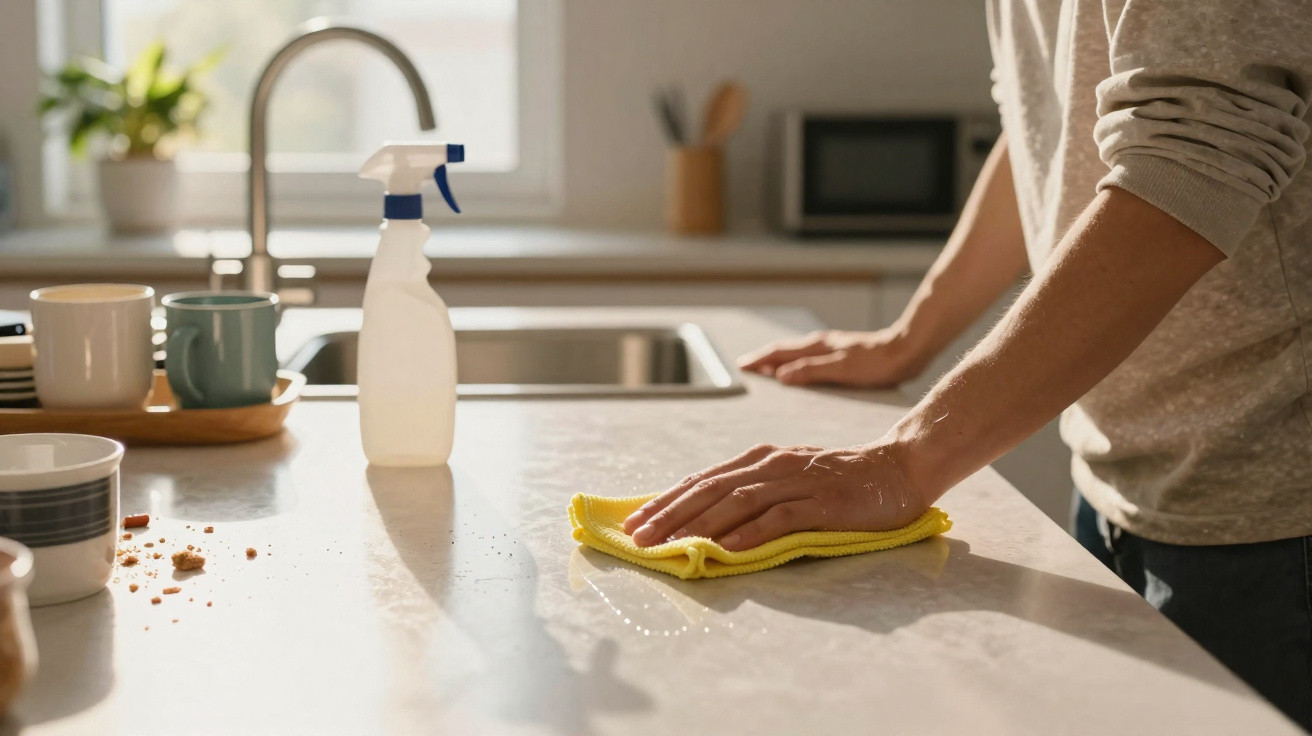
The method is simple. Choose one visible area of the home, such as the living room, kitchen or entrance hall. Then deal with every major surface your eyes naturally settle on, in this order. First, gather everything into a temporary “holding basket” - do not sort it yet; simply clear the surface. Next, take a microfibre cloth and a spray; even diluted washing-up liquid will do - and wipe from back to front and from side to side. Finally, return only the items that genuinely belong there and look deliberate: a lamp, a plant, a few books or a tray.
You have now completed a surface reset, and the room will immediately look 30% cleaner.
The main mistake is telling yourself, “If I start, I have to do the whole house.” You do not. The approach works specifically because you avoid doing that. Tackle one coffee table, one section of kitchen worktop or one sideboard. Set a timer for 7–10 minutes, work quickly and stop when it goes off. You may want to reorganise drawers or deep-clean the hob. Do not give in. Save that for another day.
Honestly, hardly anyone does this every single day. The point is to get a rapid visual result, not to create another full-time job.
“When my place feels out of control, I don’t clean everything,” says Léa, 34, who juggles two kids and remote work. “I clean the stuff I see in photos. The table, the counters, the TV stand. It tricks my brain into believing the house is under control, and then I actually feel like doing more.”
- Begin with the room’s “hero” surface - the first place your eyes go.
- Use one medium-sized basket to collect clutter quickly, then sort it later in a quieter corner.
- Use just one spray and one cloth so you do not waste time collecting cleaning products.
- Keep decorative items minimal: a tray, a candle and a plant, rather than twelve small items that need dusting.
- Stop after 10 minutes, even when you are “in the zone”. That boundary makes the habit easier to maintain.
When gleaming surfaces encourage everything else
After doing this several times, you may notice another effect. A wiped dining table subtly encourages you to serve dinner there rather than add more piles of post. A clean worktop almost challenges you to make something to eat. An uncluttered coffee table can make the sofa feel like somewhere pleasant to sit, rather than a place to dump half-folded washing. This single job changes more than what you see; it affects what you want to do next.
There may still be dust bunnies beneath the armchair, but the room feels usable again.
| Key point | Detail | Value for the reader |
|---|---|---|
| Focus on key surfaces | Coffee table, kitchen worktops, TV stand, dining table | Immediate visual impact without cleaning the entire house |
| Use a quick “basket and wipe” method | Clear items into one basket, wipe the surface, then return only essentials | Saves time and limits decision fatigue |
| Establish a repeatable 10-minute ritual | Use a timer, focus on one area at a time and keep products to a minimum | Makes chaos a manageable habit |
FAQ:
- Which surface should I start with if my whole home feels overwhelming? Choose the surface you would photograph if you needed to list your home on a rental website tomorrow. It is usually the one that changes the atmosphere most quickly.
- What if my worktops are permanently cluttered with appliances? Group them together. Set up one “appliance zone” and leave another area visibly clear. Even one clean stretch of worktop creates a major visual difference.
- How often should I do this quick surface clean? Once or twice a week is enough for most people. Do it before visitors arrive, before a work call or whenever the room begins to feel “heavy”.
- Do I need special products for shiny results? No. A lightly damp microfibre cloth with a drop of washing-up liquid will handle most surfaces. For glass and glossy tables, dry it with a second cloth.
- What should I do with the things I put in the basket? Set a second, shorter timer later that day to sort them. Five minutes is often sufficient for keys, post, charging cables and miscellaneous items.

Comments
No comments yet. Be the first to comment!
Leave a Comment