
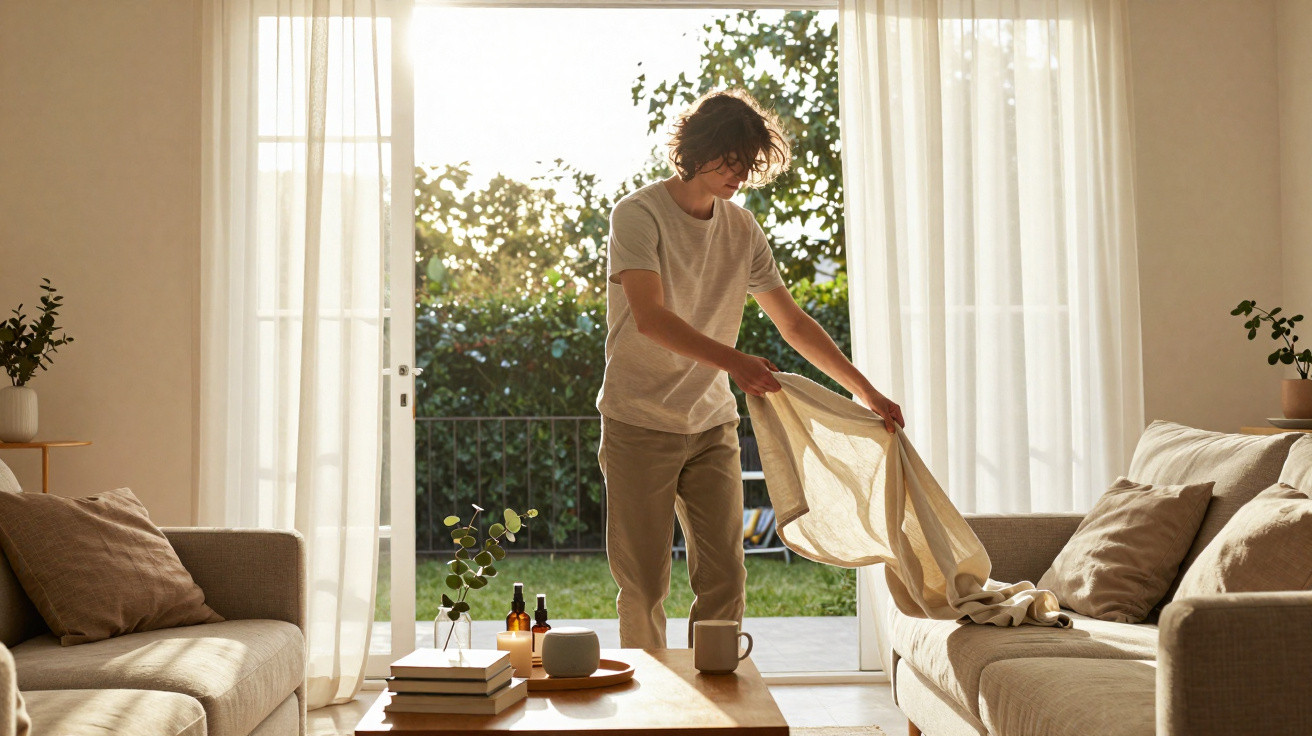
You get home at the end of the day, step into the living room and immediately feel your mood dip. Nothing is technically “dirty”, yet the atmosphere seems stale, the cushions appear worn out, yesterday’s coffee mug remains on the table, and the light looks slightly… grey. You glance at the clock, then at the vacuum, and all motivation disappears. You do not have two hours to spare. You can hardly manage twenty minutes.
You promise yourself you will sort it at the weekend, then spend the entire week in a room that quietly saps your energy.
But what if the aim was not “cleaning” at all? What if you simply gave the room’s energy a quick reset?
The real secret: refresh the room, not the floors
Many people assume a space cannot feel “new” again without an exhausting cleaning marathon: mopping, vacuuming, washing windows and decluttering every single surface. That belief is enough to tire anyone out before they begin. In reality, what changes the feel of a room is far more straightforward: the air, the lighting and the first things your eyes notice.
Alter those three elements and the room can seem almost freshly cleaned, even while the dust bunnies beneath the sofa continue to flourish unnoticed.
Imagine friends are due in 15 minutes. There is no opportunity for a proper clean, only a mild sense of panic. You open a window, gather loose papers into one orderly stack, plump the sofa cushions, run a damp cloth over the coffee table and light a candle by the entrance.
Ten minutes later, they arrive and say, “Wow, your place looks so nice!” You laugh because the bathroom sink is still a mess and the bedroom resembles a war zone. But what they notice is tidiness, light and a faint pleasant fragrance. That is the real trick: improve the first impression rather than tackling the entire home.
When we walk into a room, our brains do not inspect every surface. Instead, they register a small number of strong signals: scent, visible clutter, brightness, and one or two focal points such as the sofa or table. Those signals determine whether a room feels fresh or tired.
The simplest way to refresh rooms without full cleaning, then, is to focus only on those cues rather than on your whole to-do list. You are creating the impression of a reset, and for a tired mind that can feel every bit as satisfying as a thorough scrub - at least for tonight.
Five-minute room resets that make a difference
Begin with the air, as this is the quickest and most effective change you can make. Throw a window open for 5–10 minutes, even on a cold day. Allow fresh outdoor air to sweep through the room, clear away stale odours and shift the atmosphere. While it is open, take a small rubbish bag around with you and discard the obvious culprits: packaging, receipts, empty bottles and snack wrappers.
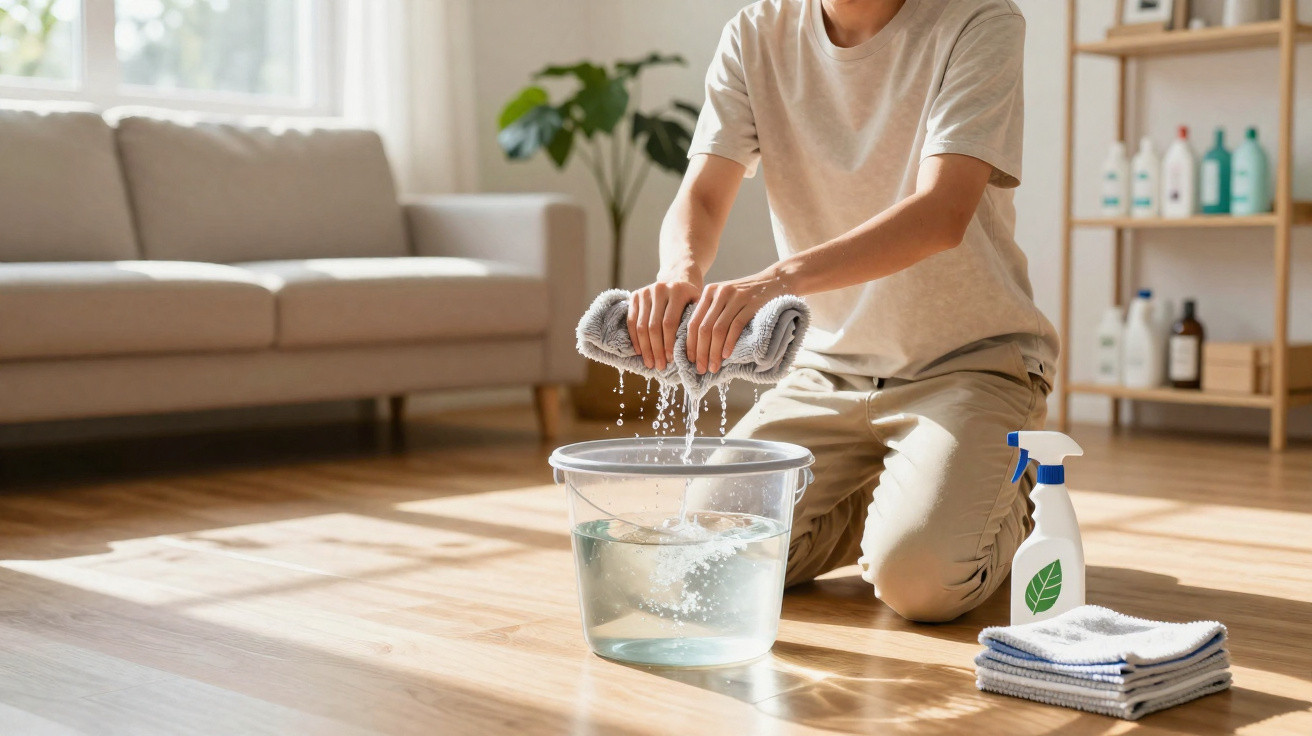
After that, choose the surface that has the biggest visual impact in the room - perhaps the coffee table, dining table or kitchen island - and clear it completely. Give it a wipe, even if all you have is a lightly dampened cloth. One bare, clean surface can feel like a visual deep breath.
Then turn to fragrance and lighting. This is often where the rapid transformation takes place. Use a gentle room spray, simmer water with lemon peel on the hob, or light a candle with a mild, neutral scent. The point is not to mask odours; it is to create a different atmosphere.
Rather than relying on the ceiling light, use lamps. Switch off the harsh main light and turn on two smaller lamps at opposite ends of the room. The room instantly feels warmer, calmer and more considered. The furniture and dust may be unchanged, but the space seems to breathe out.
This is where many of us go wrong: we attempt to refresh everything and abandon the task halfway through. You get the vacuum out, open every cupboard, begin rearranging a bookcase, then end up in the middle of the disruption scrolling on your phone. Honestly, nobody does that every day.
Set yourself a firm boundary instead: ten or fifteen minutes, one room, one surface, one change to the air, one to the lighting and one to the scent. Nothing more. You are not failing at being an adult; you are picking an approach that your future self may realistically repeat.
The art of a “fake clean” that still feels genuine
Try this specific approach tonight. Choose the room you spend the most time in - typically the living room or bedroom. Stand in the doorway and view it as though you are seeing it for the first time. Ask yourself: what are the three things my eyes dislike most right now?
It might be clothing piled on a chair, a cluttered coffee table and a throw sitting crookedly on the sofa. Your task is not to clean the whole room. It is to remove or hide those three irritations. Fold the clothes into a single neat pile, or put them into a laundry basket and leave it in the hallway. Arrange the throw neatly. Gather everything on the coffee table into one tidy stack, leaving only one object on display, such as a book or plant.
There can be a subtle sense of shame in feeling as though you are “not keeping up” at home. You scroll past immaculate minimalist living rooms, and suddenly your ordinary, lived-in home seems like a personal failure. That feeling is often precisely what stops you doing anything. You hold out for the imaginary free weekend that never quite comes.
Rather than aiming for perfection, think in terms of “reset moments”. These are quick, forgiving actions that say: this room is lived in, but it is cared for. There is no guilt about what remains undone. There are simply a few small steps that make it easier to breathe when you pass the doorway. Your home does not need to impress anybody. It only needs to stop quietly causing you stress.
“I stopped trying to have a spotless house and started aiming for rooms that recover quickly,” a friend told me. “Now I only touch what I know I’ll see first when I sit down. It tricks my brain, but in a good way.”
- Open the window first – Fresh air immediately changes the way your brain interprets the room.
- Clear one main surface – One tidy table can make the rest of the space seem far less chaotic.
- Sort the fabrics – Make the bed, fold a throw or plump cushions for an immediate improvement.
- Add one source of fragrance – Try a candle, diffuser or even a bowl of ground coffee on the worktop.
- Choose soft, low lighting – Lamps and warm bulbs are the quickest way to make a room feel cosy.
Creating spaces that can bounce back
Refreshing a room without cleaning it completely is ultimately about making a home that is forgiving. It is about having a place that does not punish you when life becomes busy, you are unwell or the week simply gets the better of you. Once you train yourself to notice a handful of rapid “reset levers” - air, light, smell, one uncluttered surface and one straightened piece of fabric - the mess around the edges becomes less significant.
You start to believe you can take a room from “ugh” to “okay, I like this” in under fifteen minutes. That confidence can change the way you move through the day. You may invite people over more often. You may read on the sofa rather than doomscroll in bed. You may even be a little kinder to yourself when you spot the laundry waiting in the corner.
Rooms do not have to be flawless to feel pleasant. They simply need a route back to centre on an ordinary Tuesday, when you are tired but still deserve a space that quietly looks after you.
| Key point | Detail | Value for the reader |
|---|---|---|
| Focus on first impressions | Prioritise air, scent, lighting and one main surface rather than undertaking a complete clean | Creates the sense of a thorough refresh with a fraction of the work |
| Set time limits | Use ten–fifteen-minute “reset sessions” rather than open-ended cleaning efforts | Avoids overwhelm and makes the habit easier to maintain |
| Accept “good enough” | Aim for rapid visual improvements: stacked clutter, straightened fabrics and softer light | Lessens guilt and improves everyday comfort at home |
FAQ:
- Question 1 What is the fastest single way to refresh a room in under five minutes?
- Question 2 How often should I carry out these quick resets to stop my home descending into chaos?
- Question 3 Can I skip vacuuming and still make my home feel fresh?
- Question 4 If clutter rather than dirt is the issue, where should I begin?
- Question 5 Are candles and sprays sufficient for strong odours, such as cooking smells or pet smells?

Comments
No comments yet. Be the first to comment!
Leave a Comment