
Every time a room is rearranged, there is a small surprise waiting beneath the furniture: once it has been shifted, the carpet reveals the marks it has been holding.
Move the sofa just a few centimetres and four deep, square impressions may appear in the pile, precisely matching its feet. Although the floor covering is clean, it can look worn and permanently compressed, making a replacement rug or costly professional cleaning seem like the only answer.
What really happens to carpet fibres under heavy furniture
When a sofa, bed or bookcase remains in one position for months, its weight is focused on very small areas: its feet. Beneath every foot, carpet fibres become compressed and slowly lose their resilience. The pile is flattened, the strands cling together and eventually retain the precise outline of the furniture base.
This happens more quickly in heated rooms where there is little airflow close to the floor. Warm, dry conditions can make fibres more rigid, while dust and tiny particles settle between the strands. Over time, the impression becomes a noticeable hollow that will not rise again, even after the furniture has been moved.
The fibre composition is important as well. Modern homes contain floor coverings made from many materials:
- wool and cotton in more traditional or premium rugs
- polypropylene and polyester in many mainstream carpets
- nylon in hard-wearing, stain-resistant flooring
- plant-based fibres, including sisal or jute, in natural-style interiors
Every fibre type responds differently to weight, dampness and heat. Wool, for example, has a natural crimp and often recovers when handled carefully. Nylon responds well to steam and can withstand slightly more manipulation. Sisal, however, does not tolerate too much water and may distort or become stained when soaked.
Understanding the fibre under your feet is the first step to lifting those dents without causing permanent damage.
The ice cube trick for carpet dents: a small gesture with a big visual payoff
Of all the DIY suggestions circulating on social media, one is particularly notable for being so straightforward: a standard ice cube straight from the freezer. It needs no cleaning product, specialist tool or expensive spray.
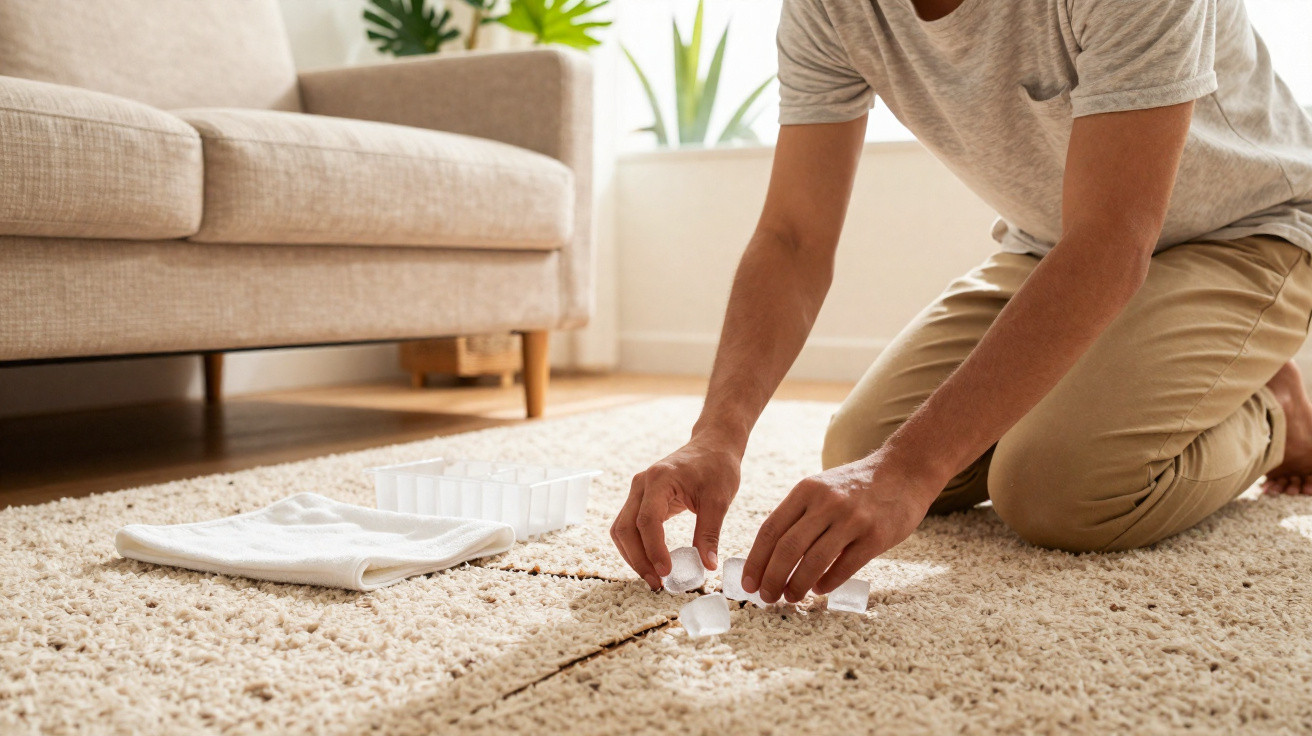
The technique is remarkably simple. Put an ice cube directly onto the depression made by a furniture foot, then allow it to work gradually. As it melts, the chilled water slowly travels down into the bottom of the pile. The fibres take in the moisture, become more pliable and start to lift once more.
A single ice cube, left to melt for around ten minutes, can visibly soften or erase many furniture marks on modern carpets.
Step-by-step: how to use ice to lift carpet dents
For a rug or fitted carpet installed over a surface that can cope with a small amount of moisture, this method only requires a few minutes:
- Put one ice cube in every noticeable dent, using several cubes for a larger furniture foot.
- Let the ice melt fully, which normally takes around 10 to 12 minutes according to the room temperature.
- Dab away surplus water carefully with a clean, absorbent cloth. Do not rub the area, as this may make the fibres fuzzy.
- Lift the pile gently with your fingers, the back of a spoon or a fork, working in the fibres' original direction.
With particularly compressed synthetic carpet, some people leave the ice in place for longer so additional water can reach the backing. The principle remains unchanged: blot the moisture gently, then brush the pile in several directions to help it recover its fullness.
Where the carpet sits over untreated wood, parquet or laminate that is sensitive to moisture, place a thin towel or microfibre cloth beneath the dented section before you begin. Testing a concealed corner first is a quick way to assess the colourfastness and response of both the carpet and the floor underneath.
Adapting the method to different carpet types
Different floor coverings do not all suit the same approach. Checking the product label or the original purchase invoice can help you select the right treatment.
| Carpet type | Recommended approach | Points of caution |
|---|---|---|
| Wool or cotton | Ice cube method, followed by gentle brushing | Avoid soaking; dry thoroughly to prevent odours |
| Synthetic (nylon, polypropylene, polyester) | Ice or light steam, then vacuum and brush | Do not overheat with appliances |
| Sisal, jute and other plant fibres | Moisture-controlled steam from a distance | Water stains and warping if too wet |
| Antique or dry-clean-only rugs | Very light humidity, or professional care | Colours may bleed; backing may weaken |
The ice cube approach is effective on wool or cotton provided that the spot is not allowed to remain saturated. Once you have blotted it, use a soft brush or a small carpet rake to bring back the fluffy finish. A hairdryer on a warm rather than hot setting can help the area dry faster as you raise the pile with your fingers.
Plant-fibre rugs, including sisal and jute, carry greater water-related risks. In this case, a short burst of steam may be a better option. Hold a steam iron approximately 10 to 15 centimetres above the dent to warm and humidify the fibres without soaking them directly. Spraying water before using a hairdryer at a moderate temperature may achieve a similar effect, provided you keep the dryer moving continuously to prevent concentrated heat spots.
Delicate, vintage or hand-dyed pieces deserve extra caution: a quick phone call to a specialist may save a cherished rug from irreversible marks.
How to stop furniture dents coming back
After the dents have been lifted, the main task is preventing them from returning. A handful of simple routines can make a noticeable difference.
Spread the pressure and keep things moving
Furniture marks develop when heavy legs remain pressed into the same small section of carpet for an extended period. It is easier than expected to interrupt this pattern:
- Move sofas, tables and armchairs a few centimetres every few months.
- Attach felt pads or gliders below every foot to increase the contact area.
- Choose an underlay with good thickness and density so the load is distributed across more fibres.
An underlay measuring roughly 6.5 to 10 millimetres thick can already be beneficial. A denser option supports the carpet backing and reduces severe compression. Although the measurements need not be exact, a good-quality pad will often deliver better results than any supposed miracle spray.
Frequent vacuuming matters too. Vacuuming in several directions helps raise flattened fibres and removes the grit that can weigh them down. Occasional gentle brushing also refreshes the pile beneath and around furniture, where dust can build up without being noticed.
Practical scenarios and what to do in each case
Suppose you move a large corner sofa for the first time in several years. The carpet below may have dents as well as slightly darker sections caused by reduced light and air exposure. In this case, several measures can be combined: apply ice cubes to the deepest impressions, use light steam on the wider flattened sections and then vacuum the entire area slowly. Once the fibres stand up again and reflect light more evenly, the colour contrast will often fade naturally.
Alternatively, consider a rented flat with basic laminate flooring and an inexpensive synthetic rug. You may wish to avoid being charged for water damage, despite the obvious impressions left by the furniture. Putting a thin plastic sheet or towel underneath the dented part of the rug before applying ice creates a protective barrier. After the impressions have risen and the rug is dry, fitting small furniture coasters distributes the weight and may give your landlord reassurance at the next inspection.
Risks, limits and when to call a professional
Despite its simplicity, the ice cube trick has a few risks worth considering. Too much water can pass through to timber subfloors, resulting in slight swelling or discolouration. Excessively vigorous brushing may fray cut-pile carpet, leaving it fuzzy rather than restored. Older backing materials can also respond poorly to repeated wetting and drying.
For valuable Persian or Oriental rugs, deep marks that have remained for a long time may indicate weakened warp or weft threads. A home treatment in these circumstances could conceal the issue rather than fix it. A specialist cleaner or restorer can determine whether structural repairs are required, particularly when the rug has already been in use for several decades.
For most everyday carpets in contemporary homes, however, combining ice, light steam, regular furniture movement and suitable underlay will usually keep the floor looking fresh. The answer is not so much a secret shortcut as careful, consistent maintenance: brief, uncomplicated steps that keep those familiar square dents from becoming lasting scars across the living-room floor.





Comments
No comments yet. Be the first to comment!
Leave a Comment