
Anna’s mop bucket was already becoming cloudy when she added more water “just to be safe.” She gave the floor cleaner a generous squeeze, filled the bucket to the brim with hot water, and enjoyed the splash as she lowered in the mop. By the time she had finished, her kitchen tiles shone and carried a faint scent of lemon and “job well done.”
Two days afterwards, that shine had faded. Her bare feet felt a slight stickiness with each step, as though there were a thin coating of sugar underfoot. The formerly fluffy mop had become stiff at the ends. A greyish layer had gathered around the chair legs she was certain she had scrubbed. Clearly, something was wrong.
At first, Anna assumed the floor had been much dirtier than she thought. Then, after speaking with a cleaning specialist, another possibility occurred to her: perhaps dirt was not the issue at all. Perhaps the water was.
Why soaking your floors is quietly wrecking them
Many of us were brought up to believe that more water produces cleaner floors. There is something reassuring about a full bucket, a dripping mop and puddles gradually drying across a room. It seems thorough, as if sheer volume can wash away the day.
Specialists now warn that this habit is more than old-fashioned. It can quietly damage floors, particularly laminate, engineered wood and modern vinyl. These materials are made to cope with spills, not repeated soaking. Surplus water does not simply disappear: it seeps into gaps, remains in place and leaves residue behind.
Professional cleaner Mara Lopes recalls a client who proudly mopped her newly fitted laminate every evening using a bucket filled to the top. Her home always smelled fresh, almost like a hotel lobby, and for a year the floor appeared flawless.
Then the signs began to appear one morning: plank edges were lifting, tiny gaps were trapping crumbs, and certain patches looked smeared regardless of how many times she “rewashed” them. A moisture meter later revealed raised humidity beneath the boards. There was no leak to blame. The cause was the daily inundation of cleaning water, which never had sufficient time to evaporate completely.
Too much water does not evaporate without consequence. It can dilute detergent to the point that you instinctively use more, then leave behind a fine coating of soap and minerals as it dries. It is much like the film that forms on shower glass, except it is thinner, less obvious at first and spread across the floor.
That coating attracts dust, pet hair and grease, becoming a sticky grey patina that accumulates over the weeks. With porous surfaces such as wood and grout, water enters microscopic cracks and causes repeated expansion and contraction with every clean. Eventually, you are not really washing the floor at all; you are gradually adding barely visible damage.
The right way to clean without drowning your floors
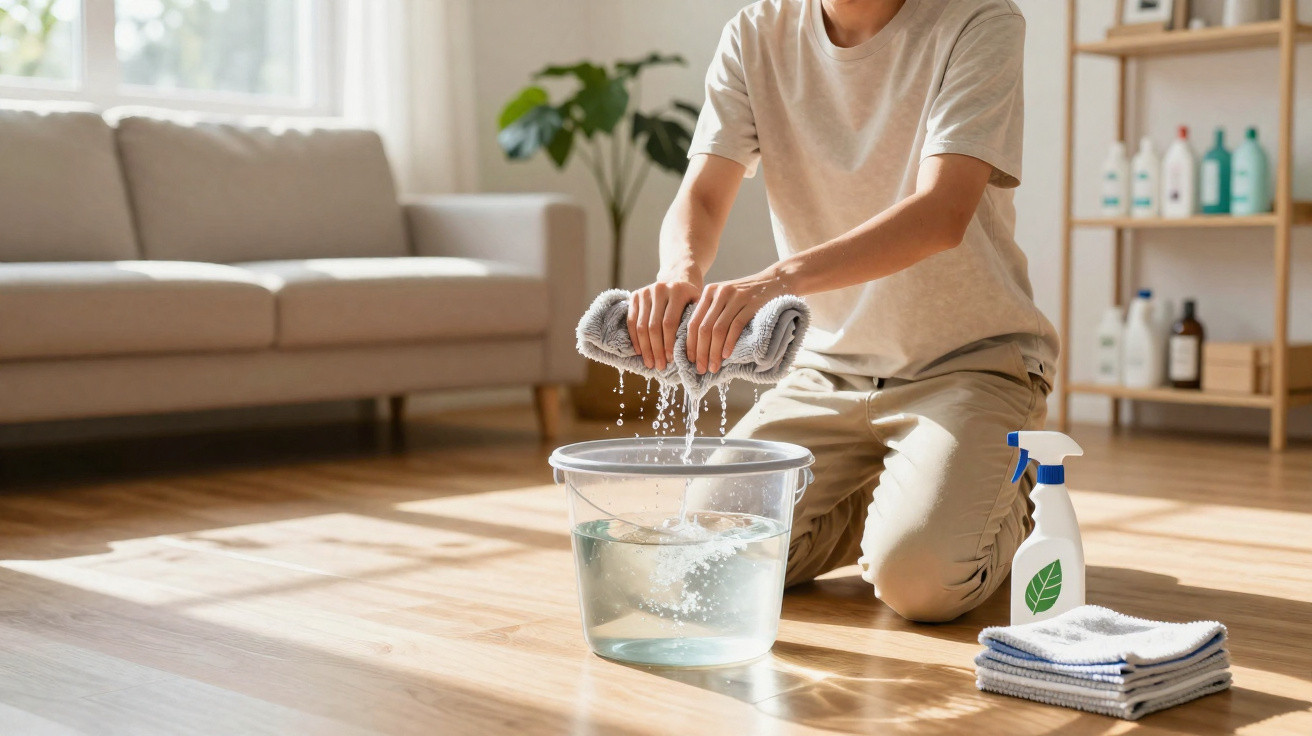
The central rule repeated by specialists is surprisingly straightforward: damp, not wet. Replace the sloshing, dripping mop with one that is only lightly moistened, similar to a well-wrung cloth used for wiping a table. One professional technique is to twist the mop after soaking it until small streams of water no longer fall back into the bucket. Only then should it go on the floor.
The two-bucket method is another approach receiving praise. Fill one bucket with diluted cleaner and the other with plain water. Dip the mop into the cleaner, work on a small section, then rinse it in the clean water to release the dirt. The aim is not to leave a lake behind. The floor should have only a faint sheen and dry within minutes, rather than taking half an hour.
We have all experienced the moment of stepping back, noticing streaks and immediately reaching for extra cleaner and water. It appears logical: stubborn grime surely calls for stronger reinforcements. Specialists take the opposite view. Streaks often indicate that you have already used too much, with residue signalling from the surface.
Instead, reduce the amount you use. Lightly mist high-traffic areas with a spray bottle instead of pouring product directly into the bucket. Choose microfibre mops, which capture dirt mechanically rather than depending on vast amounts of liquid. If you are rinsing so frequently that the water resembles soup, you have not failed; you are probably simply trying to clean too large an area at one time.
“People think they’re rinsing away filth,” explains floor care specialist Daniel Rios. “What they’re really doing is spreading a thin cocktail of soap, minerals and grime over every square foot. Less water and less product usually means a cleaner floor and a longer‑lived one.”
- Use cold or lukewarm water: hot water may accelerate chemical reactions and harm certain coatings.
- Follow the dosage on the label: twice as much product seldom delivers twice the cleanliness, only twice the residue.
- Test a corner first: this is especially important with wood and stone, as a small concealed area will show how the surface responds.
- Encourage quick drying: open windows, use a fan or make a final pass with dry microfibre on sensitive floors.
- If water drips from your mop when you lift it, it is too wet for almost every modern floor.
A different relationship with “clean” at home
Once you begin to notice it, it becomes clear how strongly our idea of “clean” is associated with excess: more foam, stronger fragrance and fuller buckets. Yet the specialists who repeatedly caution against excess water are not trying to take away that satisfying feeling. They are seeking to protect your floors, your time and, quietly, your money.
In reality, hardly anyone follows an ideal routine every day. Few people clean as adverts suggest, using fresh water for each room and allowing perfectly timed drying. Most of us rush through it late in the evening, after the children are asleep, attempting not to wake anyone as we pull an ageing mop across yesterday’s mess.
This is precisely when small changes can make a difference. Try a spray-and-wipe routine rather than a weekly soaking. Make vacuuming or sweeping thoroughly beforehand a habit, so the mop tackles marks rather than dust. Watch the drying time before allowing pets or children to run across the surface again. The goal is not sterility. It is a floor that feels pleasant beneath bare feet, stays clear rather than cloudy and lasts beyond a single renovation cycle.
The understated truth shared by specialists is almost unsettling: most floors do not fail because of scratches. They fail because of water. Not dramatic flooding, but the bucket filled slightly too high, slightly too often. That “extra” splash added because it feels caring, when it is actually causing wear.
The next time you fill the bucket, you may find yourself slowing your hand. You may measure the cleaner rather than estimating a generous amount. You may even leave the bucket aside and pick up a microfibre pad and spray bottle instead. Not from guilt, but because you have adopted a calmer understanding of what clean can be.
Years from now, when your floors remain smooth and level, with no mystery film or warped edges, you may not remember the day you stopped drowning them. You will simply find your home easier to maintain. And deep down, you will know it began with something as simple as using less water.
| Key point | Detail | Value for the reader |
|---|---|---|
| Avoid excess water | Damp mopping rather than soaking prevents seepage and residue | Protects floors from warping, swelling and early ageing |
| Use the right tools | Microfibre, spray bottles and two-bucket methods reduce the spread of dirty water | A cleaner finish with less effort and fewer streaks |
| Rethink “clean” habits | Less product, better drying and more frequent light cleaning | Saves time and money while keeping floors looking new for longer |
FAQ:
- Can I still use a traditional string mop? Yes, but wring it firmly until it is only damp, and replace the water often so that you are not spreading dirty liquid around.
- How often should I wash my floors? Most specialists recommend once a week in busy areas, plus quick spot-cleaning when needed, rather than fully mopping every day.
- Is vinegar safe for all floors? No. Vinegar may dull stone, marble and some finishes, so always check your floor manufacturer’s recommendations first.
- What’s the best option for wooden floors? Use a barely damp microfibre mop with a wood-specific cleaner and ensure good ventilation so the surface dries within minutes.
- My floor already feels sticky, what can I do? With clean, lukewarm water and a microfibre mop, gently lift old residue over several passes rather than adding more detergent.
Comments
No comments yet. Be the first to comment!
Leave a Comment