
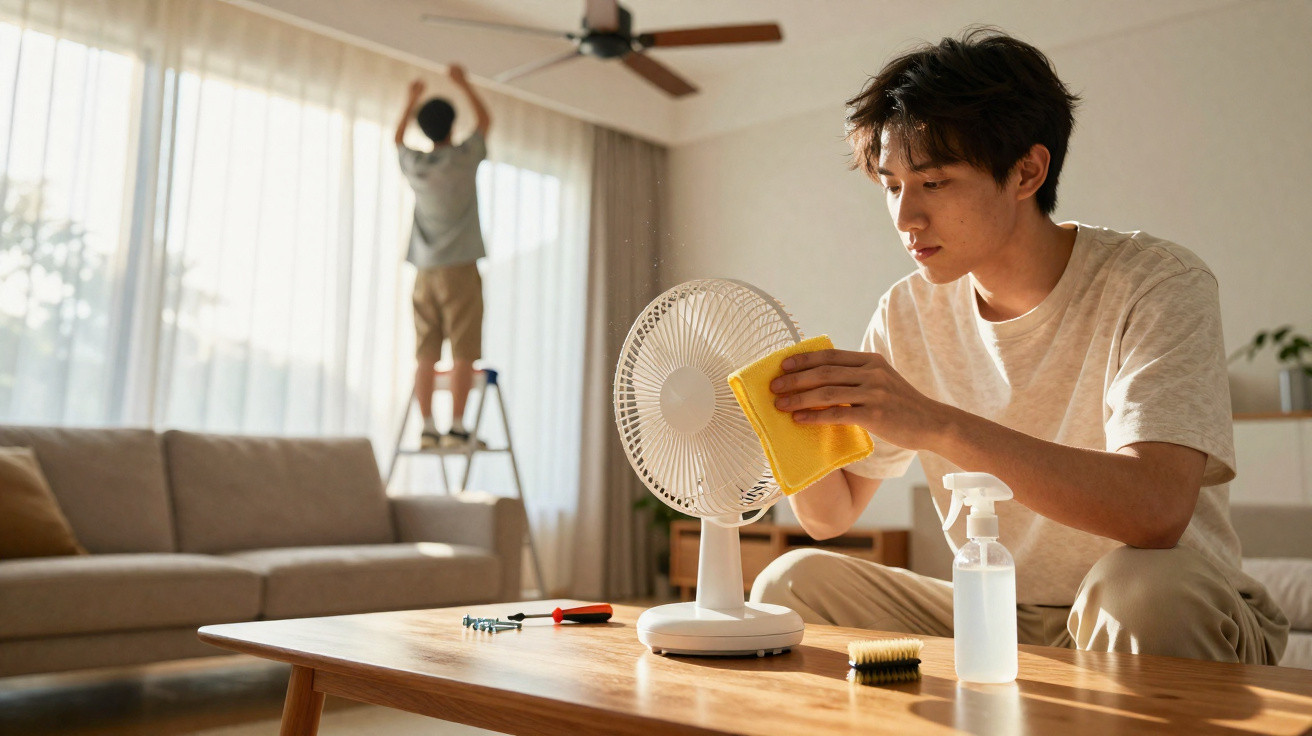
During the routine mid-year clean, dust becomes quickly noticeable on surfaces after bedrooms have been shut for a while. Preparing the room properly lets residents breathe easily on hot afternoons, while using clean equipment and saving electricity.
Why is it essential to clean a fan regularly?
A dirty fan impairs proper air circulation and can also distribute harmful dust mites around the home. Keeping the grilles and blades thoroughly sanitised helps prevent serious respiratory problems, ensuring your home receives only a pure and pleasant airflow.
An excessive build-up of debris on internal parts places extra strain on the motor as it runs continuously on muggy days. Carrying out preventative maintenance every fortnight during warm seasons can greatly extend the mechanism's lifespan, preventing your valuable appliance from suddenly stopping working.
The following materials are recommended to make deep-cleaning the components of this ventilation device much easier:
- Warm water: Helps loosen stubborn, embedded dirt more quickly.
- Mild washing-up liquid: Removes grease from plastic surfaces.
- Microfibre cloth: Prevents unwanted lint from being left on the grilles when finished.
- Small brush: Reaches awkward corners around the motor edges.
- White vinegar: Works as a powerful, eco-friendly disinfectant for appliances.
How do you dismantle and clean a portable fan correctly?
Before starting, unplug the appliance straight away to prevent unwanted household accidents. Carefully remove the front protective clips and release the moving parts, keeping the pieces separate before applying any cleaning product or running water.
Vacuum the plastic components carefully, or use a small brush to sweep away all dirt lodged around the edges. Then wash each surface with a simple solution, allow everything to dry completely in the open air, and reassemble the fan properly before switching it on again.
Below is a video from the YouTube channel A DICA DO DIA COM FLÁVIA FERRARI, which explores the points covered in this topic in greater depth:
What is the best way to clean ceiling fans?
Switching off the main electrical supply for the relevant room is the crucial first step for working safely at height. Never hang your weight from the delicate rods or force the side structures, as these careless actions can bend the central shaft and result in permanent damage.
Practical tip: a pillowcase to contain dust
Covering a fan blade with an old pillowcase stops unwanted dust from flying all over the bedroom.
This clever method traps the debris inside the dark fabric itself, making the everyday household cleaning process considerably quicker.
Use a cloth dampened with water and mild washing-up liquid to remove the visible grimy layer from the flat upper surfaces. Rub the metal finishes gently to preserve their original factory alignment, ensuring consistently quiet operation and smooth airflow without uncomfortable vibrations.
Here are the main actions to avoid when handling the upper parts of these large ventilation appliances:
- Resting your body weight on moving plastic parts.
- Pulling the rods with excessively sudden movements while cleaning.
- Scrubbing the appliance's thin edges with too much force.
How can you keep the mechanisms running smoothly and consistently?
Simply removing surface dust is not enough to keep the fan working at its full cooling capacity. Applying lubricating oils to moving mechanisms once a year prevents excessive friction, reduces unwanted noise and easily prolongs the service life of its internal system.
Homes close to the sea are severely affected by constant moisture and strong daily salt-laden winds. In these particular coastal areas, spraying anti-rust liquids on the edges every three months is essential to prevent the metal components from corroding and the appliance from being lost quickly.
The following products are recommended for preventative maintenance and for ensuring the essential components last longer:
- Lubricating oils specifically intended for use in household mechanisms.
- Easy-to-apply protective sprays with an anti-rust effect for surfaces.
- Completely dry, soft cloths for gently finishing the job.
Which additional habits help keep the home cool in summer?
As well as removing dirt from the grilles, small everyday measures can enhance the feeling of relief from the heat. Closing curtains during the sunniest periods reduces heat build-up in enclosed rooms, while allowing the evening breeze to cool the spaces and create a pleasant and very cosy atmosphere.
Keeping containers of fresh water in bedroom corners helps humidify dry air during these sunny spells. Combined with freshly cleaned fans, this approach supports restorative nights of sleep for the whole family, replacing the continuous use of a heavy electric air conditioner with a sustainable alternative.
Read also: How to clean a fan without spreading dust throughout the house


Comments
No comments yet. Be the first to comment!
Leave a Comment