
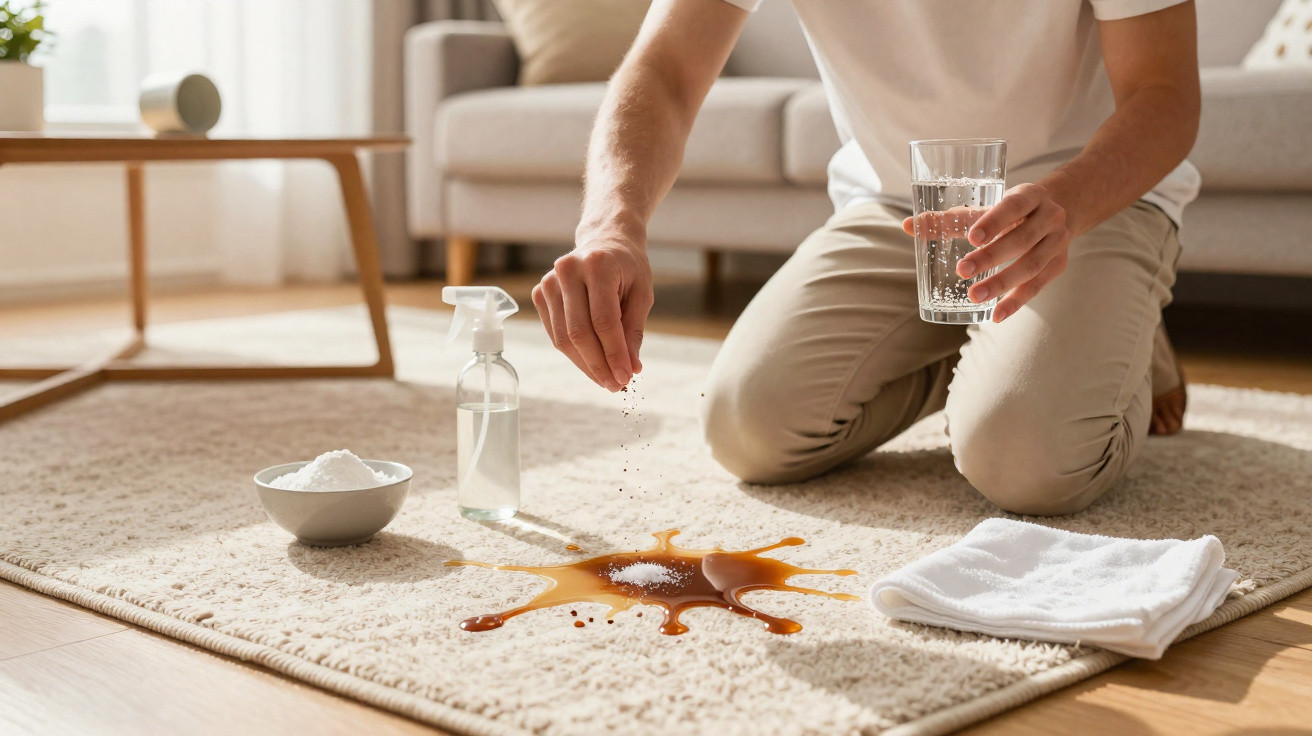
Fresh coffee spills need not cause panic. With a few everyday cupboard essentials, you can lift the mark effectively if you act sensibly and steer clear of common errors.
The quick science you can use
Coffee contains tannins, which bind to carpet fibres. Heat can fix them in place, and vigorous rubbing has a similar effect. Drinks containing milk and sugar also leave protein and sticky deposits, so they need a slightly adjusted treatment. Use cold solutions, handle the area gently and work with the fibres rather than against them.
Blot, don’t rub. Work from the outside in. Keep the area just damp, never soaked.
The simple trick that saves the day
This three-step coffee stain treatment combines salt, sparkling water and a gentle homemade solution. It takes only minutes and costs pennies.
- Quickly blot the spill using kitchen roll or a clean microfibre cloth. Press down firmly, lift it away, move to a dry part of the cloth and repeat.
- Sprinkle a light coating of table salt over the damp patch. Let it sit for 3–5 minutes. The salt absorbs moisture and tannins. Lift it away with a spoon and dispose of it.
- Add a small splash of cold sparkling water to the stain. Its bubbles help bring pigments up to the surface.
- Blot once more with clean towels. Keep alternating between sparkling water and blotting until the brown colouring begins to disappear.
- Should a faint shadow remain, dab it - rather than soaking it - with this solution: 250 ml cold water + 1 teaspoon white vinegar + 1 drop washing-up liquid. Continue blotting until the cloth lifts away clean. Wipe with a damp cloth to remove residue, then dry the area with towels.
Salt first, fizz second, gentle acid last. That sequence handles tannins without harsh chemicals.
Dried stain? Switch to bicarbonate
Set-in marks require extra lifting power. Form a paste from 1 tablespoon bicarbonate of soda and 2 tablespoons cold water, then apply a thin coating to the stain. Leave it for 15 minutes. Lightly spray with a 1:5 mixture of white vinegar and water. It will fizz. Blot as it foams, repeating the process once if required. Once dry, vacuum up the remaining powder.
Wool, synthetics and coloured rugs
Different carpet materials react in different ways. Wool needs a neutral pH and should not be exposed to heat. Polyester is durable, although it may hold on to oils. Saturated dyed rugs can release colour. Before treating a visible mark, always test the method on a concealed corner for two minutes.
| Fibre | Safe approach | Avoid | Drying tip |
|---|---|---|---|
| Wool | Blot, salt, brief sparkling water, minimal vinegar mix | Hot water, strong alkaline cleaners, bleach | Lift pile with a spoon, then airflow only |
| Nylon/polyester | Full three-stage method; bicarb paste for old stains | Over-soaking; aggressive scrubbing that scuffs fibres | Cool fan for 30–60 minutes |
| Natural fibres (sisal, jute) | Very light blotting, almost dry methods, powder cleaners | Liquid treatments that cause ripples or browning | Absorbent towels under and over the area |
When milk or syrup is in the mug
Flat whites and sweet lattes can leave sugars and proteins in the carpet. Where a slight odour or sticky texture remains after treating the tannins, a very small quantity of biological laundry detergent can help break down the protein.
- Combine 250 ml cold water with half a teaspoon of bio detergent.
- Put the mixture on a cloth rather than pouring it straight onto the carpet.
- Blot the area, then rinse it using a damp cloth. Dry thoroughly to prevent later re-soiling.
Dealing with odour
After the carpet has dried, sprinkle bicarbonate of soda over the affected area. Leave it for an hour, then vacuum slowly. This can neutralise any sour milk odours.
Speed matters, but timing can work for you
Where possible, begin within the first five minutes. If that is not possible, place a barely damp cloth over the edge of a dried stain for two minutes before starting. This helps loosen the ring often left behind after a hurried wipe.
Cold beats heat. Airflow beats soaking. Patience beats force.
Why this coffee stain hack is everywhere right now
Household budgets are under pressure, while cleaning-product aisles offer ever poorer value. More households are turning to versatile pantry staples. Salt, vinegar and bicarbonate are already found in most kitchens, and they tackle coffee without the fragrance or cost of branded sprays. Having fewer bottles beneath the sink also reduces the likelihood of damaging a rug with the wrong product.
Mistakes that keep stains alive
- Scrubbing forcefully. It roughens fibres and pushes pigment further in.
- Reaching for warm water. Heat sets tannins into the fibres.
- Applying excessive liquid. The backing can become wet, allowing the stain to wick back up.
- Missing out the rinse. Leftover detergent attracts dirt over time.
- Drying the area in direct sunlight. Uneven exposure can produce a pale halo.
Practical extras for frequent spillers
Put together a compact stain kit and keep it somewhere accessible. A zip bag is ideal. Include two microfibre cloths, a travel-size bottle containing the vinegar mix, a small bag of salt, a mini shaker of bicarbonate and a spoon. This is far more useful than searching through cupboards while the mark is setting.
If you have a handheld spot extractor, begin with blotting and salt regardless. Use the machine solely for rinsing and extraction. Cold plain water is sufficient in the tank for coffee marks. Using a strong detergent in the machine may create foam and draw soil back into the carpet later.
Cost and effort snapshot
| Method | What you need | Typical cost per use | Time | Risk |
|---|---|---|---|---|
| Salt + sparkling water + vinegar mix | Salt, fizzy water, white vinegar, washing-up liquid | Pennies | 10–20 minutes | Low if you avoid over-wetting |
| Bicarb paste for dried stains | Bicarbonate of soda, water, light vinegar mist | Pennies | 20–30 minutes | Low on synthetics; test wool |
| Shop spray cleaner | Branded stain remover | Higher per use | 5–15 minutes | Colour shift if misused |
If nothing shifts it
Certain stains persist when coffee has remained hot for hours or where dye transfer is also involved. Before contacting a professional, use oxygen powder only on synthetic carpet: mix half a teaspoon into 250 ml cold water, dab it onto the mark and then rinse. Never use this on wool or plant fibres. If the stain remains or the rug is valuable, contact a specialist and tell them precisely which treatments you have used.
A quick note on prevention
Applying Scotchgard or an equivalent protector to a living-room rug can prove worthwhile over several months. It allows spills to bead for longer, giving you more time to blot them up. Coasters with a raised lip can also catch the first troublesome drips beside the sofa. For coffee at a desk, choose mugs with lids. They may not look stylish, but they are highly effective on Zoom days.



Comments
No comments yet. Be the first to comment!
Leave a Comment