
The truth appeared as a pale, ghostly oval where a sticker had once sat - streaks, grime and a stubborn grey film that soap simply could not shift. I watched a friend attack the corner of a picture frame with a fingernail, then a butter knife, then a credit card, producing little squeaks and growing panic. The label had disappeared long ago, but its glue had embedded itself. We have all known the moment when a “quick clean” takes twenty minutes from our day. The solution I saw afterwards was unexpectedly calm: no scraping, no heat gun and no expensive spray. It used one ordinary household technique I had never considered - and the residue seemed to dissolve away, as though it had been waiting to go.
Why sticker residue sticks to glass so stubbornly
Sticker adhesives are designed to hold fast. Because they are pressure-sensitive, pressing them makes their bond stronger, while the adhesive works its way into microscopic pores in the glass. Sunlight and age can then cause the glue to crosslink, making it tougher than chewing gum stuck to a shoe. Peel away the paper and its shadow remains behind. It is not dirt; it is chemistry working rather too effectively.
Watch somebody tackle a jar or newly fitted window with washing-up liquid and determined rubbing. The paper tears into fragments, the adhesive spreads and patience runs out. A survey on a home-cleaning forum placed label removal among the five most irritating “five-minute chores” that never take five minutes. One neighbour told me she avoided buying second-hand jars simply because of their sticky aftermath. That is not laziness - it is a sensible response to a small battle that repeatedly defeats you.
Most solutions fail for straightforward reasons. Water cannot penetrate an adhesive made to withstand moisture. Alcohol evaporates before it has time to soak in. Vigorous rubbing creates friction, warming the glue and making it spread more easily, like butter in a hot frying pan. Instead of removing it, you polish the issue into a wider, shinier patch. The answer is not to fight the adhesive but to weaken its hold: give it time and the right companion, then remove it in one wipe. No fuss required.
The cling-film oil soak that does the hard work
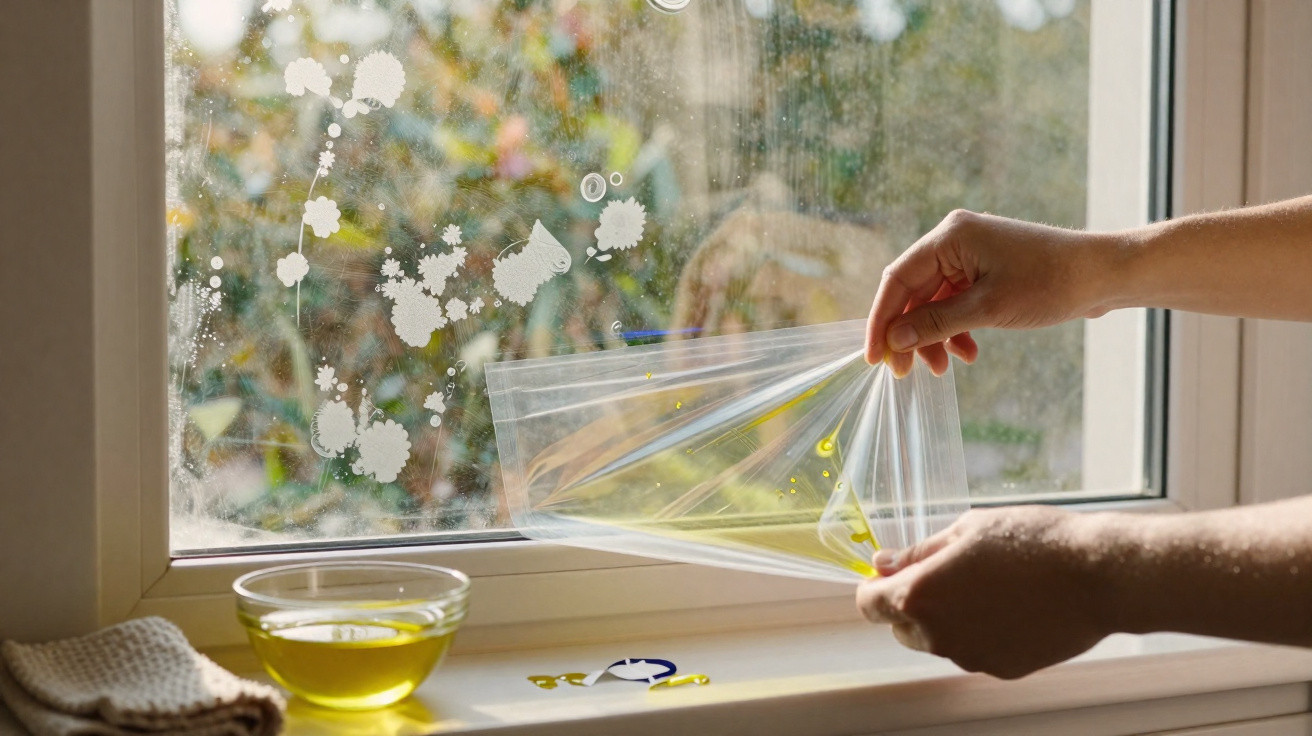
Here is the lesser-known technique: spread a thin coating of cooking oil over the residue, then press cling film on top. The film keeps the oil where it needs to be, stops it evaporating and replaces thirty frantic minutes with a peaceful twenty-minute wait. Leave it alone while you drink some water or reply to a message. Then remove the film and wipe once with dry kitchen roll or a microfibre cloth. The residue comes away as if it has forgotten it was adhesive. Finally, wash the glass quickly with hot water and washing-up liquid to remove the oily sheen. No scraping.
Use whichever oil is already in the cupboard. Sunflower, rapeseed, olive and baby oil can all work beneath pressure-sensitive adhesives to loosen their bond. Cling film is the key accelerator because it holds the oil in close contact with the glue, much like a compress soothing a sore muscle. For a large window or shower screen, overlap sheets and smooth them down with your palm. For a jar, wrap it up like a miniature burrito. Leave it for 15 to 45 minutes, depending on the sticker’s age and how much sun it has had, then wipe. Zero effort.
Realistically, nobody approaches these jobs this way every day. We hurry, scrub and grumble. This approach rewards doing the opposite: apply it, walk away and get on with your day while capillary action and time handle the task.
“Adhesives love dry, exposed edges,” a window installer told me. “When you flood them and block air, they surrender. Think less force, more dwell time.”
It feels a bit like magic.
- Works on: jars, picture frames, shower glass, oven doors and car windows.
- Avoid on: tinted film, screens and coated lenses; test a discreet corner first.
- Cleaning afterwards: hot water with a drop of washing-up liquid, or a splash of vinegar in the rinse water.
What happens beneath the cling film - and ways to adapt it
Oil is non-polar, just like the sticky material in most label adhesives: like dissolves like. The film traps the oil against the glue and softens it evenly, rather than allowing you to smear it across the surface. There is no need for heat or a blade near the glass. For old decals baked on by sunlight, repeat the treatment once. For very small spots, place an oil-soaked cotton pad beneath a postage-stamp-sized piece of cling film for a more precise application. Lifting the film to find the glue beading up is surprisingly satisfying.
There are a few useful alternatives. If you do not have cling film, use a sandwich bag. No cooking oil available? A coating of mayonnaise or petroleum jelly will do the same job, though more slowly. Once the glue has been wiped away, polish the glass with a clean microfibre cloth and a spray of glass cleaner for a glossy finish. Use only light pressure: you are not scouring a saucepan, but guiding softened adhesive into the cloth. The cling film trick is what turns a mild solvent into a hands-off method.
The usual problems arise when the soaking time is cut short or products that work against each other are mixed. Do not apply alcohol over oil in the same attempt; they counteract one another and leave a smear. If changing methods, rinse with soapy water first. On vehicle glass, check for aftermarket tinting: oil is fine on bare glass but less suitable around the edges of tint film. If the label breaks apart into tiny flakes of paper, wet the paper with warm water first and peel that layer away, then use oil and film on the remaining glue. That is not being overly careful; it is simply more efficient.
The small but satisfying result
There is a quiet pleasure in making a formerly irritating job easy. A charity-shop vase loses its ghostly ring. A new frame looks properly new. A child’s sticker vanishes from a patio door with one relaxed wipe and no telling-off. This method returns the five minutes you would otherwise have wasted - perhaps even more. Pass it on to the person who always “just scrapes it with a knife” and watch their eyebrows lift. The best techniques seem obvious afterwards and are kinder to your future self. Next time a streak catches your eye on a sunny morning, you will know exactly what to do, and it will not take over your day.
| Key point | Detail | Why it matters to the reader |
|---|---|---|
| Seal + soak | Oil beneath cling film for 15–45 minutes | Changes scrubbing into a hands-off wait |
| Proper clean-up | Wipe dry, then wash with hot water and washing-up liquid | No smears or haze; glass is left crystal clear |
| Useful alternatives | Use mayonnaise or petroleum jelly when there is no oil; use a sandwich bag when there is no film | Works with items you already have, wherever you are |
FAQ
- Will this leave a greasy film on my glass? Only until you give it a quick wash with hot water and a small drop of washing-up liquid. One pass removes the sheen.
- Is this safe on car windows and mirrors? Yes, on bare glass and mirrors. Avoid the edges of aftermarket tinted film and coated lenses; test a corner first.
- What if I don’t have cling film? Use a plastic sandwich bag, a piece of food wrap or even a cut section of a zip bag. The aim is to block air and maintain contact.
- How long should I leave it for tough, sun-baked residue? Begin with 30 minutes. If the glue still resists, apply more oil and leave it for up to an hour. Wipe gently between treatments.
- Can I swap oil for rubbing alcohol or vinegar? Alcohol works quickly on some labels but evaporates too soon without a seal. Vinegar tackles mineral haze rather than glue. Oil + seal is the dependable option.
Comments
No comments yet. Be the first to comment!
Leave a Comment