
The kitchen light was gentle, yet it showed everything. In the late afternoon, sunlight cut across the window and highlighted every tacky fingerprint and greasy mark on the cupboard doors. From across the room, the cabinets seemed perfectly acceptable. At close range, though, they told a different story: a fine but persistent coating of oil, with dust stuck into it, like the lingering trace of countless frying pans.
You wipe them with a cloth and see no change. You scrub more firmly until your arm hurts, but the grease simply shifts from one place to another. Before long, you begin to think you need some miracle cleaner or an industrial-strength spray with the scent of a petrol station.
Then somebody says: “Just warm water and dish soap foam.”
It seems almost absurdly simple.
That is precisely what makes it so effective.
The hidden dirt living on your kitchen cabinets
It builds up without you really noticing. An omelette one day, chips another, a Sunday chicken roast, a small splash of oil and steam rising into the air. Over time, that mist settles on your cupboard doors and handles in a nearly invisible layer.
Initially, the surface may only seem slightly glossier than usual. Then your fingers begin to catch a little when you reach for the salt. Eventually, a fast wipe with a tea towel no longer does the job, and the wood or laminate feels constantly sticky.
There is a situation I hear about often: a friend moves into a “clean” rented kitchen. It all looks presentable-white cupboards and no obvious stains. Then she wipes a single door with a damp sponge, and the water immediately turns yellow-grey. After one pass, the actual colour of the cupboard beneath the coating suddenly becomes visible.
She sends a photograph: one half of the door is clean, while the other remains glossy with grease. The difference is striking. You realise that the previous tenants probably never properly washed the cupboards; they merely cleared away crumbs and carried on. We’ve all been there, that moment when the kitchen looks fine until the first serious wipe reveals the truth.
The science behind it is straightforward. Grease consists of fats that do not combine with plain water. Using only a wet cloth means you are mostly spreading oil about rather than lifting it away. Airborne dust attaches itself to that light oily coating, eventually creating a slightly gritty, tacky layer.
Washing-up liquid is designed to break through this kind of grime. Its surfactants bind to fat on one side and water on the other, splitting the oil into tiny droplets that can then be rinsed off. Warm water helps the molecules move more freely and softens grease more quickly. There is no magic involved; it is simply chemistry doing the hard work in an everyday kitchen.
The warm water and dish soap foam trick, step by step
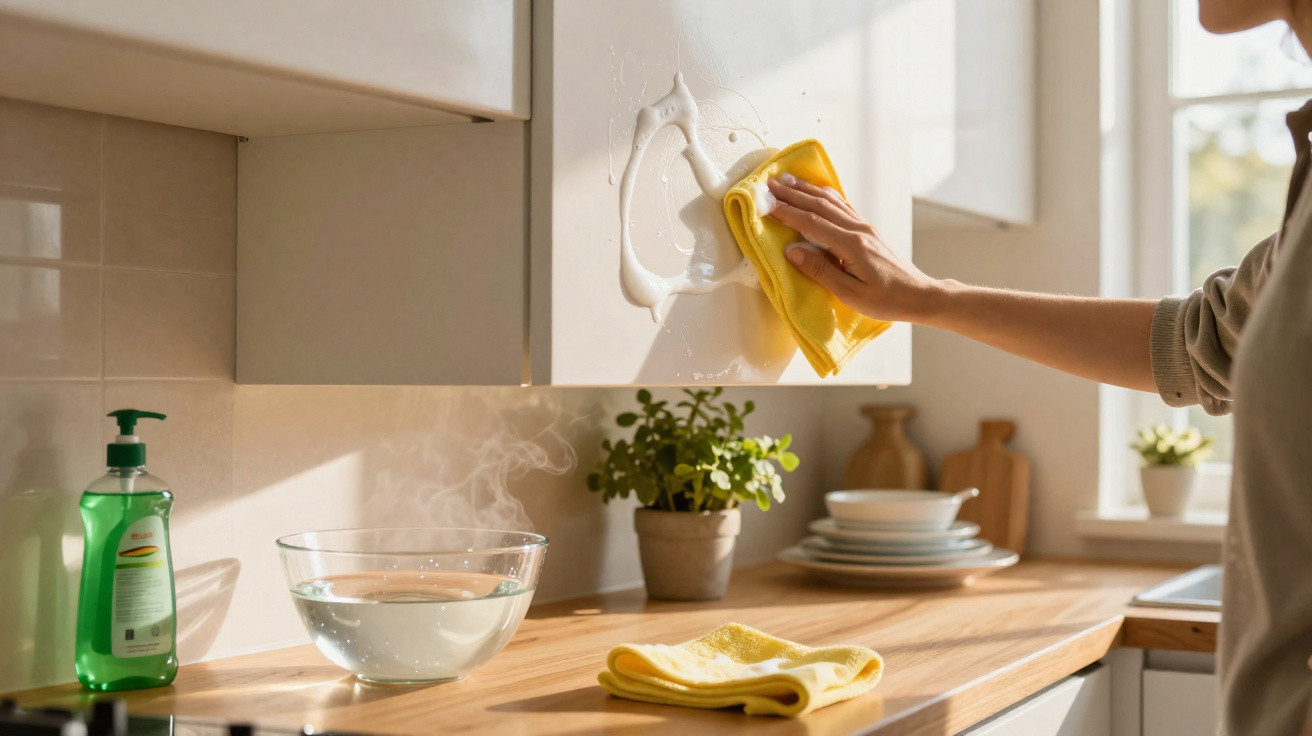
This is the uncomplicated technique that people quietly recommend to one another. Fill a bowl or washing-up basin with comfortably warm water-not boiling water-and add a small squeeze of washing-up liquid. Gently whisk it with your hand or a sponge until a light layer of foam appears. You are not trying to create a bubble bath, only a soft cloud of soapy foam.
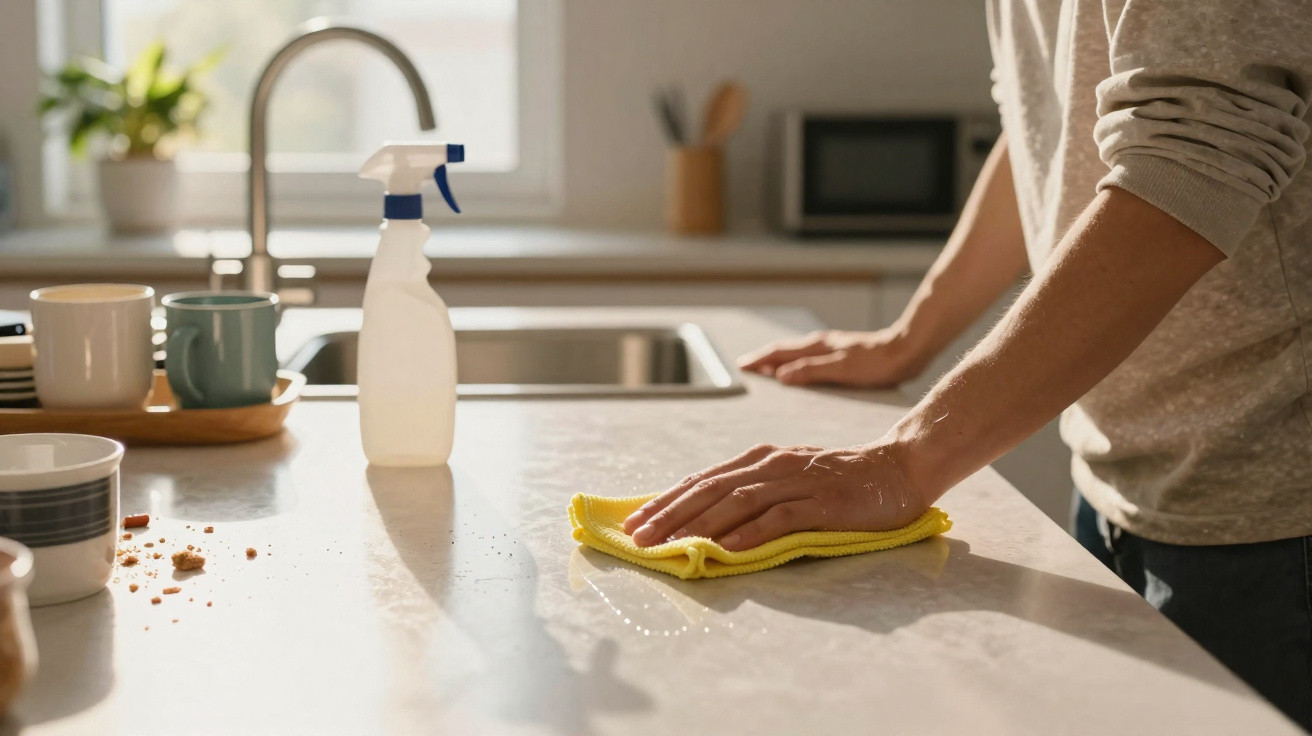
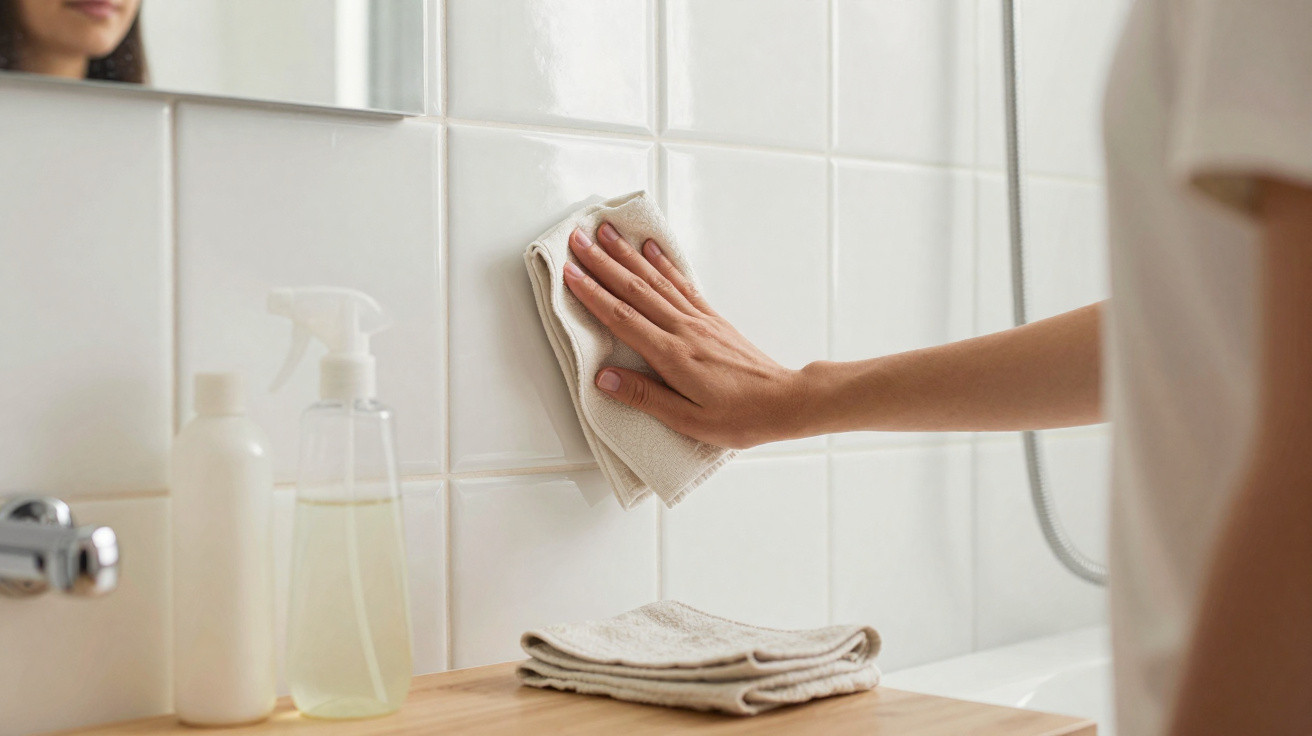
Dip a soft microfibre cloth or non-scratch sponge into the foam rather than the deeper water, then wring it out thoroughly. Glide it across the cupboard surface, beginning around the handles and on doors closest to the hob. Those are generally the areas where grease gathers most heavily.
Many people either hurry this stage or tackle the cupboards as though they were cleaning a grill. There is no need to scrub aggressively. Allow the warm soapy foam to rest on the grease for a few seconds while you move to the next door, then return and wipe with slow, gentle movements.
If your cupboards are wood or MDF, large amounts of water are their enemy. Excess moisture can cause them to swell or warp over time. This is why the foam matters: you are cleaning with soapy bubbles rather than saturating the material. Let’s be honest: nobody really does this every single day. A careful, unhurried clean once a month is already a small revolution in most homes.
“People think they need heavy chemicals to clean a greasy kitchen,” says Clara, a professional cleaner I met during a shoot in a rental flat. “Most of the time, they just need warm water, dish soap, and a bit of patience. Strong products damage surfaces and force you to repaint or replace sooner.”
- Use warm rather than hot water
Hot water may harm certain finishes and can dry too quickly, causing streaks. - Clean from top to bottom
This prevents dirty water from running onto doors you have already cleaned. - Rinse with a second cloth
Use another slightly damp cloth with plain water to remove any soap residue. - Dry immediately
A soft towel or microfibre cloth prevents water marks and helps protect wood or veneer. - A quick weekly wipe is sufficient
Once the heavy grease has gone, light upkeep keeps the problem manageable.
Living with kitchen cabinets that no longer feel sticky
There is a modest but genuinely satisfying feeling when you enter a kitchen and the cupboard doors no longer cling to your fingers. The surfaces may look much the same as they did yesterday, but the room feels different-almost lighter. You lean on the worktop, take out a mug, and your hand moves smoothly over a clean handle without that faint waxy sensation.
A simple bowl of warm water and dish soap foam can quietly change how you feel about a room where you spend so much of your life.
You begin to spot small changes: light reflects differently from a matt panel that is actually clean. The edges near the hob, once darkened, suddenly match the rest of the cupboard. That faint stale kitchen odour disappears, leaving something close to neutral air. Not perfume-simply the absence of old oil.
For some, this small task becomes a useful routine. On Sunday evening, before the week begins, they spend ten minutes on the cupboard doors and handles. Or perhaps once a month, with music playing and foam in a bowl, they quickly refresh every surface that quietly catches the splashes of daily life.
This method is not about achieving a showroom-perfect kitchen. It is about making your home feel comfortable and considerate towards you, without spending a fortune on specialist sprays. A bowl, warm water, a squeeze of washing-up liquid and a little of your time are all that is needed.
The interesting thing is how a method that seems “too simple to be true” gets passed around. A neighbour mentions it on the stairwell, someone shares a before-and-after photograph, or a friend sends a message saying, “I tried your foam thing, my cabinets feel new.” Small, practical wins against the gradual build-up of everyday life have a habit of spreading. You may be surprised by who starts copying your bowl of warm, soapy water.
| Key point | Detail | Value for the reader |
|---|---|---|
| Warm water + dish soap foam | Produces surfactants that break down grease without harsh chemicals | A straightforward, inexpensive approach using products already at home |
| Foam instead of soaking | Applies bubbles with a thoroughly wrung-out cloth to prevent excess moisture | Helps protect wood, MDF and laminate from swelling or peeling |
| Regular light maintenance | Quick wipes after cooking or weekly around the hob | Stops heavy build-up and makes deeper cleaning easier |
FAQ:
- Question 1 Can I use this warm water and dish soap foam trick on all types of cabinets?
- Answer 1 Yes, for most types: laminate, painted wood, melamine and even varnished wood. Avoid soaking the surface, always wring out your cloth thoroughly, and test a small concealed area first if your cupboards are very old or have a delicate finish.
- Question 2 What kind of dish soap works best for greasy cabinets?
- Answer 2 Any ordinary liquid washing-up product formulated to cut through grease will work. You do not need a specialist “cabinet cleaner”. Clear or classic formulas tend to rinse more easily and leave fewer streaks on glossy surfaces.
- Question 3 How often should I clean greasy kitchen cabinets this way?
- Answer 3 In a busy kitchen, a more thorough foam clean once a month is a good routine. Around the hob and handles, a quick wipe every week or two keeps build-up under control and makes the monthly clean considerably faster.
- Question 4 What if the grease is really old and stuck?
- Answer 4 Leave the warm soapy foam on the area for slightly longer, then wipe gently. You may repeat this a few times. For particularly stubborn patches, use a soft brush or an old toothbrush with the same foam, without scrubbing too hard.
- Question 5 Do I need to rinse after cleaning with dish soap foam?
- Answer 5 Yes, a light rinse is preferable. Take a second cloth, slightly dampened with plain water, to remove soap residue, then dry with a towel. This helps prevent streaks and protects the finish over time.

Comments
No comments yet. Be the first to comment!
Leave a Comment