
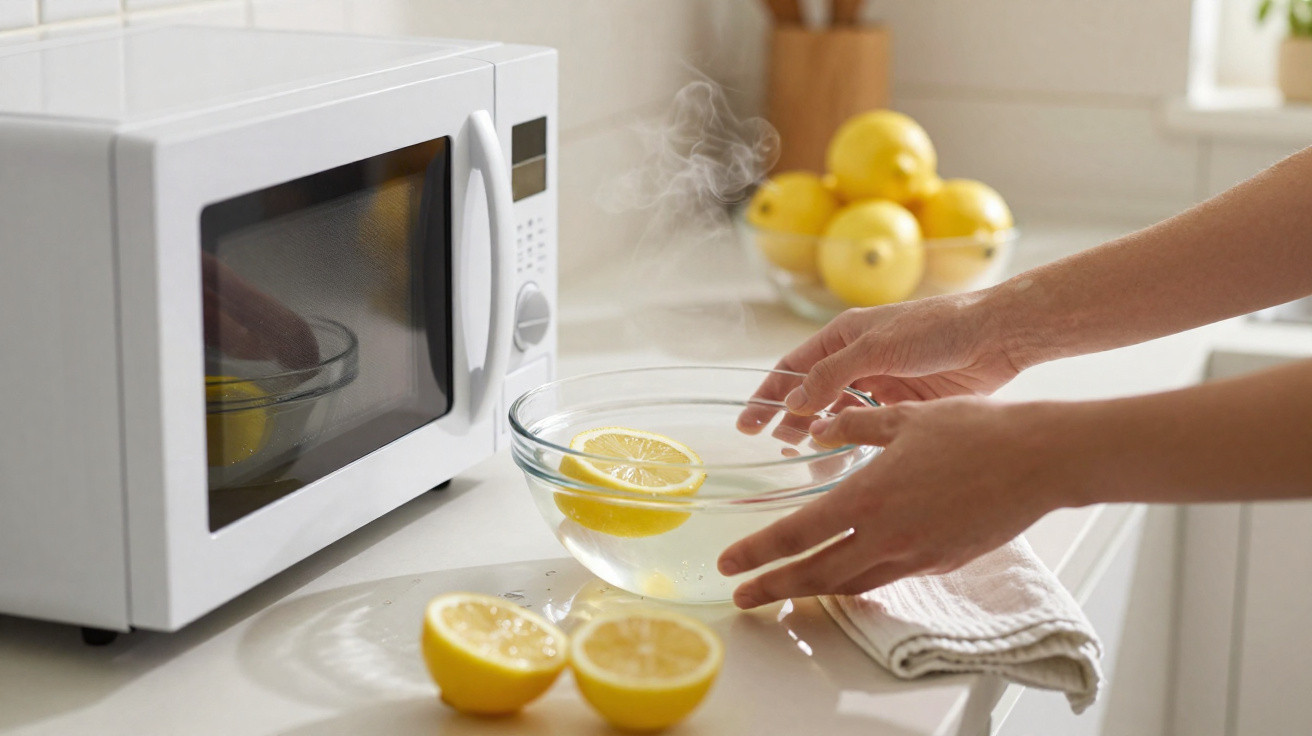
Putting half a lemon in the microwave with water helps loosen grease splatters and bits of food stuck to the inside walls. The main reason is the steam produced during heating, which moistens dried-on grime and makes it easier to wipe away with a cloth. The lemon also adds citric acid and aromatic compounds that can help reduce odours left by food.
Why do lemon and water make microwave cleaning easier?
As the water heats up, steam circulates around the sealed interior and then condenses on the ceiling, sides and door. That moisture rehydrates residues that have hardened after repeated heating cycles. The citric acid in lemon can help with certain marks, but you do not need to scrub the appliance directly with the fruit.
- Steam softens dried food residue.
- Grease becomes easier to remove with a cloth.
- Lemon leaves a citrus scent inside.
- Regular cleaning stops multiple layers of dirt building up.
How to clean properly with half a lemon
Pour water into a microwave-safe bowl, lightly squeeze half a lemon, and leave both lemon halves in the bowl as well. Heat for a few minutes, until there is plenty of steam inside, then keep the door shut for a few more minutes after the microwave switches off. The exact time depends on the appliance’s power and how much water you use.
Next, remove the bowl carefully, as the water will be extremely hot. Wipe the interior walls, ceiling, turntable and the inside of the door with a soft cloth or a non-abrasive sponge. If stubborn grease remains, run the process again rather than scraping the surface with metal objects or abrasive materials.
Does lemon really help remove food smells?
Yes-especially when the odour comes from residue left on the inside surfaces. Lemon releases aromatic compounds as it heats, while the steam helps loosen grime that continues to give off smells. Physically removing these residues is usually more effective than simply trying to cover up the odour.
- Wipe splatters as soon as you can.
- Wash the turntable separately if there is a lot of grease.
- Dry the interior after cleaning.
- Leave the door open for a few minutes to air out.
- Do not use fragrances or products not intended for surfaces that come into contact with food.
Why do this cleaning once a week?
A weekly schedule is not a fixed rule, but it works well in homes where the microwave is used every day. Small splashes may seem harmless at first, but they go through more heating cycles, dry out, and bond more firmly to the surface. Cleaning before that happens cuts down the time needed to remove grease.
If you rarely use the appliance, you can clean less often, while high-use kitchens may need it before a week is up. The most useful guide is simply to check the walls, ceiling and door: when you notice splatters or a lingering smell, there is already material that should be removed.
What precautions prevent problems when heating lemon and water?
Steam cleaning should be done using a microwave-safe container and enough water so it does not boil away completely. Do not run the microwave unattended, and do not extend the heating longer than necessary. When finished, open the door carefully and keep your face back from the hot steam before taking the bowl out.
This method also does not replace manual cleaning. Steam’s role is to soften grease; the cloth is what actually lifts the residue off the surfaces. Used this way, half a lemon with water turns a task that would normally require scrubbing into a quick bit of upkeep-particularly when done before splashes of sauce, oil and food harden into a stubborn layer inside the appliance.

Comments
No comments yet. Be the first to comment!
Leave a Comment