
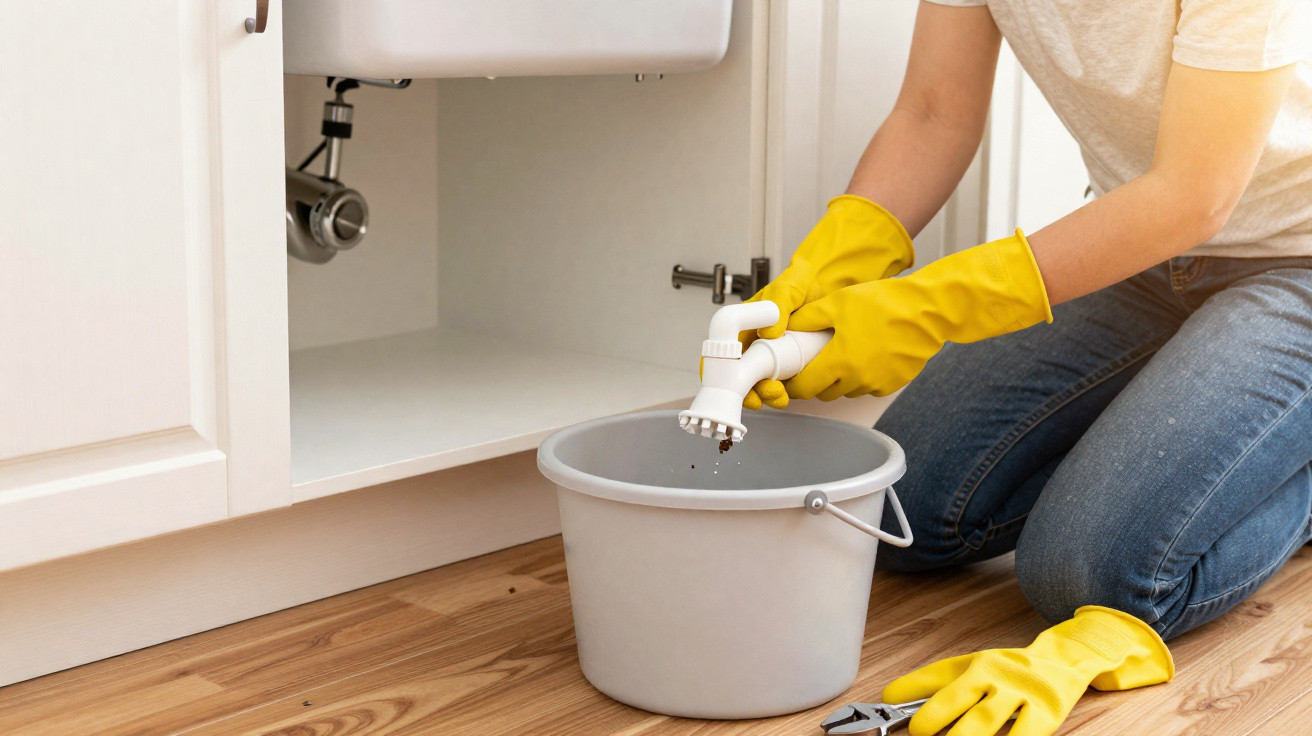
When water starts draining slowly down the plughole, many people immediately assume there is a serious blockage deeper in the pipework. However, in some situations, grease, food scraps and other debris build up right in the bend of the sink trap (siphon)-the fitting installed beneath the sink. This section holds water to help stop smells coming back from the drains, but it can also collect dirt.
Why does the sink trap collect debris?
A sink trap has a curved section that stays partially filled with water. This standing water acts as a seal, preventing gases and odours from the waste pipe and sewer system from entering the room.
That same bend, though, also creates a spot where particles carried along by the water can settle. Grease, bits of food and other materials may stick to the inside walls and, over time, gradually narrow the space the water has to flow through.
When is it worth taking the trap apart?
If the water is still draining but has become noticeably slower, a partial blockage may be sitting in the trap. Where you have an accessible, dismantlable model, removing it and cleaning it by hand can solve the issue when the build-up is concentrated in this area.
Before you start, check which type of trap is fitted. Some designs have a removable cup, while others require undoing connector nuts. Where available, always follow the manufacturer’s instructions for the specific model.
How do you wash the trap without making a mess?
Before you begin, turn off the tap and clear out anything stored in the cupboard under the sink. Place a bucket or wide container directly beneath the bend to catch the water that remains inside the trap.
Carefully loosen the connections on the dismantlable trap and let the contents drain into the container. Remove any debris, then wash the part with water and washing-up liquid, using a suitable brush to reach inside without damaging the material.
How do you refit it without causing leaks?
Before putting the trap back, inspect the rubber seals or O-rings. They need to be clean, correctly seated and in good condition so the joint seals properly again.
Reassemble the parts in the same orientation as before and tighten the fittings without using excessive force. Then turn the tap on slowly and watch all the joints. If you see any water, stop using the sink and re-check the fit before using it again.
What if the sink is still draining slowly?
If cleaning the bend does not fix the problem, the obstruction may be further along the pipework. In that case, taking other sections apart without the right technical knowledge can increase the chance of leaks or damage.
It is also worth paying attention if the issue keeps coming back, there is backflow, persistent bad smells, or leaking at the connections. In these situations, a professional assessment can confirm whether there is a deeper blockage.
In this way, cleaning the sink trap can be a straightforward solution when the dirt is concentrated in the bend. The key point is to work only with models that can be safely dismantled, and to refit all connections and seals correctly every time.



Comments
No comments yet. Be the first to comment!
Leave a Comment