
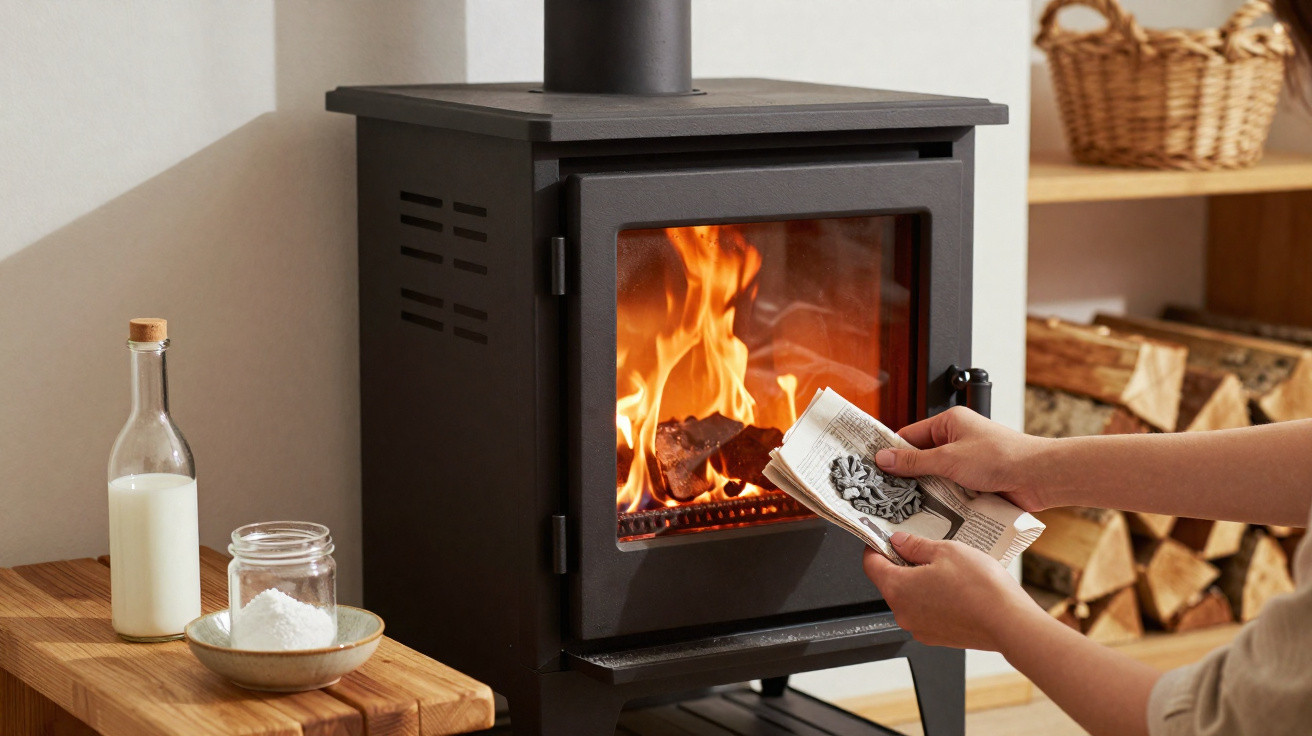
Winter fires should feel soothing, not like another cleaning chore.
A single easy change can keep your stove glass clear and lift your mood at the same time.
As the weather turns colder and the living room starts to glow again, plenty of householders run into the same annoyance: stove glass that quickly darkens and ruins the view. Rather than relaxing with the flames, you find yourself digging out strong cleaners and scrubbing until your arms are sore.
Why your stove glass turns black faster than you think
Whenever logs burn, they give off fine particles and sticky tars that travel with the smoke. When that smoky mix hits the cooler surface of stove or insert glass, it clings on and gradually forms a dark coating. That’s normal - but a few common habits speed it up dramatically.
Low, sluggish fires are a big culprit because combustion is incomplete. If the fire isn’t hot enough, it creates more soot and creosote, which readily sticks to the glass. The same happens when the air vents are shut too far or the draw is weak: the fire is starved of oxygen, smoke becomes heavier, and the view quickly vanishes.
Your fuel choice is just as important. Damp logs are notorious for dirtying glass. Because wet wood must use energy to drive off moisture before it can burn well, it smoulders and struggles to catch - producing extra smoke, more deposits, and a brown, sticky film on the glass after only a few evenings.
Cleaning habits matter too, even if it’s less obvious. Put the job off and the residue hardens and binds to the surface. Each missed week makes the next clean-up more time-consuming, which is often when people reach for harsh chemicals - despite the fact that a much gentler solution is already in the firebox.
"Dirty stove glass rarely comes from “bad luck”. It usually reveals a mix of damp wood, poor air supply, and slow-burning fires."
The forgotten ash trick that brings glass back to life
Wood ash is usually swept out and binned, yet it can be an exceptionally effective cleaner. Its fine mineral grains act like a very mild abrasive, helping lift soot from the glass without scratching it - and without strong smells or synthetic additives.
How to clean your stove glass with ash
- Make sure the fire is fully out and the glass is completely cold.
- Take a small pinch of clean, pale ash from the firebox.
- Dampen a sheet of newspaper or a soft cloth with a little water.
- Press the damp paper or cloth into the ash so it picks up a thin grey coating.
- Polish the glass using gentle circular movements until the dark film lifts.
- Buff with a clean, dry cloth to leave it clear and free of streaks.
This simple routine avoids sprays, foams and disposable wipes. It also means fewer plastic bottles under the sink and fewer irritating fumes in a closed-up winter home. Many people turn it into a weekly habit that takes only a couple of minutes before lighting the stove again.
With a handful of ash and a scrap of newspaper, most stove owners can restore full visibility in less time than it takes to boil a kettle.
Natural helpers: vinegar, baking soda and black soap
If the glass has been left for weeks, some marks can survive the first ash clean. When that happens, a few everyday household products can help shift the remainder without resorting to strong solvents.
White vinegar for fresh, greasy marks
White vinegar is good at cutting through light tar and greasy residue. Soak a sponge in vinegar, wipe the inside face of the glass, then rinse with clean water and dry with a lint-free cloth. It’s particularly effective if you clean little and often so the deposits never get thick.
Baking soda for stubborn deposits
Baking soda makes a mild scourer when mixed with a little water into a paste. Apply it to the darkest areas, leave it for several minutes, then work it over with a damp sponge and rinse well. A popular approach is to start with ash and use baking soda only on the most persistent patches.
Black soap for moderate dirt
Liquid black soap, diluted in warm water, works well when the glass is dirty but not fully opaque. Apply with a soft cloth, gently work it into the surface, rinse, then dry. Its slightly oily feel helps release grime, and it won’t leave heavy streaks if you wipe it off properly.
"Always treat stove glass when it is cold. Sudden contact with liquid on hot glass may cause thermal shock and cracks that cost far more than any cleaner."
Burning smarter so you clean less often
Cleaning methods help, but prevention makes the biggest difference over the heating season. A few small changes to how you burn wood can significantly reduce how quickly the glass turns brown.
Choose seasoned wood with low moisture
Well-seasoned logs with a moisture content below 20% burn hotter, more brightly and more cleanly. That means less smoke and far less soot settling on the glass. Freshly cut timber can hold 40% moisture or more, so it generally needs at least one to two years of correct storage to reach suitable levels.
| Wood condition | Approx. moisture | Effect on glass |
|---|---|---|
| Freshly cut logs | 35–50% | Heavy smoke, rapid blackening |
| Partially seasoned wood | 20–30% | More residue, frequent cleaning |
| Well-seasoned wood | Below 20% | Cleaner burn, slower buildup |
There are easy ways to judge quality fuel: splits at the ends of logs, a more hollow sound when two pieces are knocked together, lower weight, and bark that comes away readily. A simple moisture meter - now inexpensive and widely available in DIY stores - can also give a quick reading before you bring in the next load.
Keep the air moving through the fire
Modern stoves depend on the right air supply. If you keep the vents too closed, the flames die back and the glass stains more quickly. Opening the air control fully when lighting helps the fire establish itself. Once you have a glowing bed of embers and bright flames, reduce the air gradually so you don’t smother the burn.
Chimney draft is part of the picture too. A flue that’s blocked, too small, or serving a home that’s sealed very tightly can slow smoke removal. As the smoke cools, it settles on the glass instead. Yearly chimney sweeping and a quick check of the door seals often improve performance more than most people expect.
Good habits that protect your stove and your home
What you burn affects both stove glass and indoor air quality. Painted timber, treated wood, chipboard and household rubbish can release chemicals that stick to surfaces and contaminate the air indoors. They can also leave sticky deposits in the flue, raising the long-term risk of a chimney fire.
Simple routine checks cut dirt and reduce risk. Inspect the door gasket once or twice each season; a seal that’s flattened or fraying lets smoke leak into the room and upsets combustion. Clear out excess ash, but don’t remove every last bit: a thin ash bed can help the next lighting while still leaving enough room for air to circulate.
"Clean glass is not just cosmetic; it often signals efficient combustion, lower emissions, and a safer installation."
When to reach for commercial glass cleaners
Older appliances - or stoves that have gone years without proper care - can develop hard, baked-on staining that home methods barely touch. In those cases, specialist stove glass cleaners may be the best way to bring back clarity.
Many manufacturers now offer less aggressive products, sometimes using plant-derived solvents or mild alkalis. Apply only to a cold surface, shield nearby seals if the instructions advise it, and ventilate the room while you work. Wearing gloves can prevent irritation, especially with foaming products designed to cling to vertical glass.
Treat these cleaners as an occasional reset rather than a weekly routine. Once the glass is clear again, ash, vinegar or baking soda will usually maintain it with far fewer chemicals and at a lower cost.
Going further: energy savings, safety and comfort
A clear view of the fire also makes it easier to judge how the stove is running. Strong yellow-orange flames and little visible smoke point to efficient combustion and less wasted fuel. Dark, slow flames and repeated sooting can indicate poor-quality wood or a technical fault, such as a blocked baffle plate or worn seals.
Regular checks can also tie in with safety expectations and insurance requirements in many countries. Evidence of chimney sweeping, following the manufacturer’s guidance and using appropriate fuel can matter a great deal if there is ever an incident. Speaking to a certified installer every few years often pays off through improved efficiency and fewer unexpected problems.
For households that depend on wood as a main heat source, these steps build on one another: drier logs, better air control, gentle ash cleaning, and occasional deeper maintenance. The result is straightforward - a living room where the glass shows lively flames evening after evening, rather than a stubborn black mirror reminding you there’s another job to do at the weekend.






Comments
No comments yet. Be the first to comment!
Leave a Comment