
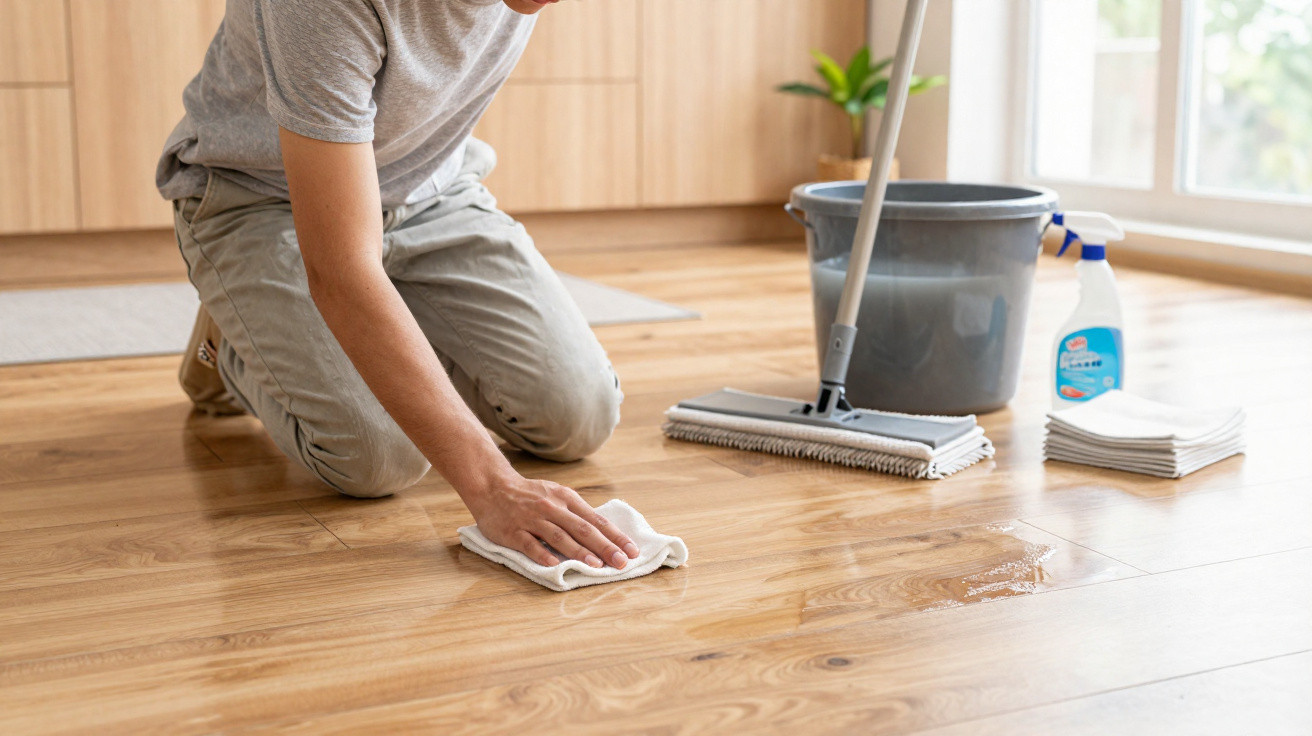
You run the mop across the kitchen floor once, then again, then a third time. The bucket water turns a gloomy grey that practically announces, “Look at all this dirt I heroically removed.”
You twist it out, rinse, pull the mop back and forth, then pause to admire your work. For about ten minutes, the floor almost looks like it belongs in a cleaning-product advert.
Then someone walks through, the angle of the light changes, and there it is: streaks, hazy smudges, and crumbs that somehow made it through the so-called wipe-out. By the next morning, there’s a faint film under your feet, plus a sticky patch by the fridge that definitely wasn’t there the day before.
You start thinking your floors are just… cursed.
Or that something is quietly undermining every single mop you do.
Why your “clean” floors still look dirty
Here’s the irritating truth: floors usually don’t look dirty because you skipped cleaning them. They look dirty because the grime never truly went away. It got shifted about, watered down, and redistributed into a thin layer you can’t easily see.
That slightly oily feel when you go barefoot from the hall into the kitchen? That’s a blend of dust, old cleaning product, and whatever the dog dragged in last week, all pressed together. Under artificial lighting it hides well; in daylight it reveals itself as streaks, rings, and oddly dull patches.
Your eyes say “I cleaned.”
Your floor says “You just rearranged the grime.”
Imagine this: it’s Sunday morning, you put on some music, fill a bright blue bucket with warm water and a generous glug of all-purpose cleaner. You mop the living room, then the hallway, then the kitchen-sticking with the same water because, honestly, the bucket isn’t that disgusting yet.
By the end, the water looks like a swamp. You empty it, leave the mop to dry, and enjoy that fake-lemon smell. A few hours later, a bar of sunlight moves across the tiles and highlights every footprint and streak like a crime-scene photo.
The issue wasn’t your effort. It was that each time you dipped into that brownish water, you turned the bucket into dirt soup-and then politely spread it back onto the floor.
There’s another culprit that’s easy to miss: residue. A lot of multi-surface cleaners leave behind a fine film. Combine that with using too much product, rinsing too little, and a mop head that hasn’t been properly washed in weeks, and you end up with a tacky layer that grabs dust like Velcro.
Whenever you walk through the room, crumbs, hair, and fluff settle into that film. That’s why a floor can look flat and tired only hours after mopping, even when nobody has spilled anything.
Let’s be honest: almost nobody replaces mop water as often as professionals say you should.
So the floor never really gets a fresh start-it just keeps collecting the leftovers of every half-clean it’s had.
The method that actually gets floors clean (and keeps them that way)
The biggest mindset change is simple: prioritise “remove” before “wash”. Before you bring out any water, clear away as much loose debris as possible. Vacuum or sweep thoroughly, right up to the skirting boards, under chairs, and along rug edges.
Only after that should you mop. If you can, use two buckets: one for your cleaning solution and one with plain rinse water. Load the mop from the detergent bucket, wring it well, clean a small section, then rinse in the clear water before going back for more solution.
The aim is dull but powerful: don’t return a dirty mop to clean water. Underfoot, the floor will feel different-lighter, less sticky, more like a surface and less like a coating.
Another common mistake is using too much product. When the floor looks especially grimy, it’s tempting to tip in extra cleaner, as if more foam will frighten the dirt away. What you usually get instead is a cloudy, sticky finish that seems to “re-dirty” at speed.
Most floors respond better to a small amount of neutral pH cleaner with plenty of water than to a heavy mix of concentrated products. On laminate or vinyl in particular, excess soap can leave dull, oddly textured areas that never quite come up properly.
And if your mop head has a musty smell, take it seriously-that’s bacteria. You’re not only mopping with it; you’re essentially marinating the floor. A machine-washable mop head that you actually wash after every big session makes a huge difference.
Sometimes the difference between a floor that stays clean and a floor that looks dirty again by dinner is not effort, but sequence. As one professional cleaner told me, “You’re not cleaning the floor, you’re managing what the dirt does next.”
- Dry first, then wet
Vacuum or sweep every time before you mop. It stops grit and hair turning into streaks and muddy smears. - Less product, more rinsing
Stick to the minimum recommended dose, swap the water as soon as it turns cloudy, and rinse the mop frequently. - Right mop for your floor
Flat microfibre mops are excellent on smooth surfaces, string mops tend to suit textured tiles, and steam can be risky on some laminates. - Target high-traffic zones
Revisit entryways, kitchens, and pet areas more often rather than redoing the whole house every time. - Tiny daily habits beat heroic cleans
A two-minute crumb sweep after dinner can do more than a monthly deep-mop marathon.
Living with floors that actually feel clean
Once you realise floors get dirty in layers, the way you clean changes. You stop expecting one big mopping session to undo weeks of slow build-up, and instead lean on small, realistic routines: a quick vacuum along the main walkway, a fast wipe where the cat drops crumbs, a doormat by the door that people actually use.
Clean floors stop being a project and become a background rhythm of the house.
You may not think about it daily-but you’ll notice immediately when that rhythm fades.
There’s also a quiet satisfaction in walking barefoot on a floor that doesn’t snag, stick, or squeak under your feet. It doesn’t need to gleam like a magazine spread; it just needs to not feel like it’s secretly coated in old history.
You’ll still have days when the bucket turns dirty too quickly and the streaks won’t budge. You’ll still ignore the “perfect method” when you’re exhausted and the kids are shouting. That’s real life.
What shifts is how you view the floor: not just as something to make look good, but as part of how your home functions day to day. And that small change in perspective can be more effective than any miracle mop on the telly.
| Key point | Detail | Value for the reader |
|---|---|---|
| Remove dry dirt first | Vacuum or sweep before mopping to avoid turning dust and crumbs into muddy streaks | Cleaner finish and fewer marks right after mopping |
| Control water and product | Use two buckets, minimum detergent, and frequent water changes | Less residue, less stickiness, floors stay clean longer |
| Match tools to habits | Washable mop heads, door mats, quick daily touch-ups in high-traffic areas | Reduced buildup and less need for exhausting deep cleans |
FAQ:
- Why does my floor feel sticky after mopping?
It’s usually product residue. Too much cleaner, too little rinsing, or using dirty mop water leaves a thin film that holds onto dust and makes the surface tacky.- How often should I really mop my floors?
In a typical busy home, doing high-traffic areas once or twice a week is realistic, with low-traffic rooms every 2–3 weeks. Daily spot-cleaning is more effective than trying to deep-clean everything in one go.- Is it better to sweep or vacuum before mopping?
Vacuuming usually comes out on top. It lifts fine dust, hair, and crumbs more thoroughly, especially at edges and under furniture where brooms often just push debris around.- Can I use the same cleaner on all types of floors?
Not safely. Wood, laminate, tile, and vinyl all react differently. Use a neutral pH cleaner designed for your specific flooring to prevent damage and avoid hazy build-up.- How often should I wash or change my mop head?
Ideally after every major mopping session; at the very least, wash it weekly. A stained, smelly mop head doesn’t clean-it simply redistributes yesterday’s dirt into today’s water.

Comments
No comments yet. Be the first to comment!
Leave a Comment