
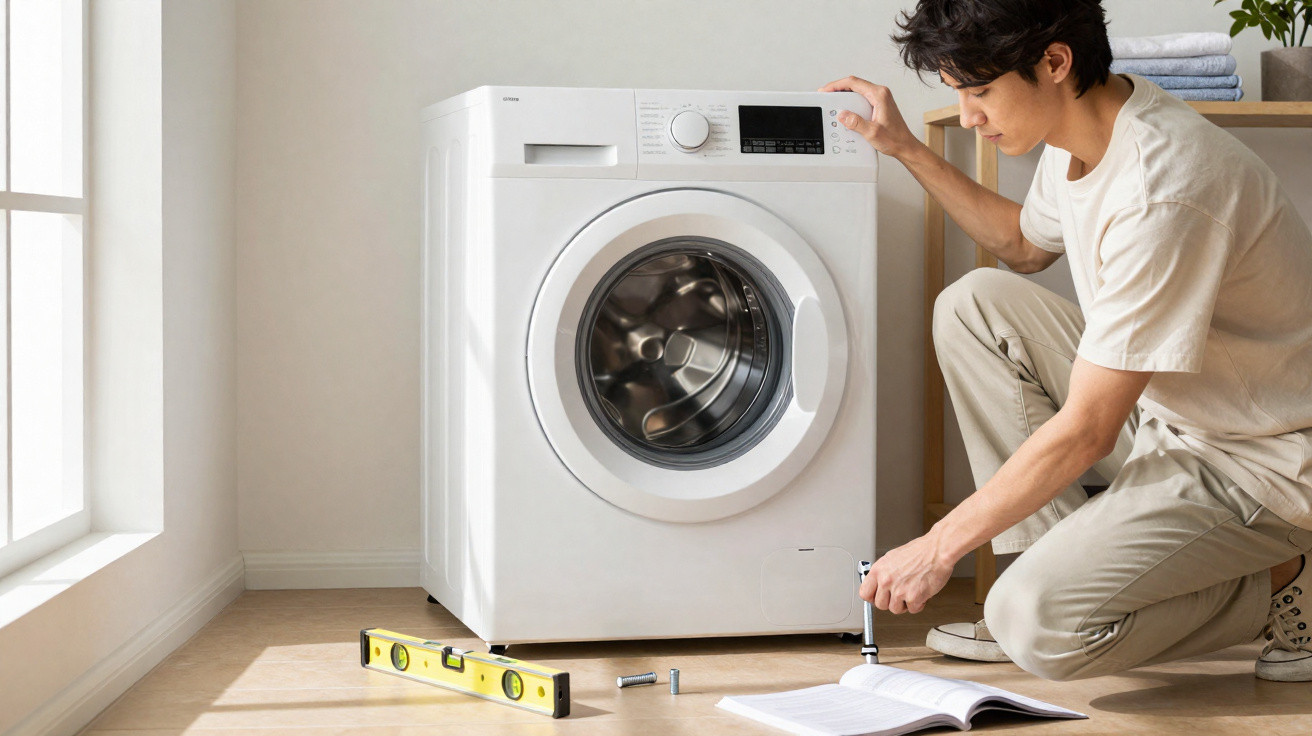
Seeing a washing machine walking during the spin cycle can be alarming, but movement does not automatically mean the appliance is faulty. In many situations, excessive vibration is linked to levelling, how the laundry is distributed, the floor surface, or transport locks that have been left in place.
Why does the machine start moving?
During spin, the drum rotates at very high speed. If the clothes gather on one side, the drum assembly can become unbalanced, which increases vibration.
When those forces exceed what the appliance can stabilise, the washer may rock and even creep across the floor. This is especially likely when a heavy item soaks up a lot of water and ends up concentrated in one area of the drum.
Does levelling affect stability?
Yes. The machine needs to sit firmly and evenly on its feet. If one foot is not adjusted properly, or the floor is not level, the appliance can be much more prone to wobbling during the spin cycle.
A quick check is to press gently on the corners and see whether the machine feels solid. If it rocks, you may need to adjust the feet as described in the manufacturer’s instructions.
Can the floor make a difference too?
The type and condition of the floor directly affect stability. A surface that is uneven, significantly sloped, or not suitable for the weight of the appliance can make it easier for the machine to move.
It is also worth checking that the feet are resting directly on the floor and that there are no objects or unstable materials underneath the washer. Your model’s manual should set out the recommended installation conditions.
What about the transport locks?
Some washing machines, particularly front-loading models, have transport bolts or transport devices designed to hold the drum assembly in place while the appliance is moved from the factory to your home.
These must be removed before use, following the manufacturer’s specific guidance. If they are left installed, they can cause excessive vibration and may even damage the machine.
What should you do if the machine keeps walking?
Start by stopping the cycle and checking whether the laundry is spread reasonably evenly. Then review the levelling, the feet, and the condition of the floor.
If the machine still moves even with a balanced load and correct installation, consult the manual or arrange a technical inspection. It is not recommended to keep using an appliance that moves excessively, as vibration can damage components and increase the risk of accidents.
So, before deciding the machine is broken, it is worth checking the basic installation and usage factors. Often, the issue is load balance or how the appliance is supported, rather than an internal fault.





Comments
No comments yet. Be the first to comment!
Leave a Comment