
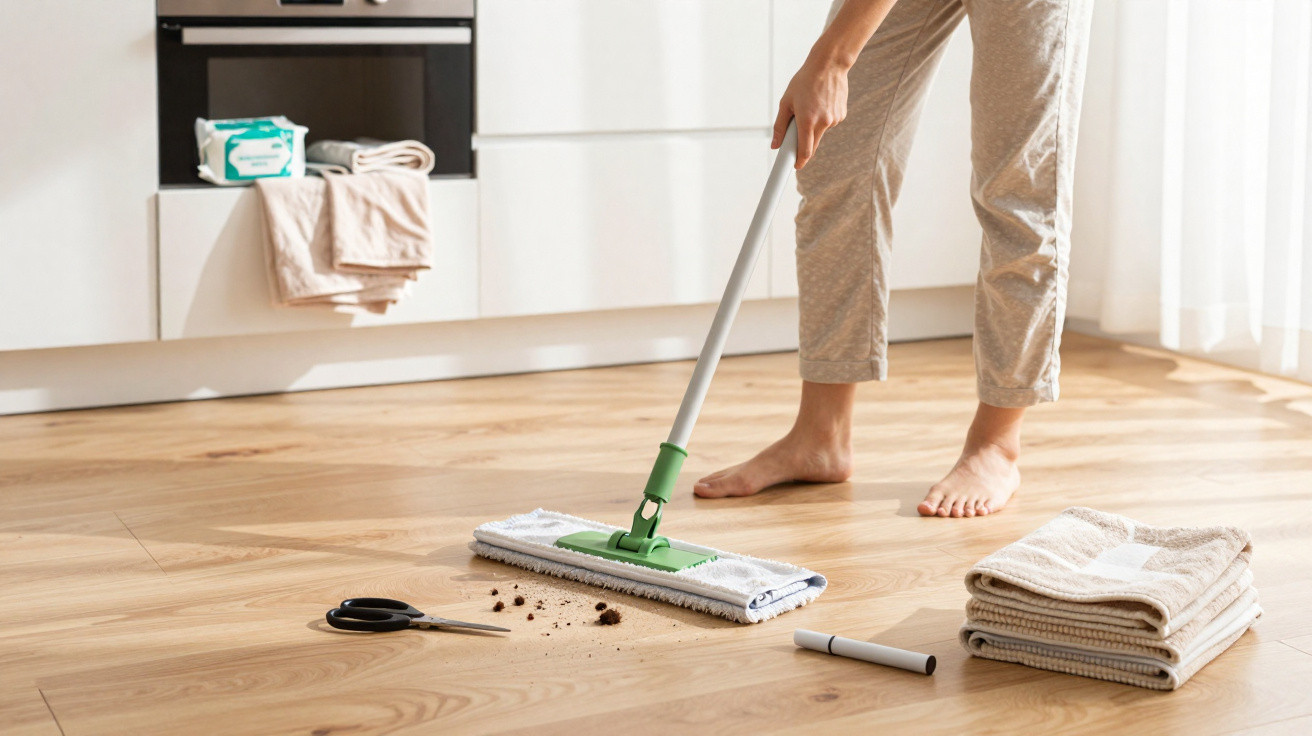
Many households keep stacks of worn-out towels that nobody really wants to use any more. Rather than binning them, you can turn one into a reusable floor-cover attachment in just a few minutes-replacing pricey single-use wipes, cutting waste, and noticeably reducing your cleaning spend.
Why an old bath towel cleans so well
The secret is the fabric. Cotton terry towelling may look ordinary, but it has qualities that are genuinely useful for cleaning floors.
- Looped texture: The tiny loops act like miniature hooks that catch dust, crumbs, and pet hair.
- High absorbency: Cotton soaks up liquid quickly-ideal for damp mopping and small spills.
- Hard-wearing and washable: The weave can handle plenty of washes at 60 degrees without wearing out straight away.
These are the same principles used in professional building-cleaning kit: mop covers, fringed mops, and flat mops also rely on absorbent, textured textiles that hold on to dirt rather than simply pushing it around.
“A retired bath towel can replace an entire year’s supply of single-use floor wipes-without making cleaning any less convenient.”
What single-use floor wipes really cost
If you reach for a flat mop with disposable wipes several times a week, the cost often only hits home at the till-not day to day.
A realistic example:
- 2 floor cleans per week
- 2 single-use wipes per clean
- comes to about 208 wipes per year
If each wipe costs €0.30 to €0.40, that adds up to around €60 to €80 per year-for throwaway cloths alone. On top of that, you create a bagful of rubbish for the general waste, because the wipes don’t belong with paper recycling or other recycling streams.
A large bath towel measuring roughly 70 × 140 centimetres provides plenty of material: you can either cut several sleeves for a flat mop or make around 15 to 20 smaller cleaning cloths. Instead of ending up in the bin, the towel stays in service for years as part of your regular cleaning routine.
Step-by-step: turning a towel into a floor mop cover
If sewing really isn’t your thing, you can relax: this conversion works entirely without a sewing machine. You only need:
- an old, clean cotton bath towel
- a flat floor mop (for example, Swiffer-style systems)
- a pen or tailor’s chalk
- scissors and a tape measure
1. Mark out the size
Spread the towel out flat and place the mop head in the centre. Trace a rectangle around it, leaving a little space, then add 5 to 7 centimetres of extra fabric on every side. You need this allowance so you can fold the material around the mop plate later.
2. Cut out the rectangle
Cut out the rectangle carefully along your markings. A tape measure helps you keep the length and width even-especially if you want to make several covers in one go.
3. Snip into the corners
At each of the four corners, make a cut about 2 centimetres deep towards the middle. This helps the thick terry towelling wrap around the edges more neatly. The cuts don’t need to be perfect to the millimetre, but they should be straight and tidy.
4. Secure the fabric on the mop
Place the mop plate back onto the cut piece. Fold the edges over the plate and tuck them into the built-in clips or rubber grips that are normally used for disposable wipes. Thanks to the small corner snips, you can pull the fabric tight more easily so it stays in place.
“In under five minutes, you end up with a sturdy, removable cover that feels like a shop-bought system-just without the disposable element.”
How to use the towel cover properly day to day
Your new floor helper is versatile, working for everything from quick dusting to more thorough wet cleaning.
Removing dust and hair
Use the cover completely dry when you want to pick up crumbs, hair, and fine dust. The terry loops hold particles securely, so they’re less likely to end up back in the air. This is particularly useful in:
- living rooms with carpet edges and lots of corners
- homes with a dog or cat
- hallways where outside dirt gets tracked in
Damp mopping on different floor types
For a deeper clean, lightly dampen the cover and wring it out well by hand or over a bucket:
- Tiles, vinyl, laminate: wring thoroughly so you don’t leave puddles behind.
- Delicate parquet flooring: work only slightly damp, never dripping wet.
- Kitchen and entrance area: do a dry pass for crumbs first, then a second pass lightly damp.
If you already clean with a bucket and wringer system, treat the cover like a small mop head: dip it in, press it out, glide it over the floor, and rinse and repeat as needed.
Care, hygiene, and a simple cleaning mix
To keep your homemade floor cover hygienic and long-lasting, it only needs a little attention.
- Put it straight into the laundry basket after cleaning.
- Wash at 60 degrees with towels or bed linen.
- Avoid fabric conditioner, which coats the fibres and reduces absorbency.
- If there’s pet hair, give it a quick shake outside or run over it with a lint roller before washing.
For a quick freshness boost, you can mix up a simple cleaning solution:
- 1/3 clear household vinegar
- 2/3 distilled water
- a few drops of lemon essential oil or another skin-safe room fragrance oil
Pour the mixture into a tightly sealed container and place several towel covers inside. Before use, squeeze one out briefly; after mopping, put it straight into the wash. That way, you always have a pre-moistened cover ready to grab-ideal for speedy in-between cleans.
How much money and waste you can genuinely save
If you’ve been buying refill packs of disposable floor wipes regularly, you’ll usually notice the difference in your shopping basket within a few weeks. A one-off batch of covers often lasts for several years, as long as you wash them regularly and don’t overdo it in the tumble dryer.
In realistic terms, the savings come to €60 to €80 per year, depending on how often you clean and which brands of disposable wipes you’d otherwise buy. At the same time, far less plastic-based nonwoven material ends up in general waste. Many local authorities now point out that single-use cleaning wipes significantly increase overall rubbish volume.
“One old bath towel cuts both spending and general waste-and makes expensive refill packs permanently unnecessary.”
More household uses for old towels
If you have fabric left after cutting, or you want to use up several towels, you can easily turn them into other practical helpers-without much effort.
- Washing-up cloths: small squares for the kitchen and bathroom, washable again and again.
- Mats for wet shoes: longer strips to lay in the hallway.
- Emergency cloths for the car: rolled up in the boot for spilled drinks or muddy dog paws.
- Pet bedding: stitched-together pieces as a liner for a basket or travel crate.
If you have a bit of sewing experience, you can also add elastic or Velcro to the floor cover for more secure handling. It’s not essential for the basic job, though-the simple cut-and-tuck method usually holds surprisingly well in everyday use.
With cleaning products getting more expensive, it’s worth taking a look in your linen cupboard. Retired towels can provide a free stock of cleaning textiles that not only leave floors looking polished, but also make throwing things away feel a little less wasteful.


Comments
No comments yet. Be the first to comment!
Leave a Comment