
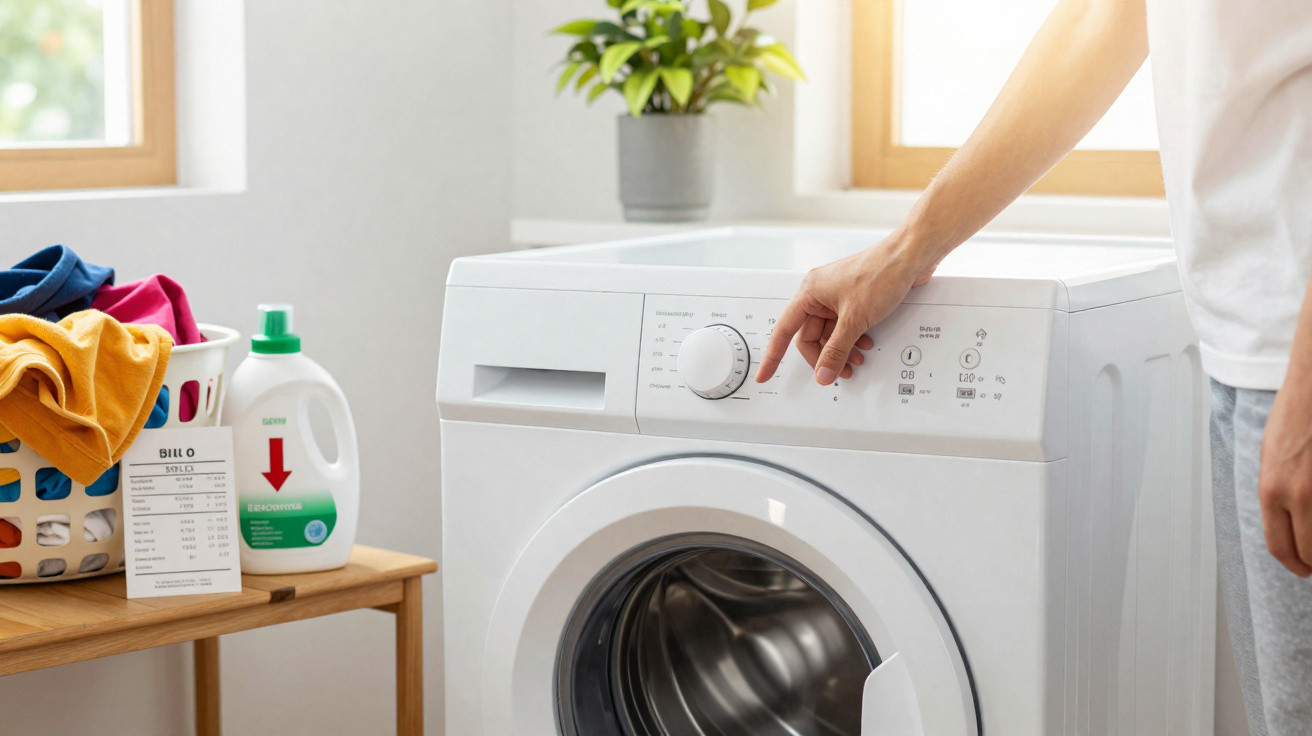
Have you ever got to the end of the month, opened your electricity bill, and felt that quiet shock?
The house looks exactly the same, nobody has bought a new appliance, yet the figure at the bottom just keeps climbing. In the kitchen, the obvious culprit is the fridge. In the bathroom, it’s the shower. And the washing machine-tucked away in the utility area-keeps turning as if it were invisible, programme after programme. Plenty of people assume there’s not much to do here: washing clothes is just pressing a couple of buttons and getting on with your day. Routine takes over, speed takes charge.
But one almost-ignored detail is quietly burning pounds, kilowatts and patience. When people finally clock it, they tend to feel both relieved and annoyed for not spotting it sooner-because it genuinely changes the story of your electricity bill.
The hidden drain in your utility room
If you watch a washing machine closely while it’s running, you’ll notice a familiar rhythm: it turns for a bit, pauses, fills, heats, turns again, rinses, then spins. From the outside, it all looks broadly the same. The electricity meter, however, doesn’t see it that way. It surges during certain phases of the cycle and eases off during others.
What rarely gets talked about is that the most power-hungry part-the bit that really drives up consumption-isn’t necessarily the loudest. It’s the choice you make right at the start on the control panel, often without a second thought. One tap, an automatic decision, and just like that, a large chunk of your washing-related electricity use is set in a few distracted seconds.
A study by the International Energy Agency found that, in some European households, simply changing one washing setting cut a washing machine’s energy use by up to 50%. It sounds dramatic until you apply it to everyday life: think how many times a month the machine runs in a home with children, pets, or anyone who trains daily. Cycles add up fast-whether it’s someone washing three times a week, a single person who lets laundry pile up until there are no clean socks left, or a couple watching the basket turn into a mountain. Every wash carries an invisible energy toll that accumulates penny by penny. A small “default” setting becomes a quiet leak over the year.
The logic is straightforward and a bit ruthless: the electricity used to wash clothes is far more tied to heating water than to spinning the drum. The motor that rotates the drum uses comparatively little. What hits your bill is taking cold water and turning it into hot water. An internal heater or heating element does the heavy lifting. When someone selects a hot-water programme “because it cleans better”, they’re effectively switching on the high-consumption mode-even for items that would come out perfectly well in cold water. Physics doesn’t forgive inattention: heating litres of water costs money. And that’s the detail most people don’t treat seriously.
The detail that changes everything: the temperature
The setting that often delivers that “up to half” reduction is usually hidden behind a small icon: the water temperature. Machines may offer neat-sounding options-“heavy”, “quick”, “daily”-but what truly matters is whether the water stays cold or is heated inside the machine.
In many modern models, washing at 30°C, 40°C or above means the machine spends a significant share of its energy simply warming the water. When you choose a cold wash-especially for everyday clothing-you remove that cost at the source. The drum still turns, the detergent still lathers, the washing still goes on the line just the same. It’s your electricity bill that finally gets a breather.
Many people still link hot water with an almost “hospital-level” idea of cleanliness. But detergent technology has moved on. Today’s powders, liquids and capsules are designed to work well in cold or mildly warm water. The old belief that only near-boiling water shifts stains is stuck in the 1990s, alongside those over-the-top adverts.
Let’s be honest: hardly anyone washes bath towels at 60°C every day in a small home without thinking about energy use. Very hot washes make more sense kept for specific cases-such as hospital-type laundry, heavier cleaning cloths, or items that are genuinely ingrained with grime. Most day-to-day washing can sit comfortably on a cold cycle.
“When I turned off the hot-water function as the default, I saw the electricity bill drop the next month and thought it was a coincidence,” said a reader we interviewed.
She only understood the real effect after comparing three consecutive bills while consistently using cold water for ordinary loads. The difference wasn’t pennies-it was tens of pounds. From then on, she adopted three simple rules:
- Use cold water for 90% of everyday washes
- Keep warm-water cycles only for very dirty or specific items
- Make use of sunshine and the washing line to support hygiene, especially for towels
Small tweaks, big impact on the bill
The practical step is simple: go to your machine, take a moment to look at the control panel, and find the temperature control. On some models it’s a separate button. On others it’s “built into” each programme.
From today onwards, whenever you’re running a normal load-T-shirts, jeans, underwear, standard bed linen-pick cold water. That’s it. You don’t need a new machine, you don’t need an add-on, and you don’t need to become a laundry expert. One different tap before pressing “start” changes the energy curve. It may feel minor, but over weeks and months it becomes real savings.
People living in smaller flats, with a compact utility area, often wash smaller loads more frequently. That can be the perfect set-up for waste, because it’s easier to rely on whatever programme is already selected and move on. Common slip-ups include: choosing “cotton 40°C” out of habit, letting the machine save a heated cycle as the default, or using a “hygiene” programme whenever something looks “a bit grey”. It’s not about blame-it’s about pace. Everyone’s rushing; everyone wants things sorted quickly. But those automatic choices cost money month after month. Once you realise most everyday clothes can handle-and often prefer-cold water, life stays busy, but it becomes less expensive.
An energy-efficiency engineer summed it up in one line during our interview:
“If you only change the wash temperature, you’ll have done more for your electricity bill than by buying several energy-saving gadgets you barely use.”
- Lower the water temperature: Prioritise 20°C or cold for everyday clothes.
- Use quick cycles: When items just need freshening up, not a “luxury bath”.
- Avoid unnecessary pre-washes: Treat specific stains by hand and let the machine finish the job.
When saving becomes a habit and a family topic
Once someone sees the impact of this one adjustment, a quiet shift tends to start at home. First comes the curiosity phase: they try it, compare bills, and check whether the laundry still smells fresh and comes out clean. In most cases, it does. The worry that “cold water doesn’t clean” fades with each basket.
Then comes the more interesting phase: it turns into conversation. A mum mentions it to a child who lives alone. A grandmother asks whether her machine has the same option. A friend in a shared flat starts noticing the buttons they’ve always ignored. A technical detail becomes corridor chat, family group-message chat, neighbourhood chat.
As the new setting becomes routine, other questions naturally follow. Is it worth waiting and combining more clothes before switching the machine on-without overloading it? Does “quick wash” solve 80% of days? Does line-drying in the sun partly replace the “freshness” people associate with hot washes? One small question leads to another, and suddenly the utility area stops being a forgotten service corner and becomes part of everyday household decisions. It’s a kind of energy education, in plain language, straight from the machine’s control panel.
There’s also an unexpected psychological effect. When someone realises they can reduce the electricity bill by changing a single setting, they regain a sense of control. It isn’t only about money; it’s about not feeling at the mercy of the next tariff change, the next price cap headline, the next story about energy costs rising. When everything else feels more expensive, finding a real, tangible saving can genuinely lift your mood. And that small change in laundry habits may even spark other tweaks at home: unplugging chargers, using more natural light, rethinking shower time. One detail leads to another-and the bill starts telling a lighter story.
| Key point | Detail | Value for the reader |
|---|---|---|
| Water temperature | Use cold-water cycles as the priority | Reduction of up to half the energy use for washing |
| Wash programmes | Avoid long heated cycles without real need | Fewer hours with the machine running and lower electricity costs |
| Conscious habit | Look at the panel and choose the setting before each wash | A sense of control and ongoing savings, with no extra effort |
FAQ:
Question 1: Does cold water really clean as well as hot water? For everyday clothes, yes. Modern detergents are formulated to work at low temperatures, removing sweat, odours and light dirt without the need for heating.
Question 2: When is it worth using hot water in the machine? In specific situations: clothes from someone who is unwell, very greasy cloths, professional-use items, or extreme, ingrained dirt. It doesn’t need to be the default for every cycle.
Question 3: My machine doesn’t show the temperature, only programmes. What should I do? Check the manual or look up your model online. Many “daily” or “quick” programmes already use cold or slightly warm water, while “cotton” or “heavy” often heat more.
Question 4: Does using cold water damage clothes less or reduce shrinkage? Yes, it tends to be gentler on fabrics, helps preserve colours, and reduces shrinkage because fibres aren’t repeatedly exposed to high temperatures.
Question 5: Does saving energy on laundry really matter if my bill is already low? Over the year, the total adds up. Anyone who washes frequently feels the impact more directly, especially during periods of seasonal increases.






Comments
No comments yet. Be the first to comment!
Leave a Comment