
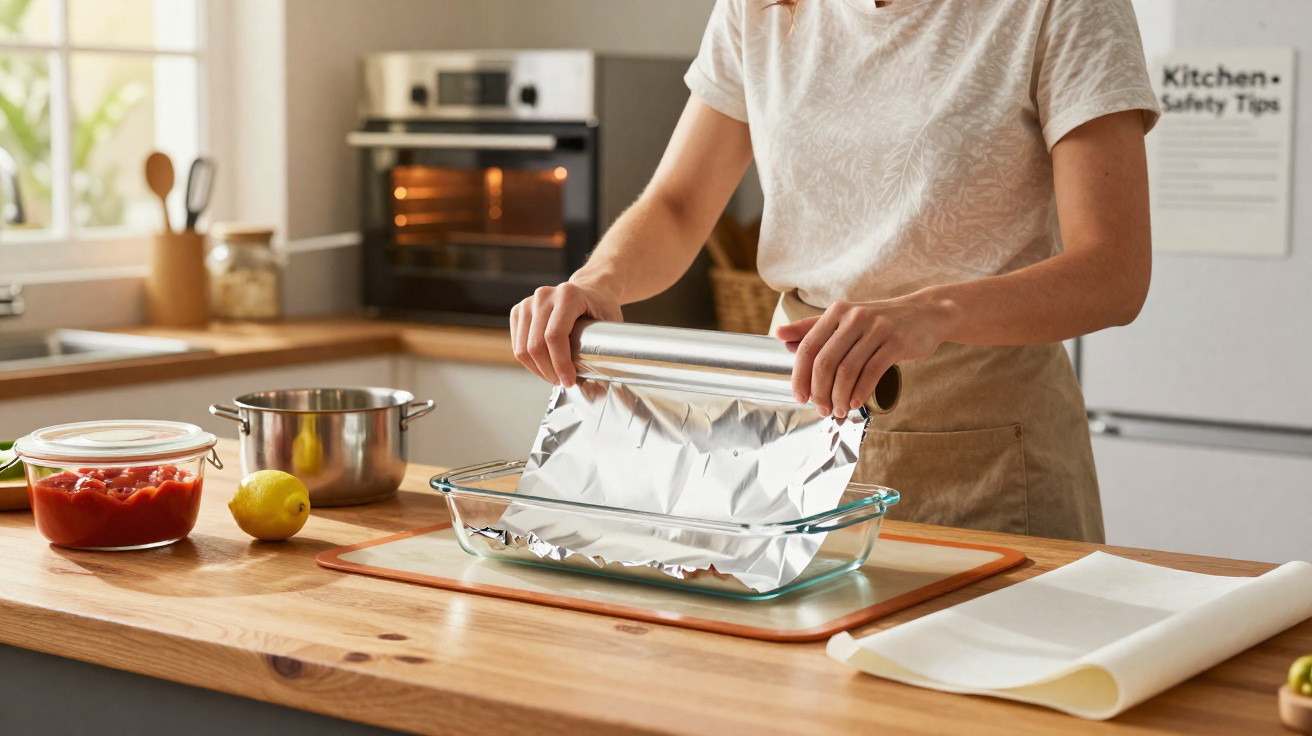
In day-to-day cooking, many people think of aluminium foil only as something to cover baking trays or wrap up leftovers. In reality, it can help with several other kitchen jobs-provided you stay within basic safety limits linked to the type of food, how long it is used for, and how it is exposed to heat.
What is aluminium foil used for in the kitchen?
Aluminium foil is mainly used to shield food from direct heat, hold on to moisture, and make cooking more straightforward. Used this way, it can help keep meats, vegetables and most roasted dishes juicy rather than dry.
It can also be used to cover leftovers in the fridge for short periods, as long as the food is wrapped properly and eaten soon afterwards.
Foil is handy for shaping small barriers in the oven too-for example, creating dividers on the same tray to keep differently seasoned foods apart, or forming a flexible “lid” over ovenproof dishes. Even so, it is best to avoid long contact with very acidic or very salty ingredients, as these can increase the transfer of aluminium particles into the food-especially during lengthy, very hot cooking.
Which household uses of aluminium foil are considered safe?
Many kitchen uses of aluminium foil are considered safe when done in moderation and alongside good hygiene and storage habits. Generally, it performs best for oven cooking or barbecuing, and for occasional reheating, rather than as a replacement for containers intended for longer-term storage.
Some everyday uses are particularly practical and can help both with cooking and with cleaning up afterwards, cutting waste and making the kitchen easier to manage:
- Cover roasts in the oven: helps prevent drying out, especially with poultry and meats that cook for a long time.
- Make individual parcels: useful for potatoes, corn and vegetables in the oven or on the barbecue, helping them stay moist.
- Shield pastry edges: strips of foil around the rim of pies and quiches stop the edges burning before the rest has browned.
- Part-line baking tins: makes trays easier to clean without blocking the oven’s heat circulation.
- Organise small portions: wrap already-cooked portions for quick reheating in a conventional oven.
What other tasks can aluminium foil help with in the kitchen?
Beyond direct contact with food, aluminium foil can support organisation and upkeep around the kitchen-particularly when it is reused safely. In these situations, it works more as a practical tool than as food packaging, helping equipment last longer and reducing reliance on disposable materials.
Common examples include scrubbing grill racks with a ball made from used (clean) foil, improvising temporary covers for containers that have lost their lids, and separating layers of steaks, burgers or fillets for freezing. In every case, reuse is only advisable when the foil is clean and free from burnt-on grease, and ideally for roles that do not involve fresh, direct eating from newly wrapped food.
What precautions matter when using aluminium foil in the kitchen?
Using aluminium foil responsibly involves food safety, protecting appliances, and environmental awareness, since the material can be recycled when clean. It is sensible to limit use with very acidic foods such as tomatoes, citrus fruits and vinegar-based sauces, particularly at high temperatures or over long cooking times.
It is also important not to cover the entire base of the oven, as that restricts heat flow and may lead to overheating. Always check the manufacturer’s instructions for electric ovens, gas ovens and microwaves before using foil. In practice, foil is best kept for occasional cooking tasks, combined with glass or ceramic dishes, and thrown away once it has built up burnt fat-so you benefit from its convenience without neglecting everyday safety basics.

Comments
No comments yet. Be the first to comment!
Leave a Comment