
Windows are open. Candles are burning. Bicarbonate of soda has been sprinkled everywhere. Yet the musty smell still hangs on-somehow duller and more stubborn than it was yesterday. There’s a reason people in older houses kept a jar by the sink for moments like this: a straightforward herbal rinse that moves through the fibres, then disappears as though nothing ever happened.
The first time I gave it a go, I was in my socks on a rug that still looked faintly damp after an afternoon downpour. The air felt thick and woolly, as if the room had gulped down a cellar. My neighbour Ruth-wearing a floral apron that looked purpose-built for getting things done-pressed a small bottle of amber liquid into my hand and said, “Mist, brush, forget it.” She was talking about thyme water. The odour started to lift before I’d even put the bottle down.
The herbal fix that old hands never forgot
Every house goes through its own smell seasons: cooking, pets, wet shoes-then the carpet quietly records it all like a diary with no lock. Mustiness doesn’t shout; it settles into the background and makes everything feel slightly weary. That’s why people used to keep thyme water ready: a homemade rinse that doesn’t merely cover an odour, but gently encourages it to leave.
In older Mediterranean homes, “sweetening” a room could be as simple as simmering thyme on the hob, then letting it cool and straining it for quick wipe-downs and freshening rugs. My aunt in Marseille swore by it for wool runners after market days. She would mist lightly, open the shutters, and let the sunshine take it from there. No hard scrubbing. No foam. Just a soft herbal note that let the room breathe again.
What makes it effective is, in its own quiet way, scientific. Thyme contains thymol and carvacrol-aromatic compounds known to curb the sort of microbes that thrive in damp fibres. Instead of soaking a rug and driving the smell deeper, a light herbal rinse loosens that stale film and helps moisture evaporate faster. Less water left in the pile means less chance of that flat, mushroomy note returning. The carpet smells clean because it actually is clean.
The forgotten thyme rinse, step by step
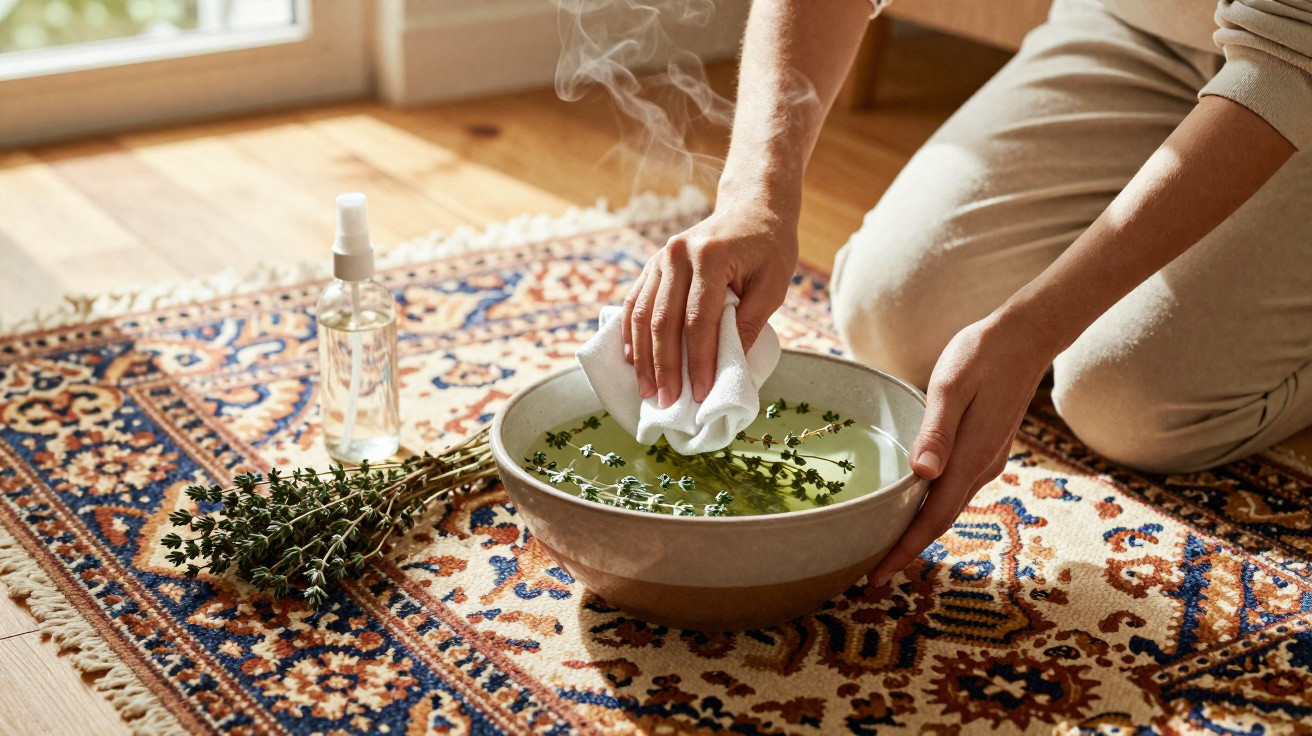
Bring 950 ml (4 cups) of water to a gentle boil. Add 2 tablespoons dried thyme (or 8 fresh sprigs), cover, and leave to steep for 20 minutes. Strain through a fine sieve or a coffee filter. Once completely cool, mix in 60 ml (1/4 cup) white vinegar and 1 tablespoon witch hazel or plain vodka to help it evaporate quickly. Pour into a clean spray bottle. That’s your rinse-light, green, and brisk. It smells like the garden after rain.
Before you do the whole area, patch-test somewhere discreet-behind a chair or along the sofa edge. Spray the carpet sparingly-think mist, not drizzle. Work section by section, about a square metre at a time, lifting the fibres with a clean brush or an old towel. Open a window, run a fan on a low setting, and let moving air do the work. When it’s fully dry, vacuum to pull up loosened dust and lift the pile.
Let’s be realistic: nobody does this daily. The best time to use the rinse is when the air starts to feel stale-after a wet spell, after guests, or whenever a room feels heavy. The secret is a simple thyme rinse. If you want to adjust it, add a few sprigs of rosemary for a sharper edge, or a strip of lemon peel to brighten it. If you’ve made extra, keep the bottle in the fridge for up to a week. After that, make a fresh batch.
“It’s the only thing that makes my old wool rug smell like a rug again, not a rainy coat,” said Ruth, waving that amber bottle like a wand.
- Ratio to remember: 2 tbsp dried thyme to 950 ml (4 cups) water.
- Light misting beats drenching-aim for a quick, even fog.
- Fan + open window = faster drying, cleaner finish.
Common stumbles-and how to dodge them
Most of us have had that moment: a room suddenly smells “old”, and we start panic-cleaning. The most common mistake is using too much water. A saturated carpet traps damp deep in the pile and brings the must back the next day. Light misting beats heavy soaking. Keep the sprayer moving and your grip loose. If the fibres look glossy-wet, you’ve overdone it.
Another common slip is rushing the drying. Watching a fan isn’t exactly thrilling, so we simply… don’t bother. Dry time is what actually erases the smell. Give the room air: windows, a fan, a short cross-breeze. Don’t put cushions back or cover the area until the surface feels cool and dry to the touch. With a wool rug, finish by brushing with the grain to bring back that soft bloom.
Heavy perfumes can make mustiness worse. Strong fragrance clings, then mixes with stale air and turns “muddy”. A thyme rinse lands cleanly and then fades, leaving nothing weighty behind. If you want a little lingering scent, tuck a few dried bay leaves beneath the underlay, or do a second, very light pass with rosemary water for a greener finish. A small amount goes a long way.
Why thyme beats the quick fixes
Bicarbonate of soda is excellent for surface smells, but it isn’t a miracle for damp-related odours. Enzyme sprays are brilliant for pet accidents, though they can feel clinical-and expensive-for everyday mustiness. The herbal rinse sits in the sweet spot: inexpensive, quick, and low-fuss. Used lightly, it’s also kind to wool and cotton, which is exactly where many “deep cleans” go wrong.
Vinegar on its own can work, but some people notice its sharp edge for hours afterwards. Thyme smooths that out, while the plant compounds quietly do their antibacterial job as the moisture evaporates. No sticky residue. No floral cloud that announces itself before you even enter the room. Just that clean, almost invisible absence of funk that makes the space feel properly refreshed.
If you want to take it up a notch, vacuum first and move anything that blocks airflow-throws, low baskets, plant stands. One pass with the herbal rinse, a fan for 30 minutes, then leave the windows slightly open for the evening. You’ll wake up to a rug that smells like itself again. Not like soap. Not like “fresh linen”. Like home.
A small ritual that changes the room
The thyme rinse isn’t really a product-it’s a pause. You heat the pot, watch the steam, strain it through a sieve, and take a breath while the bottle cools. Three small actions that quietly say you live here on purpose: practical, gentle, and attentive.
Some days you’ll spray the hallway runner and be done with it. Other days you’ll tackle the whole sitting room and perch the cushions on their sides like sails. The goal isn’t perfection-it’s refusing to let a stale smell set the tone for your day. The room feels like yours again the moment you walk back in.
| Key point | Detail | Why it matters to you |
|---|---|---|
| The rinse | Thyme steeped in water, plus a splash of vinegar and witch hazel | Natural, inexpensive, quick to make |
| How to use | Light mist, gentle brush, airflow, then vacuum | Minimal effort, maximum freshness |
| Why it works | Thymol helps curb microbes; light moisture evaporates cleanly | Smell fades without heavy perfumes or residue |
FAQ:
- What exactly is the “herbal rinse”? A cooled thyme tea with a little vinegar and witch hazel or vodka, used as a light carpet mist.
- Will it damage wool or natural fibres? Used lightly, it’s gentle. Test a hidden corner first and avoid soaking the pile.
- Can I swap thyme for another herb? Yes-rosemary or sage work well. Thyme is the classic because its scent fades cleanly and thymol is a known deodoriser.
- How often should I do it? When the room turns stale-after humid days, after guests, or monthly in damp seasons. Not a daily chore.
- What if the musty smell comes back? Check humidity, dry the room for longer, and consider a dehumidifier. Repeat a light mist rather than a heavy re-spray.




Comments
No comments yet. Be the first to comment!
Leave a Comment