
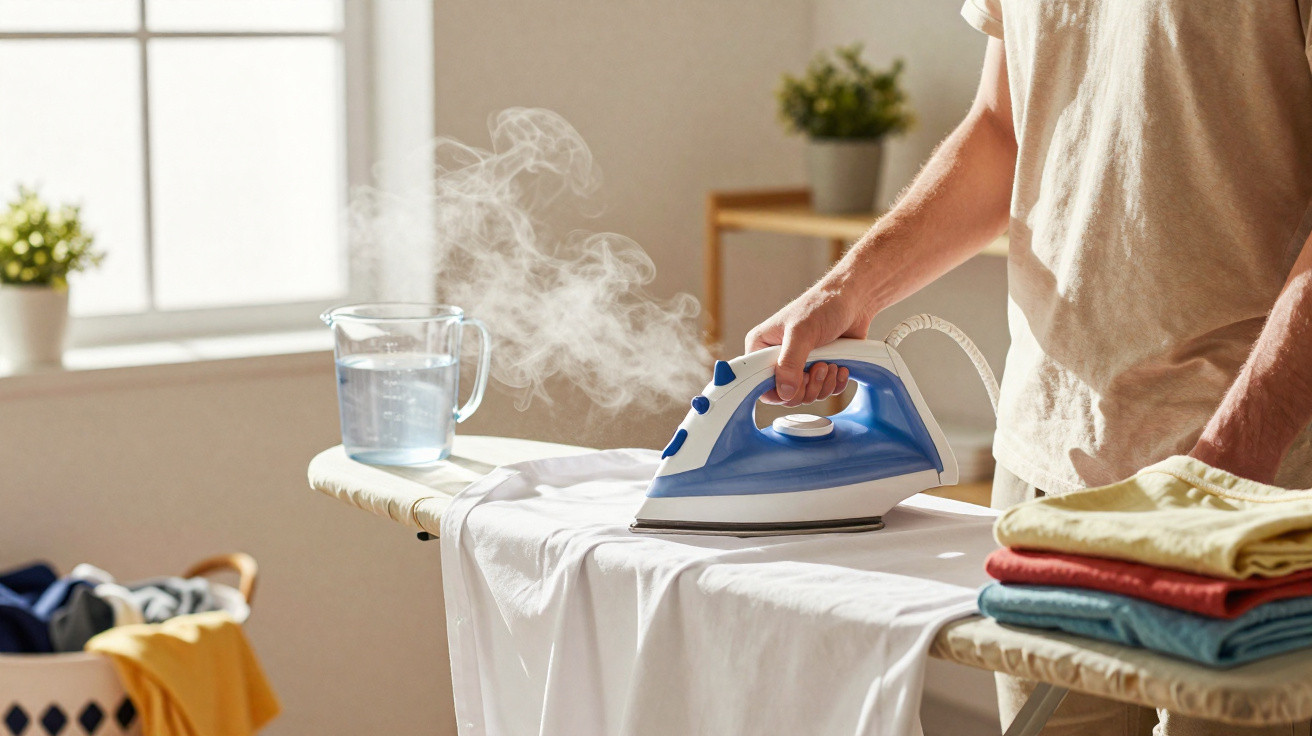
Faster, more powerful and better suited to large piles of laundry, steam generator irons still make a lot of sense in many homes. Here’s how they work, who they’re best for, and which care habits help them last longer.
With household appliances constantly evolving-and with alternatives such as vertical garment steamers or crease-reduction programmes on washing machines and tumble dryers-it can feel as though ironing is becoming less and less necessary. Even so, for plenty of households and anyone who prefers clothes to look properly cared for, an iron remains a staple.
Among the different options available, steam generator irons stand out for their ability to deliver continuous steam, their longer running time, and the speed with which they can handle bigger loads of clothes. Although they are bulkier and generally more expensive than conventional irons, they can be worthwhile for people who iron often or want results that feel closer to a professional finish.
How steam generator irons work
The key difference lies in the way steam is produced. With a traditional iron, the water tank sits inside the iron itself. With a steam generator iron, the water is stored in a separate base unit, connected to the iron via a hose.
That set-up makes it possible to use a larger reservoir and generate steam more steadily and with greater intensity. Steam penetrates the fabric fibres, helps them relax and makes creases easier to remove-so you don’t have to keep going over the same area repeatedly. As João Manaia, marketing manager and key account at Ufesa Portugal, explains: "A steam generator iron stands out for the power of its continuous steam, which allows creases to be removed more quickly and effectively, even on thicker fabrics or when a large amount of laundry builds up for ironing."
Key benefits: speed, capacity and comfort
Speed is one of the most noticeable advantages. When there’s a lot to get through, a constant flow of steam can help you finish sooner-particularly with shirts, trousers, towels, bed linen or heavier fabrics.
Tank capacity is another important factor. Because it is larger than the reservoir on a standard iron, you can usually iron for longer without frequent pauses to top up the water.
João Manaia highlights the difference: "Compared to a traditional iron, it makes the experience more comfortable and efficient, since the large tank capacity allows you to work for much longer without needing to refill it."
Also, because the water sits in the base rather than in the hand-held unit, the iron itself can feel lighter than a conventional model with a full tank. That can make extended ironing sessions more comfortable.
Are steam generator irons still used?
Yes. Despite the rise of more compact ways to freshen or smooth garments, steam generator irons remain practical for anyone who irons large quantities or reaches for the iron several times a week. They are not necessarily the best choice for someone who only irons one or two items from time to time. In those situations, a traditional iron may be all you need: it takes up less space, is easier to put away and typically costs less.
For families, frequent users or anyone regularly dealing with more demanding fabrics, the extra runtime and continuous steam output can justify the investment. According to the brand representative, "The Ufesa Smart Digital Pro is especially suitable for families, users who iron frequently and for longer periods, or who are looking for more professional results at home."
João Manaia also argues that this kind of appliance can make day-to-day chores feel simpler: "Thanks to its high performance, it is also an excellent option for those who want to simplify a routine task, saving time without compromising ironing quality."
Who is it worth it for?
A steam generator iron tends to pay off most for people who build up a lot of ironing, press clothes several times a week, or often need to shift stubborn creases. Before buying, it’s worth weighing up factors such as tank capacity, continuous steam output, pressure, heat-up time, the weight of the iron, the size of the base, and whether it includes cleaning and descaling systems.
Available space matters too. Because it’s larger than a standard iron, you’ll need more room while using it and a suitable place to store it.
Maintenance and descaling for steam generator irons
Looking after the unit properly is crucial if you want it to keep performing well. Limescale build-up can interfere with water flow, reduce steam output and lower overall efficiency. João Manaia advises: "To guarantee the best performance over time, it is important to use water according to the manufacturer’s recommendations, regularly carry out cleaning and descaling cycles, and empty the tank when the equipment will not be used for a prolonged period."
How often you need to clean it will depend on the model, how heavily it’s used and the characteristics of your water supply. For that reason, you should follow the guidance in the appliance manual. As he adds: "Simple, regular maintenance helps preserve the appliance’s features, namely steam output, and extends its service life."
Ultimately, the right choice comes down to how often you iron, how much laundry you have, and how much space you can dedicate to the appliance. A conventional iron remains a convenient option for occasional use, smaller loads and homes where storage space is tight. A steam generator iron is better suited to anyone who prioritises speed, longer running time and the ability to tackle tricky fabrics or high volumes of ironing.
Far from being outdated, steam generator irons continue to meet a very specific need: making ironing quicker, more efficient and more comfortable.



Comments
No comments yet. Be the first to comment!
Leave a Comment