
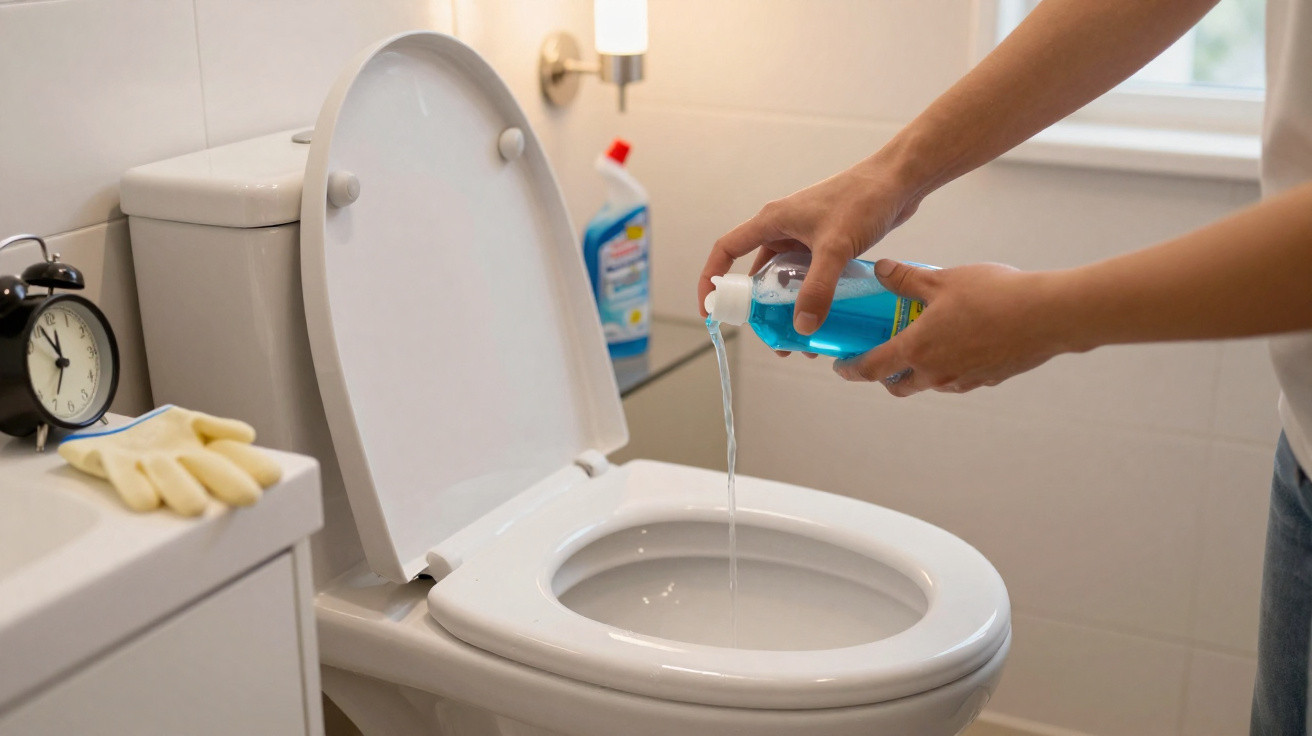
Putting a small amount of washing-up liquid in the toilet bowl before you go to bed can help soften organic build-up and make scrubbing easier the next morning. It works as a maintenance clean, but it does not replace proper disinfectants and it will not, on its own, remove heavy limescale or rust staining.
Why does washing-up liquid help clean the toilet bowl?
Washing-up liquid contains surfactants - compounds that lower water’s surface tension and help lift grease, soap residue and dirt stuck to the porcelain. Because the toilet is typically not used overnight, the solution can sit against the surface for longer, which makes it easier to remove the loosened grime with a toilet brush.
- Softens organic residue stuck to the porcelain;
- Helps the brush glide more easily over the surface;
- Assists in breaking down greasy films and soap scum;
- Can temporarily reduce odours linked to built-up dirt;
- Works as upkeep between more thorough cleans.
How do you apply washing-up liquid before bed?
Spread around 15–30 ml (1–2 tablespoons) of liquid washing-up detergent around the inside of the bowl, focusing beneath the rim and on any areas with visible residue. There is no need to use about 120 ml (½ cup) or to create lots of foam, as too much product means more rinsing and can lead to foam overflowing in toilets with a powerful flush.
Leave it to work overnight, provided the bathroom will not need to be used during that time. In the morning, scrub the porcelain with a toilet brush - including under the rim - then flush. Letting the washing-up liquid sit reduces the effort, but brushing is still required to remove the dirt that has been loosened.
Which stains can’t washing-up liquid remove?
Liquid washing-up detergent is good at tackling greasy residues, but it does not dissolve hardened mineral deposits effectively. Yellowish rings caused by mineral-rich water, rust and older encrustations may require a dedicated product, used according to the manufacturer’s instructions.
- Limescale build-up below the waterline;
- Rust stains caused by iron;
- Old marks that have soaked into damaged surfaces;
- Mould in grout lines and external seals;
- Blockages caused by paper, objects or excessive waste;
- Micro-organisms that require a dedicated disinfection step.
Does washing-up liquid also disinfect and unblock the toilet?
It can help with cleaning, but ordinary washing-up liquid should not automatically be treated as a disinfectant. Cleaning removes some micro-organisms along with the dirt, whereas disinfection requires a product registered for that purpose and adherence to the contact time stated on the label.
It also will not fix blockages caused by objects, large amounts of paper or pipework issues. For minor obstructions, the added lubrication may help some residue move through, but the correct approach is to use a plunger. Do not pour boiling water into the toilet, as a sudden temperature change can damage the porcelain or parts of the installation.
The most important precaution is not mixing products
Before using washing-up liquid, check that there is no bleach, acid, ammonia, disinfectant or toilet cleaner still in the bowl. The advice not to mix household cleaning products helps prevent reactions that can release irritating or toxic fumes. Use one product at a time, keep the room ventilated, and always follow the label.
Used on its own and in a small quantity, this overnight method can make routine maintenance simpler. The best results come from combining dwell time, thorough brushing, and regular cleaning of external parts such as the lid, seat, flush button and the base of the toilet.
Comments
No comments yet. Be the first to comment!
Leave a Comment