
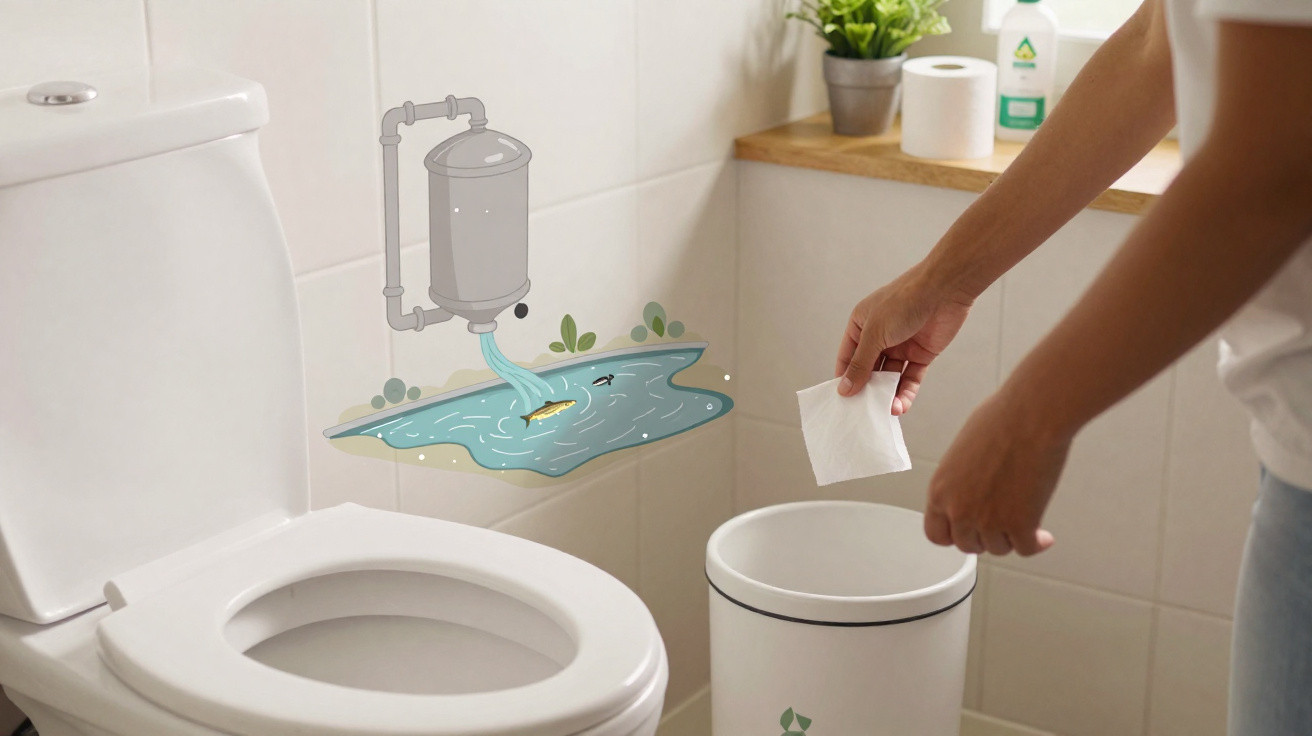
Across much of Europe, the United States and Japan, people flush and forget-toilet paper goes straight into the bowl without a second thought. In Brazil, the guidance is usually the reverse, and many only learn why when a plumber turns up with an invoice. In most cases, Brazil’s sewage networks and household pipework simply were not designed to handle fibrous solid waste in addition to human waste.
What Brazilian pipework can handle - and what it can’t process
Most homes in Brazil have plumbing sized to carry mainly liquids and organic solids that break down quickly in water. Pipe runs are often built with a smaller diameter, several tight bends, and sections with too little fall. Every bend and every narrowing becomes a likely point for fibrous material-such as toilet paper-to snag. And although toilet paper is intended to disintegrate, it does not always break up fast enough to pass cleanly through an entire run of pipe.
Flush pressure is another key part of the equation. Countries with more modern sanitation infrastructure commonly use higher-pressure systems that push the contents along with enough force to travel metres of pipework without leaving residue behind. In Brazilian homes with a close-coupled cistern or an elevated water tank, pressure is more limited. As a result, paper can cling to the inner walls of the pipes, building up layer by layer until it forms a blockage that restricts flow and can eventually lead to a full obstruction.
- Triple-ply or premium toilet paper: the thickness and strength that make it feel nicer to use are precisely what makes it harder to break down in pipe water.
- Any kind of wet wipe: even those labelled “flushable” are highly resistant to disintegration and are the number one cause of serious blockages in Brazil and worldwide.
- Kitchen roll: designed to absorb liquid without falling apart, its long fibres (often reinforced with additives) make it close to indestructible in domestic pipework.
- Large amounts of paper at once: even thin paper becomes a problem when the flush does not have enough pressure to carry the whole volume in one go.
- The safest option: a pedal bin with an airtight lid next to the toilet, which avoids hygiene concerns and protects the pipework with no maintenance cost.
Why homes with septic tanks face an even bigger problem
A significant share of Brazil’s population is not connected to a mains sewer network and relies on septic tanks to deal with waste. These buried tanks work through anaerobic bacteria that digest the organic matter in human waste. The catch is that the cellulose fibres in toilet paper are far more resistant to bacterial breakdown than organic waste.
When paper is flushed in homes with a septic tank, it can collect at the bottom of the tank because it does not decompose at the same rate as the other material. Over time, this build-up reduces the tank’s effective capacity, disrupts bacterial action, and can bring forward by years the need for pumping by a tanker-an expensive service. In severe cases the tank can overflow, contaminating surrounding soil and nearby groundwater.
The environmental impact that few people link to this daily habit
The downsides do not stop at the bathroom door. Once toilet paper reaches sewage treatment systems, it has to be mechanically separated from liquid waste before treatment can continue. That separation uses energy, demands constant equipment upkeep, and produces solid waste that is sent to landfill. In municipalities where sewage receives inadequate treatment-a reality that still applies in much of Brazil-undissolved paper can end up flowing directly into rivers, streams and the sea.
When flushing might be considered (with caution)
Four conditions must be met at the same time
The pipework needs to be PVC with an appropriate diameter, laid out with few bends and installed relatively recently. The home must be connected to the municipal sewer network with active treatment-never a property using a septic tank. The paper must be single-ply and used in moderate amounts-never wet wipes, kitchen roll or triple-ply paper. The flush needs to be a close-coupled cistern with a minimum volume of six litres and strong flow pressure.
In practice, this combination of four conditions is still uncommon across Brazil’s housing stock. For most properties-especially older homes, houses with septic tanks, and buildings still using original pipework installed decades ago-a bin next to the toilet remains the safest, cheapest and most environmentally responsible option.
A pedal bin with an airtight lid removes the main objections people tend to raise about this habit. With modern models widely available at affordable prices, the aesthetic and hygiene arguments largely fall away. The paper goes into a closed bin, the bathroom stays odour-free, and the pipework stays protected. What looks like a minor bathroom detail is, in reality, a preventative maintenance choice-one that can spare you plumber call-outs and pipe repairs.
Why so many Brazilians still flush paper, even knowing the risk
Some of it comes down to a lack of clear, accessible technical information about the limits of Brazilian sanitation infrastructure. Another driver is greater exposure to travel content and to people living abroad, where flushing paper is presented as standard practice. When someone returns from a trip to Europe or watches an American series, what seems normal on screen can shape habits at home-without recognising that the underlying infrastructure is entirely different.
Flushing toilet paper is one of those behaviours that feels harmless until the day the water starts rising instead of draining away. Anyone who understands the real constraints of Brazil’s sanitation infrastructure realises that a bin next to the toilet is not cultural backwardness. It is protection for the pipes, your wallet and the environment.
What changes when a city has a sewer network with treatment
Even in cities with a sewer network, the calculation is not as straightforward as it appears. Sewage treatment plants must remove paper mechanically before treating the liquid effluent, which raises operating costs and increases the volume of solid waste produced. Brazil’s sewage treatment coverage remains low, with less than half of the population having access to adequate collection and treatment, according to data from the Ministry of Cities. That means that, for most Brazilians, the consequences of flushing paper still reach well beyond the pipes inside the home.
This is the kind of information that can permanently change a daily habit. Share it with the people you live with-or anyone still unsure what the correct practice is in a Brazilian bathroom.
Comments
No comments yet. Be the first to comment!
Leave a Comment