
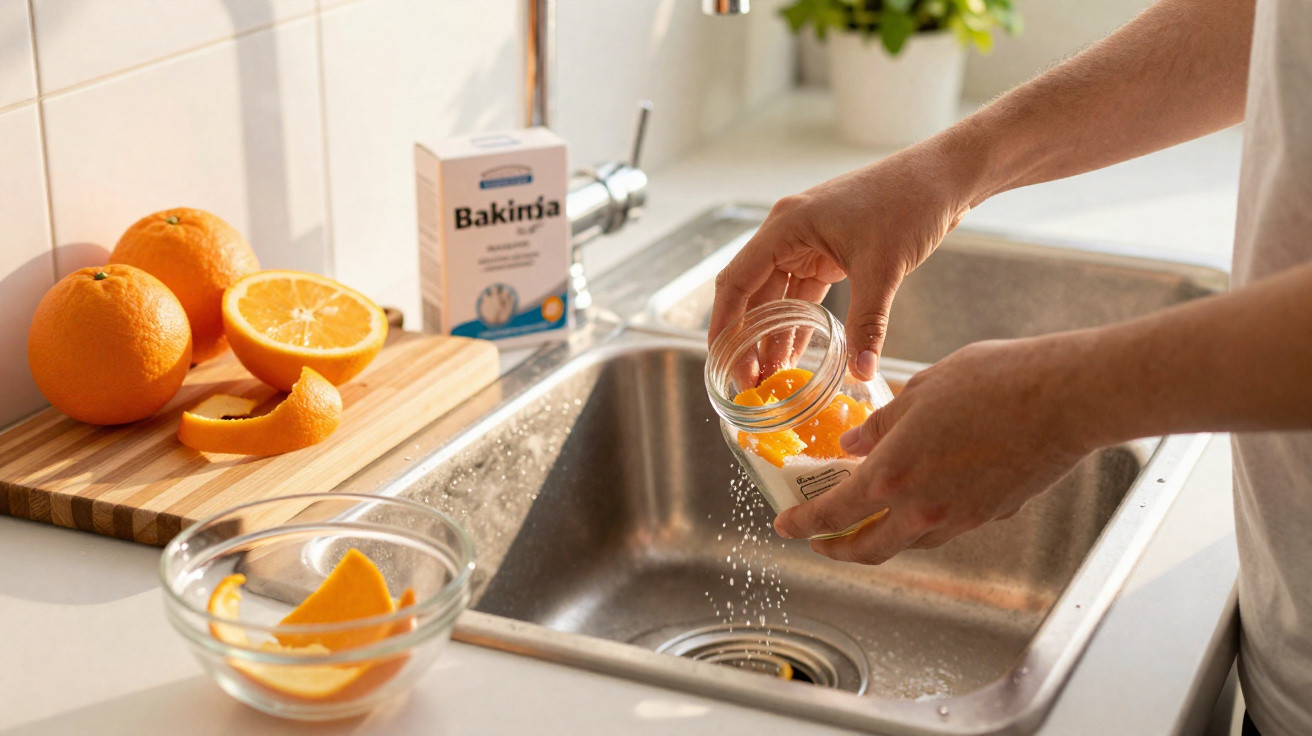
Blending orange peel with bicarbonate of soda can create a lightly abrasive, pleasantly scented paste that may help lift grease and reduce kitchen smells. This approach makes use of fruit waste, but it should be made in small amounts, used only on suitable surfaces, and treated as a maintenance cleaner rather than a disinfectant.
What is the purpose of mixing orange peel and bicarbonate of soda?
The outer layer of the peel contains aromatic oils, including limonene, which can help loosen greasy residues. Bicarbonate of soda adds gentle abrasion and can help neutralise certain odours, while blending turns the ingredients into a paste that is easy to spread.
- Helps remove light grease from a hob;
- Helps lift residue from hard-wearing containers;
- May reduce odours in bins that have already been washed;
- Reuses peels that would otherwise be thrown away;
- Leaves a temporary citrus scent in the room;
- Works as a top-up alongside washing-up liquid.
How do you prepare the mixture without overdoing the quantities?
Wash the peel from one orange thoroughly, chop it into small pieces, and add it to a blender with about half a cup of water. Blend until it becomes thick, then add one tablespoon of bicarbonate of soda gradually, as the mixture can foam.
When you come to use it, this homemade orange-peel cleaning paste can also be combined with a few drops of mild washing-up liquid. There is no need to add salt, alcohol, vinegar, or other cleaners, because more complicated combinations make the reaction harder to manage and can damage materials.
Where can the orange cleaner be applied?
Before using it more widely, test the product on a small, hidden patch. On hard-wearing surfaces, apply a small amount with a soft sponge, leave it for only a few minutes, then remove it completely with a damp cloth so that no peel or bicarbonate particles remain.
- Oven racks and enamelled parts of a cooker, once cool;
- Sturdy plastic containers with lingering food smells;
- Washable bins, after the waste has been removed;
- Stainless-steel sinks, without scrubbing hard;
- Tiles and ceramics that do not have a delicate finish;
- Suitable pans, in line with the manufacturer’s guidance.
Which surfaces might be damaged?
Bicarbonate of soda can leave marks on shiny materials when it is scrubbed repeatedly. This mixture should not be used on screens, unsealed wood, non-stick pans, painted surfaces, delicate acrylic, or any item whose cleaning instructions advise against abrasive products.
It is also sensible to avoid marble, unsealed granite, and other sensitive natural stone, as citrus residue and moisture can stain the finish. Aluminium, copper, and decorative metals may dull or change appearance. For glass hobs, use the manufacturer-recommended product to avoid creating micro-scratches.
Why should the mixture be made for immediate use?
Blended peel and water produce a perishable mixture, with no preservative to prevent mould and bacteria from multiplying. For that reason, it is not safe to store large quantities for weeks or to treat the recipe as valid for 90 days. Make only what you need, throw away any leftovers, and wash the blender straight afterwards.
Orange-peel cleaner also does not automatically disinfect the kitchen. Start by removing dirt with washing-up liquid and, when disinfection is required, use a separately approved product for that purpose, following the label. Never combine this recipe with bleach, ammonia, acids, or other cleaning products.
Comments
No comments yet. Be the first to comment!
Leave a Comment