
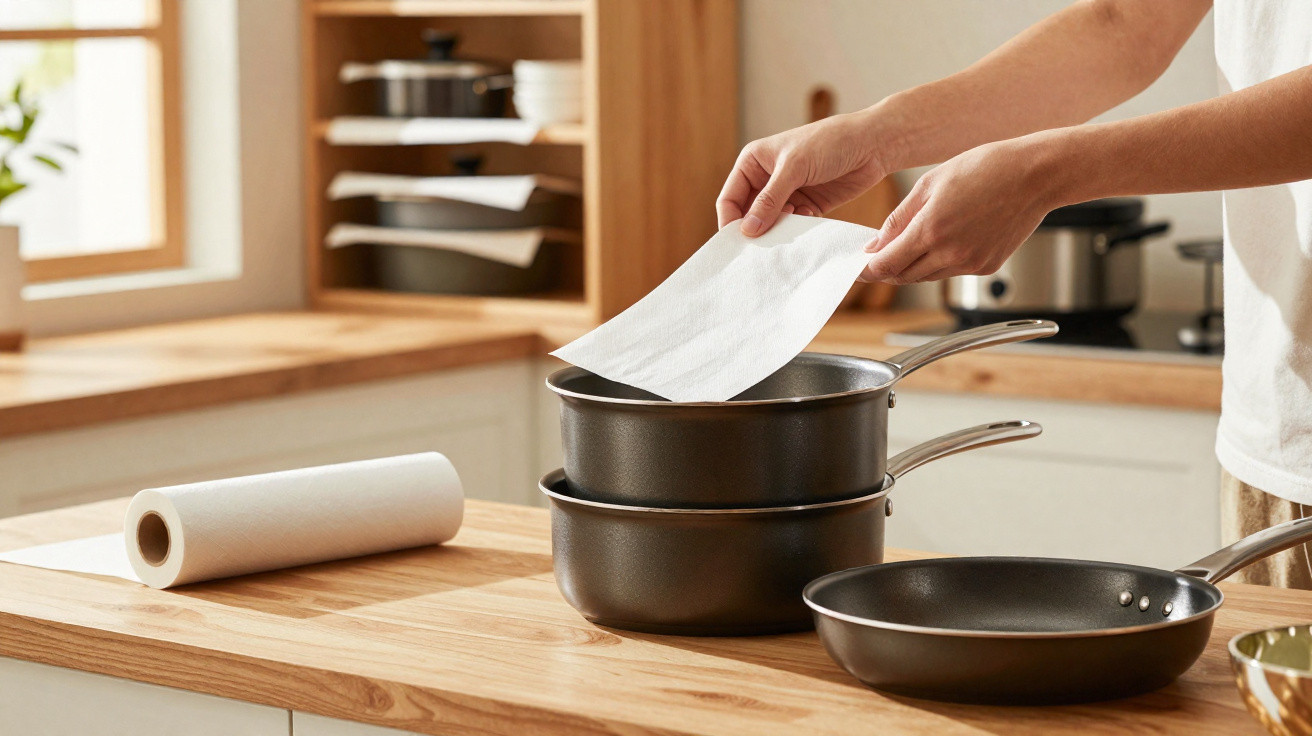
Placing a sheet of kitchen roll between non-stick pans creates a protective buffer against rubbing while they are stored. This simple step stops the base of one item from scraping the inside of another, helping to limit scratches, scuff marks and premature wear of the coating.
What is the point of putting kitchen roll between pans?
Kitchen roll acts as a soft separator between otherwise hard surfaces. When you open and shut a cupboard, or lift one item from a stack, pans can slide and knock together. The layer in between absorbs some of that movement and prevents direct contact between metal and the non-stick surface.
- Lowers friction between stacked pieces;
- Prevents scratches caused by another pan’s metal base;
- Cushions minor knocks inside the cupboard;
- Shields delicate rims and inner surfaces;
- Helps keep the coating in better condition for longer;
- Makes pans easier to lift out without dragging them.
Why does the non-stick coating need this extra care?
A non-stick finish is a comparatively thin layer applied over the pan’s main body. On some cookware, that surface includes polytetrafluoroethylene, known as PTFE, while other ranges use ceramic coatings. Although they are different materials, both can wear down when repeatedly exposed to hard objects and ongoing friction.
Even a pan that looks clean can have tiny grains of salt, sand or residue stuck to its underside. If it is placed directly onto another piece, those particles can behave like abrasives. The damage may not show straight away, but it can build up each time the stack is moved.
How can you stack pans without damaging the inside?
Before putting anything away, wash and dry every item thoroughly. Place a sheet of kitchen roll, a thin cloth, or a purpose-made protector inside the largest pan, then set the next one on top without pressing down. Repeat this at each level of the stack.
- Store only pans that are completely dry;
- Put a clean protective layer between every piece;
- Avoid very tall, wobbly stacks;
- Do not drag a pan out to remove it;
- Arrange handles so they do not press on rims;
- Replace the kitchen roll if it becomes damp, greasy or torn.
Does the same apply to frying pans and electric pans?
Yes. Non-stick frying pans are often even more susceptible because they have a wide cooking surface that takes the full weight of anything stacked above. Using a separator helps prevent rough bases, screws or exposed metal edges from leaving marks in the centre of the frying pan.
The removable bowl of an electric rice cooker should also be stored without metal utensils or other pans placed inside it. If you do need to use the space, put a soft protective layer in first and avoid putting excessive weight on the rim.
Does kitchen roll increase a pan’s lifespan?
A separator cannot repair a coating that is already scratched, but it does cut down one of the main sources of wear that happens during storage. For better results, combine this habit with silicone, wooden or heat-resistant plastic utensils, cleaning methods that avoid abrasive materials, and cooking temperatures that match the manufacturer’s guidance.
You can do the same thing with the protective pads designed to prevent cupboard scratches. Whether you use kitchen roll, felt or a tea towel, the aim is to keep a clean barrier between items and protect the non-stick coating from unnoticed friction.

Comments
No comments yet. Be the first to comment!
Leave a Comment