
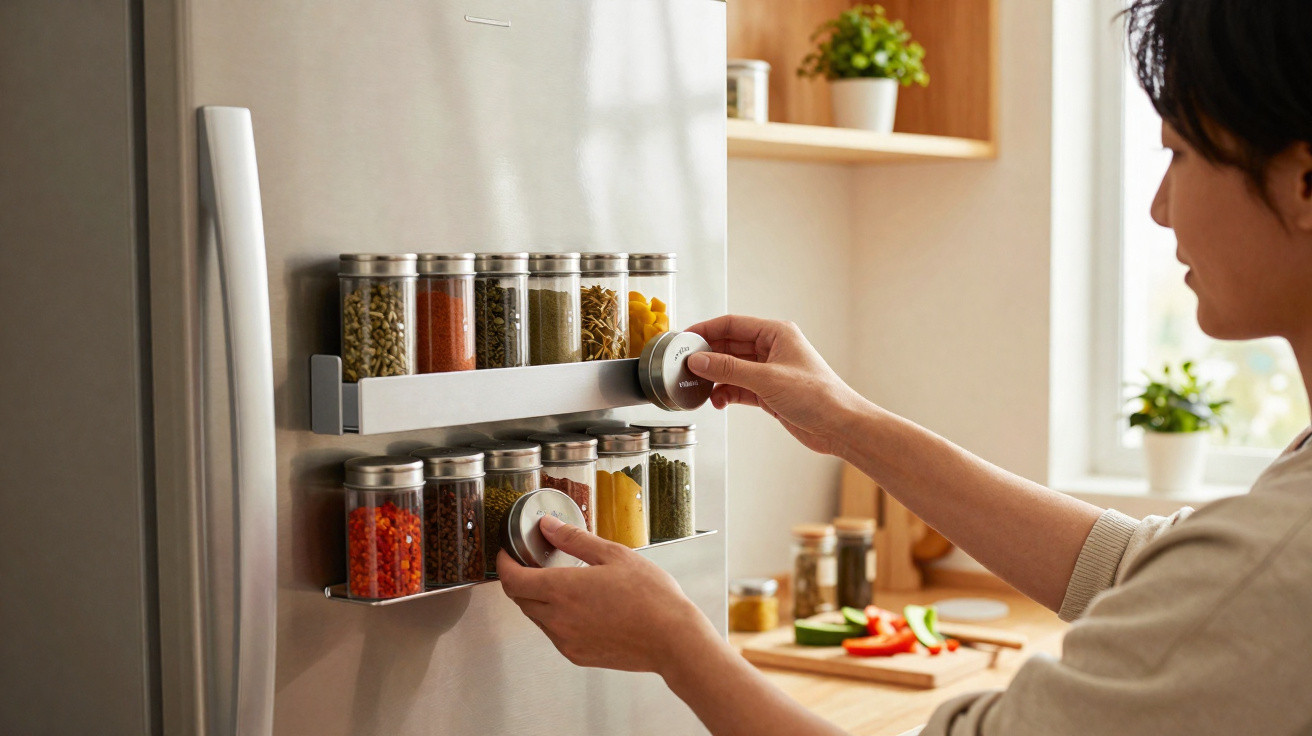
Among the many kitchen organisation items available, the spice rack has undergone a real shift. In fitted or compact kitchens, a more discreet, adaptable and practical option is taking pride of place: the magnetic spice rack. It is often mounted on the side of the fridge, on metal rails fixed to the wall, or inside cupboard doors-keeping everything visible, within easy reach and looking consistently tidy.
Why is the magnetic spice organiser replacing the traditional model?
The magnetic spice organiser is increasingly chosen in place of a conventional spice rack because it combines quick access, a cleaner look and smarter use of vertical space in a single system. Rather than relying on a fixed stand on the worktop or a central carousel, it makes use of surfaces that are usually overlooked, such as the side of the fridge or the inside face of cupboard doors.
This approach also lowers the chance of jars being forgotten at the back of a cupboard, since containers typically have clear lids or forward-facing labels. Seeing everything at a glance encourages more regular use of a wider range of herbs and spices, adding variety to everyday cooking without needing extra equipment or major changes.
How does a modern magnetic spice rack improve access and optimise space?
A modern magnetic spice rack lines jars up in clear rows, which cuts down the time spent searching for a specific seasoning and helps prevent mix-ups between similar-looking ingredients. In kitchens shared by more than one person, using matching containers and consistent labelling adds both speed and confidence to day-to-day cooking.
By moving spice jars onto vertical surfaces, this setup frees up internal shelves, drawers and part of the worktop for pans, small appliances and prep tools. To get the most from the system, a few practical details usually make the difference:
- Front-facing visibility: clear lids or labels placed on the most visible side of the jar.
- Adjusted height: metal rails fitted at eye level or slightly above the worktop.
- Flexible modules: the option to increase or reduce the number of jars depending on how many seasonings you keep.
- Easy cleaning: removable jars that make it simple to clean both the container and the magnetic surface.
How can you adapt a magnetic spice rack in small kitchens without spending much?
A budget magnetic spice rack can be fitted without any renovation by using existing surfaces such as the fridge, cooker hood or the sides of metal cupboards. Where there is no metal, simple strips or sheets can be attached using heavy-duty double-sided tape, screws or wall plugs, depending on the wall or furniture material.
To keep costs down, many people reuse small glass jars and simply add good-quality magnets to the base or the lid, ensuring they can hold the weight of a full container. In kitchens of different sizes, certain layouts tend to work particularly well:
- Compact kitchen: a vertical magnetic strip on the side of the fridge, holding 8 to 12 of the most-used jars.
- Medium kitchen: a combination of a metal rail above the main worktop and another inside a cupboard.
- Large or gourmet kitchen: larger panels positioned near the hob, arranged by type of seasoning.
What care keeps a new spice rack efficient for longer?
For a new spice organiser to stay effective, it should be installed away from the hob’s direct heat and from very damp areas such as the sink. Keeping jars tightly sealed and refilling only what you need helps reduce waste, preserves aroma and prevents residue building up inside the containers.
It is also worth getting into the habit of cleaning the metal surfaces periodically and checking what is in each jar, paying attention to colour, smell and the manufacturer’s stated expiry. With these simple steps, a magnetic system supports a kitchen that feels more organised, practical and visually balanced-making better use of space without structural work.





Comments
No comments yet. Be the first to comment!
Leave a Comment