
Doing the laundry at home is part of everyday life for many households, yet most people rarely stop to consider how different fabrics need different treatment. Among jeans, towels, T-shirts and tea towels, underwear is often the most overlooked - and it actually needs a completely different approach. Throwing everything into the same wash may feel convenient, but it can create problems for hygiene, skin health and the lifespan of your clothes.
Why is it risky to mix underwear with other items?
Underwear sits directly against warm, damp parts of the body, so it collects sweat, natural secretions and tiny flakes of skin. That combination can encourage bacteria and fungi, which may then transfer to bath towels, tea towels and everyday outer clothing when everything is washed together.
There are fabric risks too: delicate items can be damaged by friction from zips, buttons and heavy denim, leading to pilling, small holes and snagged lace. On top of that, using too much detergent and heavily perfumed fabric conditioner can leave residue against sensitive areas, which can contribute to itching, irritation and lingering odours.
How should you wash underwear properly?
Ideally, run a separate wash just for underwear whenever you can, or hand-wash items in cool or warm water using a mild, neutral soap. This gives you better control over rubbing, product quantity and water temperature, helping protect elastics, lace and moulded cups without aggravating the skin.
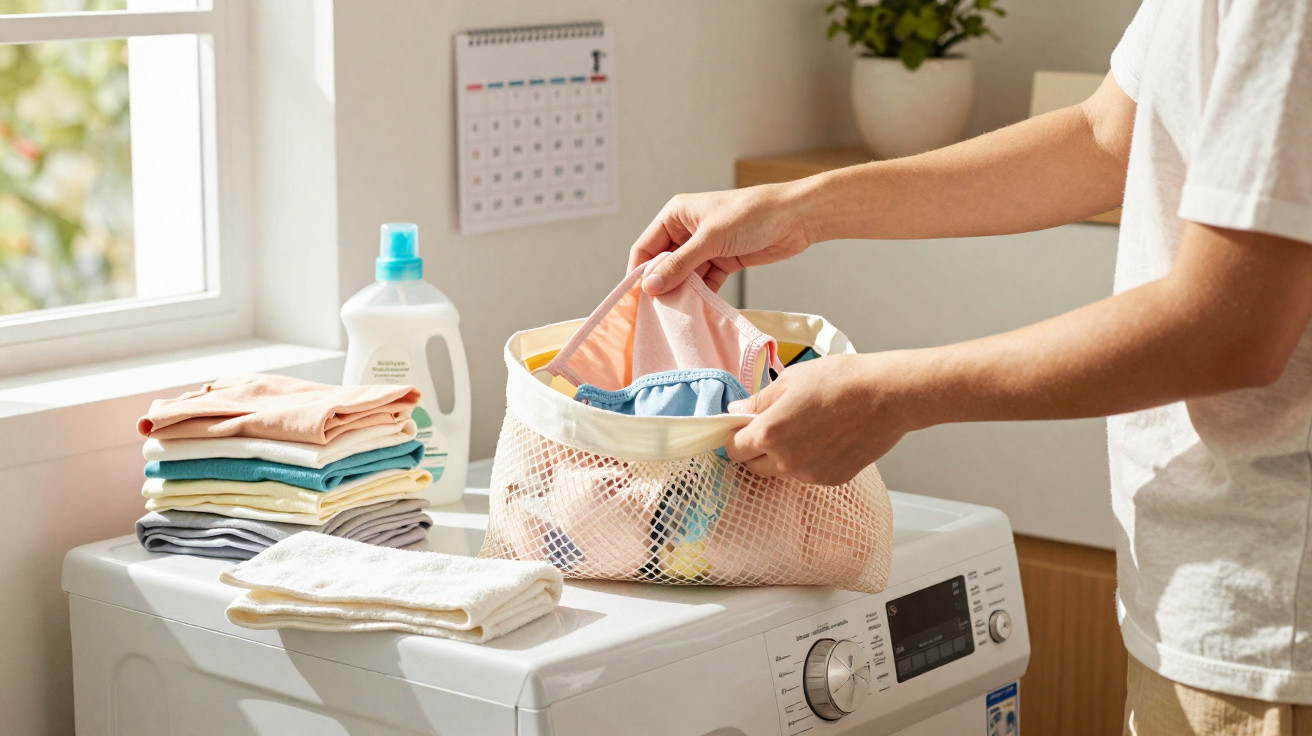
If you’re using a washing machine, put items in mesh delicates bags and select a delicate programme with a gentle spin. This is particularly helpful for women’s bras with moulded cups, shapewear and sports underwear, which tend to hold more sweat and smell. Here are practical tips by item type:
- Bras with moulded cups or underwire: hand-wash and do not wring; press in a towel to remove excess water, then dry flat.
- Cotton knickers and men’s briefs: these can go in the machine in cool or warm water, preferably inside a delicates bag and kept away from heavier items.
- Lace pieces or delicate fabrics: choose a delicate cycle, avoid very hot water and skip the tumble dryer to prevent fibres drying out or losing shape.
- Sports underwear: avoid fabric conditioner, wash with a gentle detergent and dry in the shade in a well-ventilated place so odours don’t get trapped.
How does washing underwear correctly improve daily hygiene?
Building a dedicated routine for these items is a straightforward way to stay on top of hygiene. Keeping underwear separate from cleaning cloths, mats and face towels lowers the chance of cross-contamination, because each category comes into contact with very different environments and areas of the body.
It also helps not to leave lingerie and briefs sitting damp in the laundry basket for too long, as that can lead to strong smells and stubborn stains. Having a more neutral detergent just for these pieces can be useful for people with sensitive skin, as it reduces intense fragrance and fibre-clinging residue on items worn directly against the body.
How can you organise an underwear-washing routine at home?
A few small changes can make the job easier and stop it feeling like you’re constantly short of clean pieces. Using a separate basket for underwear prevents contact with heavily soiled items, makes it easier to collect enough for a dedicated cycle, and helps you notice when it’s time to wash.
Choosing one or two fixed days each week for this load, washing in cool or warm water, and always drying in the shade in an airy spot are habits that help underwear last longer. Combined with each person using their own underwear and towels, this approach brings more comfort, better hygiene and long-term savings.




Comments
No comments yet. Be the first to comment!
Leave a Comment