
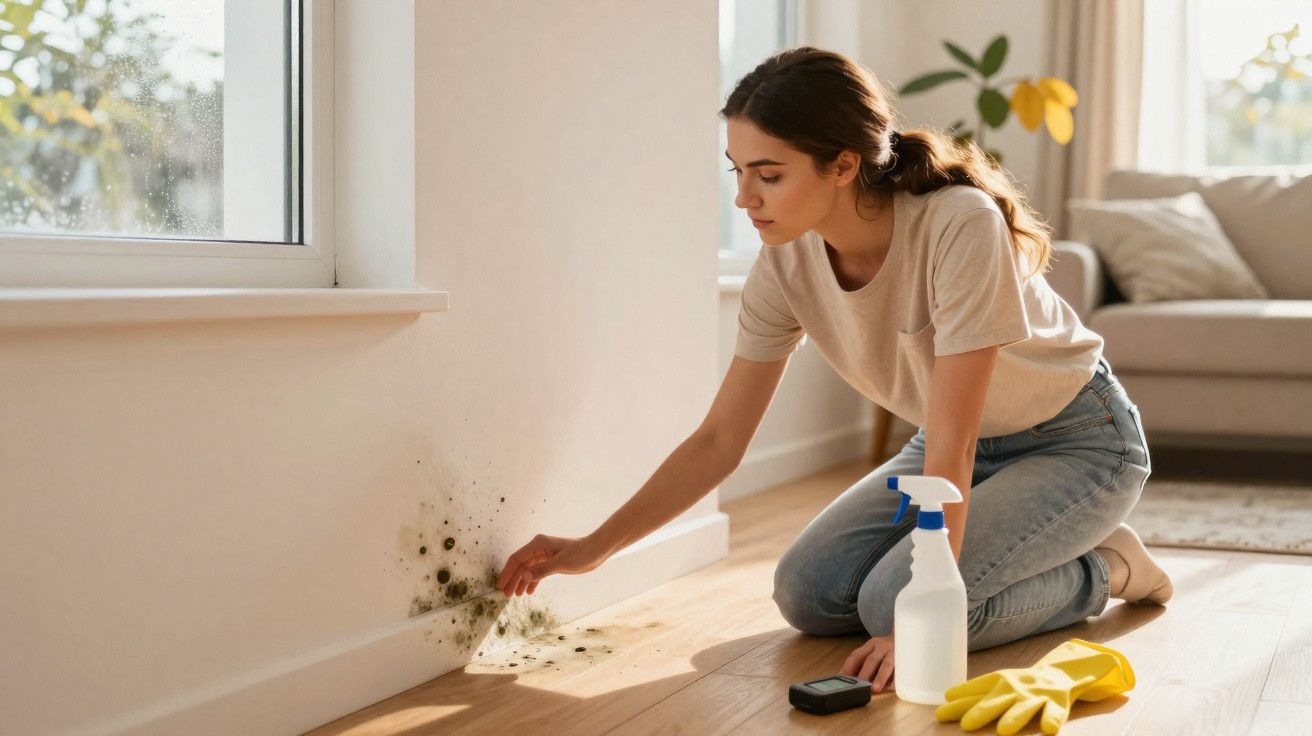
Mould appearing indoors can be deeply unsettling. Dark specks and powdery-looking patches on walls are a clue that something is wrong, but it matters whether the growth is simply an annoyance or something that could be harmful.
Fungi are extraordinarily diverse, with more than 1 million species. Some are harnessed to make vital medicines. Others, when they grow inside the human body, can lead to life-threatening infections.
The microscopic fungi that colonise buildings are troublesome because they can provoke asthma and other allergies. In my role as a fungal biologist, however, I have not come across strong scientific evidence to back claims that household moulds cause other serious diseases.
What are moulds?
Moulds are microscopic fungi that can grow on almost anything. That might sound like an overstatement, but choose virtually any material and you will find mould present somewhere: on the leaves of a houseplant, on grain stored in a kitchen cupboard, and throughout the soil under our feet. They create blotches on the outside of buildings, thrive in tiny cracks in concrete paths and roads, and can even exist harmlessly on our bodies.
Moulds are also essential to life on Earth. They are superb recyclers, returning nutrients to the environment by breaking down organic matter. “Mildew” is simply another term for mould.
Fungi, moulds included, make tiny seed-like particles known as spores, which travel through the air. Mould spores are produced on stalk-like structures.
There are so many spores around that you breathe them in with every inhalation. Thousands could fit inside the full stop at the end of this sentence.
When spores settle on a surface, they can germinate and produce elongating threads. As those threads branch, they form web-like colonies that spread into roughly circular patches. Once a colony has been established for a few days, it begins releasing a fresh generation of spores.
Where do indoor moulds grow?
Mould can develop in any building. Even the most carefully kept home is likely to have small traces of mould tucked away beneath bathroom and kitchen sinks. It also commonly appears on shower curtains and can grow inside sink drains, dishwashers and washing machines.
Mould thrives wherever water accumulates, but it typically only becomes a building problem when there is an ongoing plumbing leak or a property has been flooded.
A wide range of indoor mould species can occur, and a specialist can identify them by examining their spores under a microscope.
Household moulds often include species of Aspergillus and Penicillium, which can be hard to distinguish from one another. Other common indoor moulds include Cladosporium and Chaetomium, which particularly likes damp carpets.
Another frequent indoor fungus is Stachybotrys. I have found it myself beneath plant pots in my living room.
When does mould growth become a problem?
Mould becomes problematic when plasterboard is thoroughly soaked and colonies expand into large brown or black areas. If the affected patch is no bigger than a pizza box, you can probably deal with it yourself.
When the growth is more extensive, it is often necessary to remove and replace the plasterboard. In either situation, fixing the leak or preventing further flooding is crucial, otherwise the mould is likely to return.
If mould growth is severe, you can employ an indoor air quality specialist to test the level of airborne spores in the property. Small numbers of spores are normal and not hazardous, but high concentrations can trigger allergic symptoms.
As part of air testing, the specialist will usually take samples indoors and outdoors on the same day. If the indoor spore count is far higher than the outdoor count, it suggests mould is growing somewhere within the home.
A further sign is when the mix of mould types differs between outdoor and indoor air. Professional air sampling can detect both of these patterns.
Why are indoor moulds a problem?
Indoor moulds cause three main difficulties. To start with, they make a home feel unpleasant by staining surfaces and producing a musty, mouldy odour.
Secondly, their airborne spores can provoke asthma and allergic rhinitis, also known as hay fever.
Thirdly, certain moulds manufacture toxic compounds called mycotoxins.
There is no scientific evidence that mycotoxins produced by indoor moulds cause illness in homeowners. However, mycotoxins could potentially be an issue in the most extreme cases of mould damage - most often following flooding.
Even setting mycotoxins aside, mould should still be addressed in these serious situations to reduce the risk of allergies.
The mould Stachybotrys has been labelled “toxic black mould” since its growth was associated with lung bleeding in infants in Cleveland in the 1990s. This fungus can colonise plasterboard after it becomes saturated with water, and it produces a range of mycotoxins.
Spores from black mould are sticky and do not become airborne very easily. This behaviour limits how many spores people nearby are likely to inhale, and it means any dose of toxins absorbed from indoor mould is vanishingly small.
Even so, babies’ and children’s developing lungs are especially vulnerable. That is why it is important to keep mould growth under control in homes and to deal with the sources of dampness that encourage it.
Understanding when indoor moulds need attention is a practical skill for any homeowner and can help avoid needless anxiety.
Nicholas Money, Professor of Biology, Miami University
This article is republished from The Conversation under a Creative Commons licence. Read the original article.




Comments
No comments yet. Be the first to comment!
Leave a Comment