
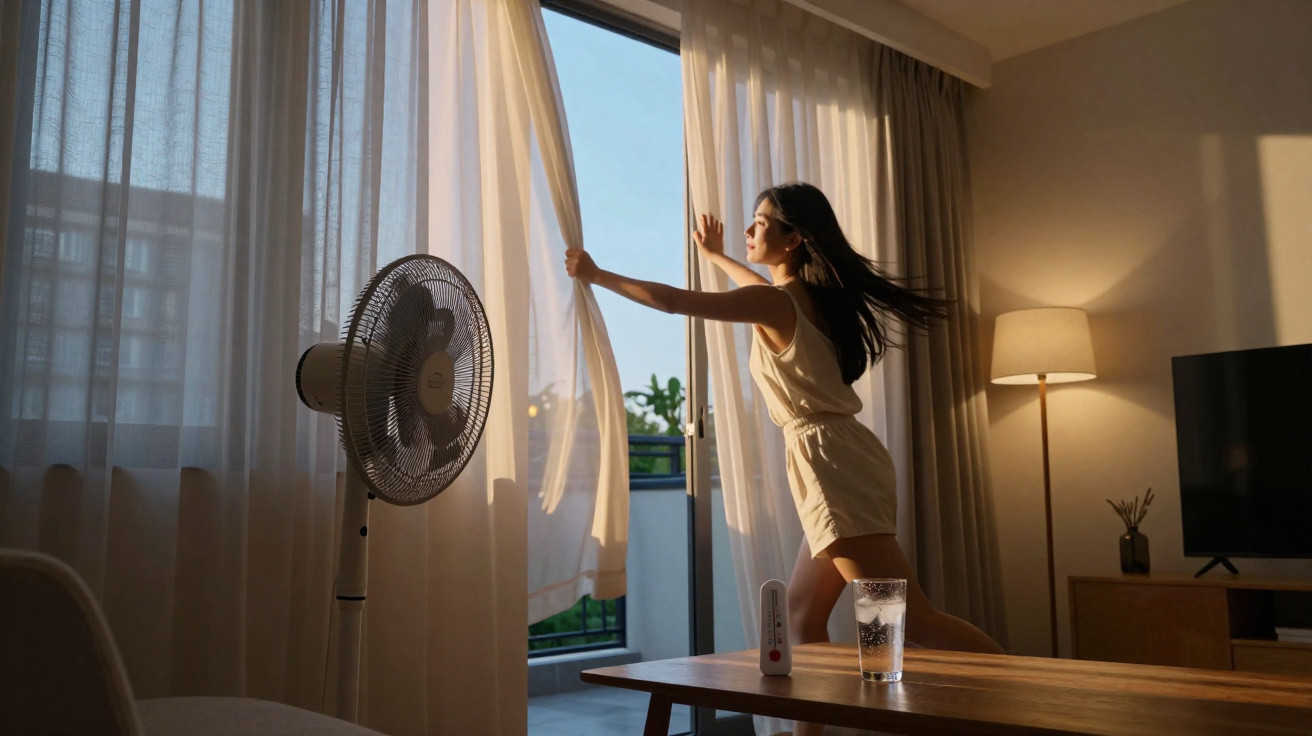
Cooling your home quickly after a spell of intense heat relies on two things: getting rid of the trapped hot air and stopping the sun from carrying on warming your floors, walls and furniture. Ventilation is most effective once the outdoor temperature drops - mainly at night and in the early morning. In the daytime, the priority shifts to blocking solar radiation, sealing out hot air and cutting down internal heat sources.
When should you open doors and windows to cool the house?
Open doors and windows only when the air outside is cooler than the air indoors. That’s usually overnight, in the small hours or early in the morning, once the sun is down and the building fabric has started to release stored heat.
For the strongest result, create cross-ventilation. Open windows on opposite sides of the home, keep internal doors open, and help hot air escape via higher openings such as upstairs windows, rooflights, or rooms on an upper floor.
Why does keeping everything shut during the day help?
In very hot weather, airing the house at the wrong time can make it feel worse. If the outside air is hotter, it comes in, heats up curtains, sofas, floors and walls, and then lingers for a long time.
To limit heat gain, it helps to follow a simple routine during the hottest hours:
- Shut windows and external doors as soon as the sun starts warming that side of the house.
- Keep curtains, blinds or shutters closed in sunlit rooms.
- Use awnings, solar screens or external shading where available.
- Avoid leaving internal doors open into rooms that are extremely hot.
How can you use fans without spreading hot air?
Fans don’t cool the air in the way air conditioning does, but they can help move heat out of the home when positioned well. At night, placing a fan facing an open window can push warm indoor air outside and speed up replacement with cooler air.
In the daytime, you need to be more deliberate. In a sealed room that’s already very hot, a fan simply churns stuffy air around. It performs better in a shaded area with some access to cooler air, or when aimed at people rather than at sun-heated walls.
What should you switch off to reduce indoor heat?
After several hot days, your home can continue to warm up from inside. Ovens, hobs, older light bulbs, computers, televisions and chargers left on for hours all raise room temperature - especially in small living spaces and kitchens.
A few simple changes can cut the heat load without any refurbishment:
- Avoid using the oven and hob during the hottest parts of the day.
- Turn off devices that sit on standby when you don’t need them.
- Choose LED bulbs, which give off less heat than older types.
- Close the kitchen door after cooking hot food.
- Use an extractor fan or open a window only when the outdoor air is cooler.
How do you keep the house cool after it has cooled down?
Once the indoor temperature starts to drop, the aim is to hold on to that cooler air for as long as possible. In the morning, close windows, curtains and blinds before the sun becomes strong - especially in bedrooms, living rooms with large glazing, and west-facing spaces.
The most effective approach combines night-time ventilation, daytime solar blocking, and reduced heat produced indoors. With this routine, walls and furniture store less heat through the day, so the next night can cool the rooms down more quickly.
Comments
No comments yet. Be the first to comment!
Leave a Comment