
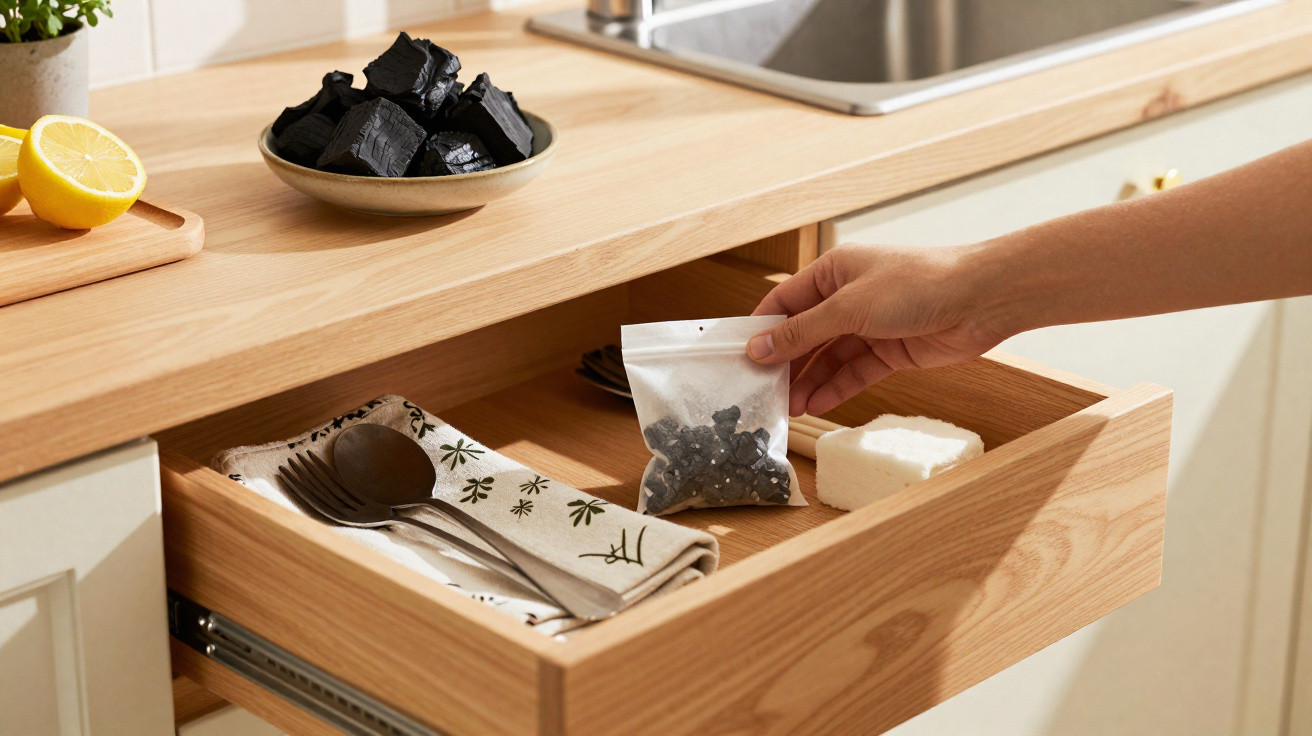
Keeping charcoal in kitchen drawers can help cut down smells and reduce excess moisture in enclosed spaces. Its porous structure traps molecules in the air, helping protect packets of spices, biscuits and kitchen tools from that stale, cupboard-stored odour. Even so, this approach does not replace fixing leaks or ensuring cupboards are properly ventilated.
Why does charcoal help control moisture and smells?
Charcoal contains tiny pores that can adsorb odour molecules and some of the moisture vapour found inside drawers and cupboards. With adsorption, these particles cling to the surface of the material, rather than being absorbed into it the way water soaks into a sponge.
This works best in closed compartments where dampness is only mild. Places where charcoal can be used include:
- Drawers used to store tea towels and utensils;
- Cupboards holding packets of biscuits and other dry foods;
- Sections where spices and dried herbs are kept;
- Shelves with pans that have a stored-away smell;
- Areas near the sink, provided they are not exposed to splashes.
How do you place charcoal inside drawers?
Set aside two or three pieces of clean charcoal with no lighting products on them. Put the pieces in an open jar, a perforated container, or a breathable fabric pouch, keeping the material away from food and avoiding direct contact with the base of the drawer.
How can you prevent stains from black dust?
Charcoal sheds particles that can mark wood, fabrics, packaging and light-coloured utensils. Before storing it, brush off excess dust with a dry brush and wrap the pieces in a thin cloth, gauze, or a sturdy paper filter.
A few precautions help lower the risk of mess and contamination:
- Do not place loose charcoal directly on a shelf;
- Avoid crumbly pieces or ones carrying a lot of built-up dust;
- Use a stable container that will not tip when the drawer is opened;
- Keep the material away from unwrapped food;
- Do not use charcoal that contains alcohol, paraffin, or a chemical firelighter.
How do you reactivate charcoal so you can keep using it?
When it becomes less effective at tackling odours, remove the pieces and leave them in the sun for a few hours, in a dry, well-ventilated spot. The warmth helps drive off some of the trapped moisture, allowing the charcoal to be reused before it needs replacing.
- Sun-dry it about once a month;
- Let the charcoal cool before putting it back in the cupboard;
- Replace the pieces every two or three months;
- Change it sooner if mould appears or the smell lingers;
- Throw it away if it has been splashed with grease or water.
Charcoal supports ventilation and kitchen cleaning for humidity control in cupboards
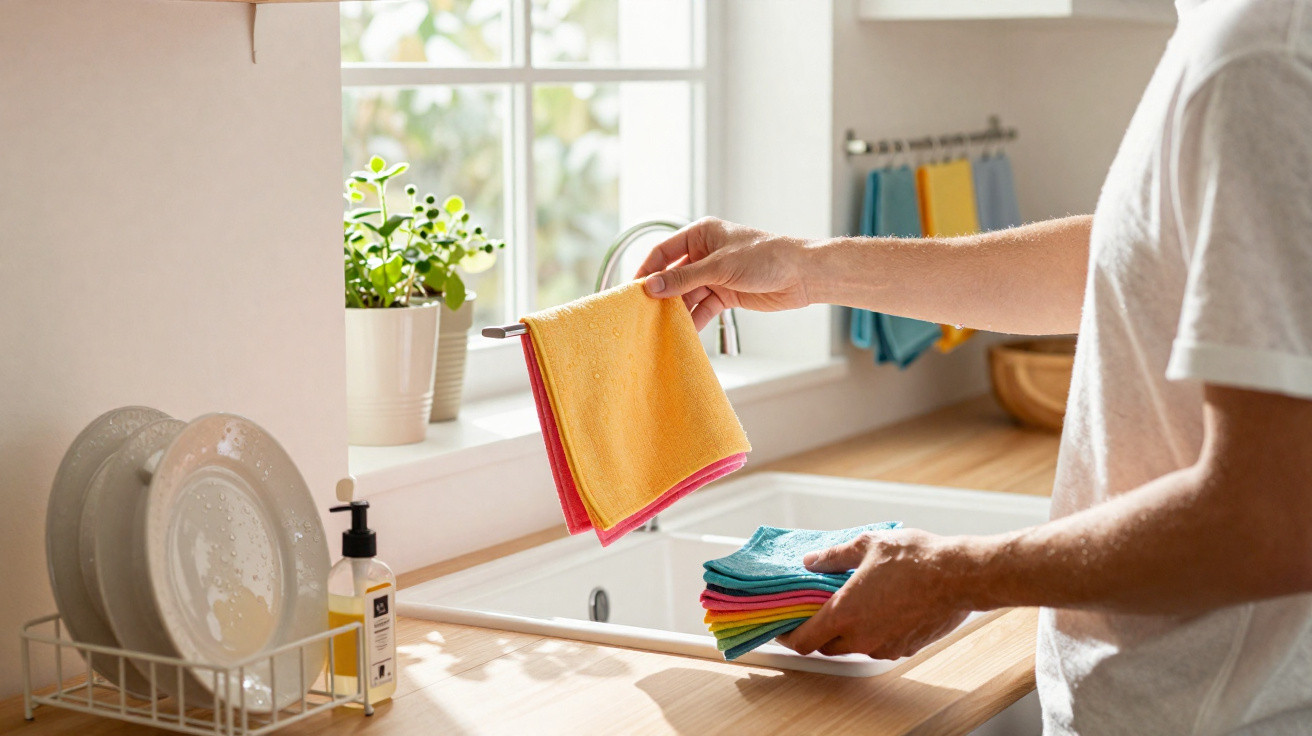
This method performs best when drawers are opened regularly and food containers are kept tightly sealed. Crumbs, leaks, damp cloths and poorly closed packaging can still encourage mould, insects and loss of crispness, even if charcoal is sitting inside the unit.
If you notice wet walls, swollen wood, or marks that keep returning, you will need to find where the water is coming from. Humidity control in cupboards mainly relies on airflow, dry surfaces and fixing leaks, while charcoal serves as an extra measure against odours and light dampness.



Comments
No comments yet. Be the first to comment!
Leave a Comment