
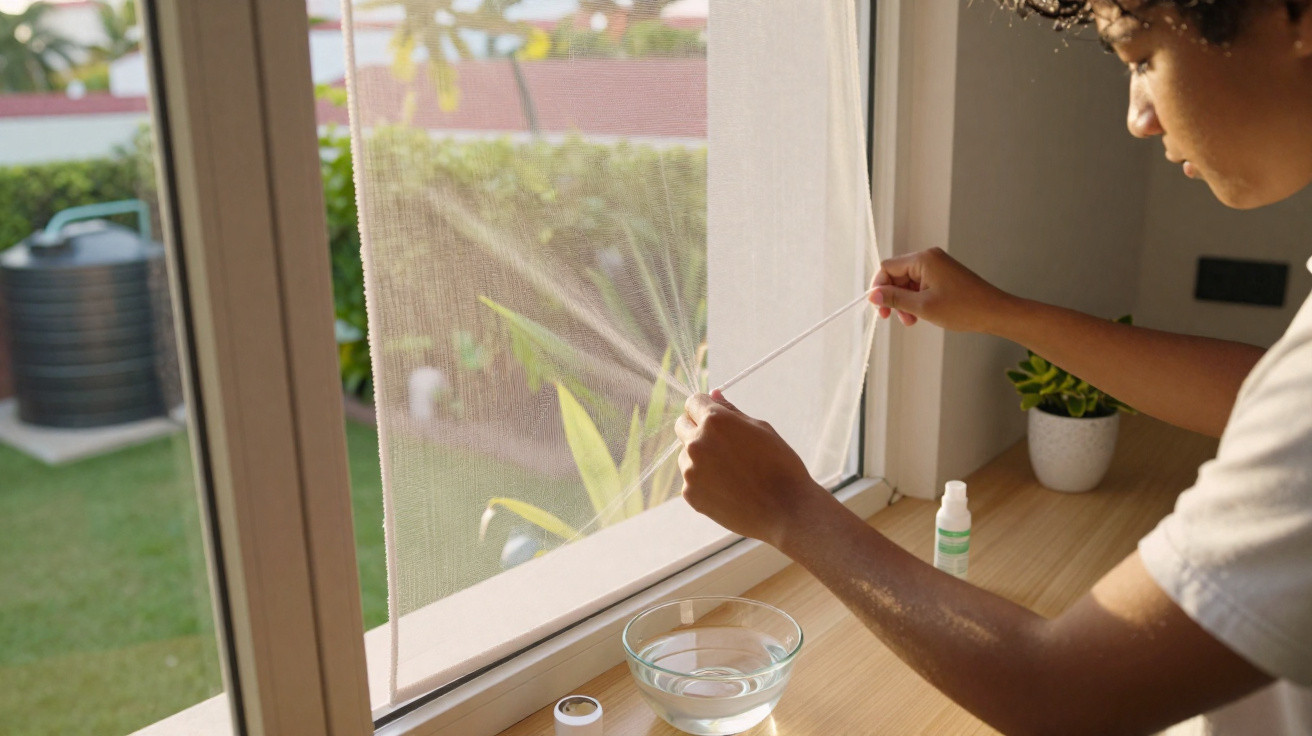
The easiest way to stop mosquitoes getting into the house is not to scent the rooms, but to shut down their entry routes. Well-fitted mosquito screens, sealed gaps and properly adjusted doors all cut down how many insects get indoors, particularly during periods of heat and dengue.
Why do mosquitoes get into the house so easily?
Mosquitoes take advantage of tiny openings around windows, doors, drains, small tilt windows and gaps close to the floor. On hot days, homes are often left more open to improve airflow, which creates convenient routes for insects looking for shelter and food.
Aedes aegypti is described as a mosquito that has adapted to urban settings and to the human home. Because it lives so close to houses, it becomes essential to block entry points and remove places where standing water can collect.
The main points to watch are:
- Windows: snug screens reduce entry without cutting off ventilation.
- Doors: draught excluders, rubber strips and seals close gaps near the floor.
- Gaps: small spaces in walls and frames can also act as passages.
- Garden: exposed containers increase the risk of breeding sites.
- Heat: hot spells encourage mosquitoes to move around inside the home.
How do mosquito screens help with protection?
Screens act as a physical barrier: air can still circulate, but insects cannot pass through freely. This is especially useful in bedrooms, kitchens, utility areas and on windows that tend to stay open for longer during the day and at night.
What matters is checking that the screen is fixed firmly along the edges, with no tears or loose sections. Even a narrow gap can undo much of the protection, particularly in ground-floor homes or properties close to gardens, rubbish and wet plants.
What should you seal besides windows?
Doors with a gap underneath are among the most common entry points, particularly when they open onto corridors, gardens or outdoor areas. A door sweep, adhesive rubber sealing and simple adjustments can reduce access without major work or expense.
A simple barrier against mosquitoes
The blocking effort starts with the smallest openings.
Screens, rubber seals and door adjustments reduce insect movement without relying solely on chemical products.
Protection improves further when the home also keeps drains, the garden and containers free from water build-up.
It is also worth checking infrequently used drains, small tilt windows, gaps in frames and pipe penetrations. These details can be missed day to day, yet they still provide enough of a route for mosquitoes to enter-even when the house seems closed and protected.
Before the hottest period, check:
- Tears or looseness in mosquito screens.
- Gaps beneath external doors.
- Drains without covers or that are rarely used.
- Spaces around windows, small tilt windows and utility areas.
Why is this care linked to dengue?
Aedes aegypti is known for spreading illnesses such as dengue, zika, chikungunya and urban yellow fever. Because it adapts so well to living alongside people, protecting the home’s entry points needs to go hand in hand with tackling breeding sites and water.
A physical barrier reduces nuisance inside rooms, but it will not solve the issue if containers around the property are holding water. Plant saucers, buckets, gutters, bottles and poorly sealed tanks still create conditions for eggs and larvae.
Simple steps make a real difference in everyday life:
- Empty containers that could collect water.
- Keep water tanks and bins tightly covered.
- Clean gutters, outdoor drains and plant saucers.
- Re-check screens and seals more often during hot weather.
How can you turn the trick into a daily habit?
The most effective approach is to combine outdoor prevention with indoor protection. When talking about mosquitoes in hot weather inside the home, the key is to reduce access routes, hiding places and breeding sites through routine and attention.
In the end, the simple trick is to close off the route before the mosquito gets in. Properly installed screens, sealed gaps, adjusted doors and the removal of standing water make the home safer, airy and comfortable during the months of heat.




Comments
No comments yet. Be the first to comment!
Leave a Comment