
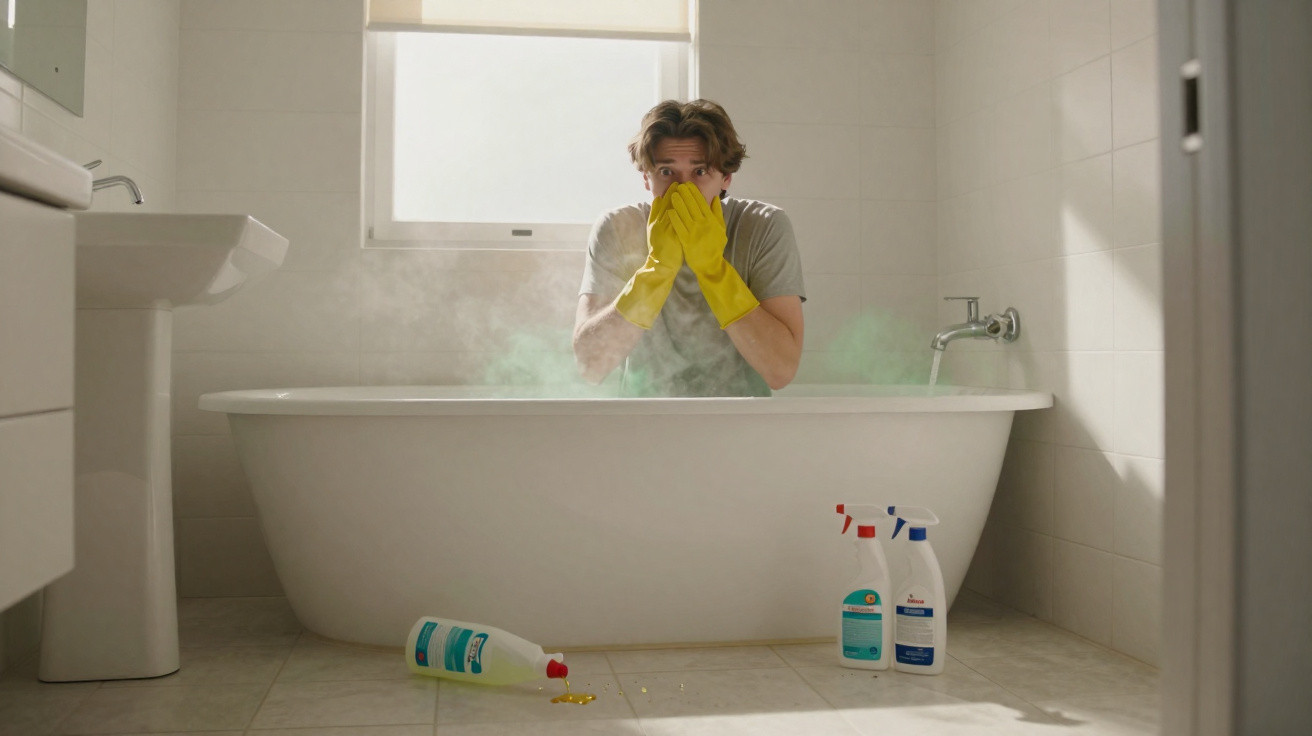
What looked like a routine after-work clean turned into a medical emergency for a 35-year-old in the Albi area. While scrubbing the grout in his bathroom, he combined two everyday household cleaners - unknowingly filling the room with a highly dangerous cloud of gas. Only the rapid response of 13 firefighters prevented the situation from becoming far worse.
How the dangerous bathroom accident happened
The incident occurred on a Thursday evening at around 18:00 in a residential neighbourhood near Albi. The man was trying to thoroughly clean his bathroom windows and grout lines that were thought to be mouldy. To do so, he reached for a common pairing: a chlorine-based bleach and a vinegar cleaner.
To apply the liquids more precisely, he poured both products into a spray bottle. That decision triggered the hazardous reaction: as soon as the two substances mixed, a toxic gas formed. The fumes spread quickly through the enclosed bathroom.
"Within a few seconds, a normal cleaning routine turned into an acute danger situation with severe breathing problems."
The man suddenly found it harder to breathe, began coughing repeatedly, and reported intense burning in his eyes and airways. Neighbours or other people in the home raised the alarm, and the emergency call centre immediately dispatched multiple fire and medical units.
13 firefighters called out after household cleaners were mixed
According to regional media reports, a total of 13 firefighters attended with three vehicles. On arrival, crews assessed the scene: a man in his thirties in clear respiratory distress, a small bathroom with little ventilation, and a sharp, acrid smell in the air.
The responders ventilated the flat, secured the area, and looked after the man at the scene. He was then taken to hospital so doctors could check for any potential damage to his lungs and airways.
"Firefighters repeatedly point out that the gases produced in this way can severely irritate the eyes, mucous membranes and airways - and, if inhaled in high concentrations, can cause lasting harm."
In this case, neighbours and emergency crews acted quickly, which likely limited the health consequences. Even so, the incident highlights just how risky supposedly “clever” DIY mixes can be during everyday cleaning.
What happens chemically when the products are mixed
The symptoms were caused by a chemical reaction between the chlorine-containing bleach and the acid in the vinegar cleaner. When these two components meet, chlorine gas is produced. This gas was used as a chemical weapon in the First World War - and in the home it is just as unwanted as it is dangerous.
Why chlorine gas is so treacherous
- it is usually invisible, so it is often noticed too late
- it can irritate the mucous membranes and lungs even in small amounts
- in small, poorly ventilated rooms, the concentration rises particularly quickly
- symptoms typically begin within seconds
Symptoms can vary widely depending on the dose and how long a person is exposed. People commonly report:
- a sharp smell and an urge to cough
- shortness of breath and tightness in the chest
- burning in the nose, throat and eyes
- headaches and dizziness
With prolonged or very intense inhalation, there is a risk of pneumonia, fluid on the lungs, or permanent damage to the airways. People with asthma or chronic lung conditions often react far more sensitively.
Why it is especially dangerous in the bathroom
Bathrooms are among the places where these accidents happen most easily. Many bathrooms have only a small window, or no direct way to ventilate at all. On top of that, it is exactly here that different cleaners are often used one after another - for limescale, for mould, for soap residue.
In this incident, the man sprayed the mixture in a confined space onto tiles and window grout. Because air circulation was limited, the gas accumulated right at breathing height. Just a few sprays were enough to raise the concentration noticeably.
"The combination of a small room, strong chemicals and poor ventilation can quickly turn a bathroom into a trap - often with no visible warning signs."
Typical household risk factors
- mixing different cleaners “for extra effect”
- using spray bottles in confined spaces
- cleaning with windows and doors closed
- lack of protective measures such as gloves or respiratory protection
- not knowing what ingredients and warning notices mean
Which product combinations can be dangerous
It is not only the combination of chlorine bleach and acidic cleaners that carries risk. A range of other mixtures should also be strictly avoided. Many incidents happen because people assume that “more is better” and simply combine whatever is in the cleaning cupboard.
| Combination | Possible result |
|---|---|
| Chlorine-based cleaners + vinegar or bathroom/sanitary cleaners | Formation of chlorine gas, severe irritation of the airways |
| Chlorine cleaner + ammonia-containing products (e.g. some glass cleaners) | Formation of toxic chloramines, irritation of eyes and lungs |
| Mixing different drain cleaners together | Violent reaction, small explosions, splashes with risk of chemical burns |
| Strong acids + strong alkalis (e.g. drain cleaner + limescale remover) | Intense heat release, splashing, scalds or chemical burns |
Many manufacturers explicitly warn on the back of their products not to mix them with other agents. These warnings are not a formality - they address precisely the kind of incident seen in Albi.
How to stay safe while cleaning
Anyone who wants to play it safe does not need to fear a deep clean, but should follow a few straightforward rules.
Basic rules for safe use of cleaning products
- never mix cleaners yourself - use one product at a time, exactly as the manufacturer instructs
- ventilate regularly and thoroughly while cleaning, especially in the bathroom and kitchen
- avoid aerosol spray where possible; use a cloth or sponge instead of a spray bottle
- wear gloves and, for stronger products, consider a light face mask
- do not decant products into other, unlabelled bottles
- read the warning information on the back at least once, carefully
If there are children in the household, extra caution is essential. Small children are far more vulnerable to toxic fumes because of their lower body weight. Pets that like to stay in the bathroom or kitchen can also be affected.
What to do if something goes wrong
If coughing, breathlessness or intense eye burning suddenly starts after cleaning, every minute matters. Key steps include:
- Open all windows wide immediately and let fresh air in.
- Leave the room if symptoms are severe, and close the doors behind you.
- Move the affected person into fresh air and encourage slow, calm breathing.
- If there is noticeable difficulty breathing, call the emergency services straight away.
- Do not inhale or drink any “antidotes” - that can make the situation worse.
Anyone who may have inhaled suspicious fumes should not avoid calling for medical help out of embarrassment. The Albi incident made one point clear: the faster professionals intervene, the greater the chance it ends without lasting consequences.
Why these accidents can also happen in Germany
Although this specific incident took place in France, the products involved are sold across Europe and sit on supermarket shelves almost everywhere. In German households, chlorine-based cleaners and vinegar products are often stored side by side in the same cupboard.
At a time when many people are trying to clean more “thoroughly” and countless cleaning hacks circulate on social media, the risk of dangerous mixtures increases. Some “household tips” even explicitly recommend combinations that are, from a chemical standpoint, extremely hazardous.
Anyone doing themselves a favour should stick to simple, clearly separated cleaning methods: either a chlorine-based cleaner - or an acid-based one. In between, there should always be thorough rinsing and ventilation. That keeps the cleaning routine effective without needing firefighters and paramedics as part of the bathroom toolkit.




Comments
No comments yet. Be the first to comment!
Leave a Comment