
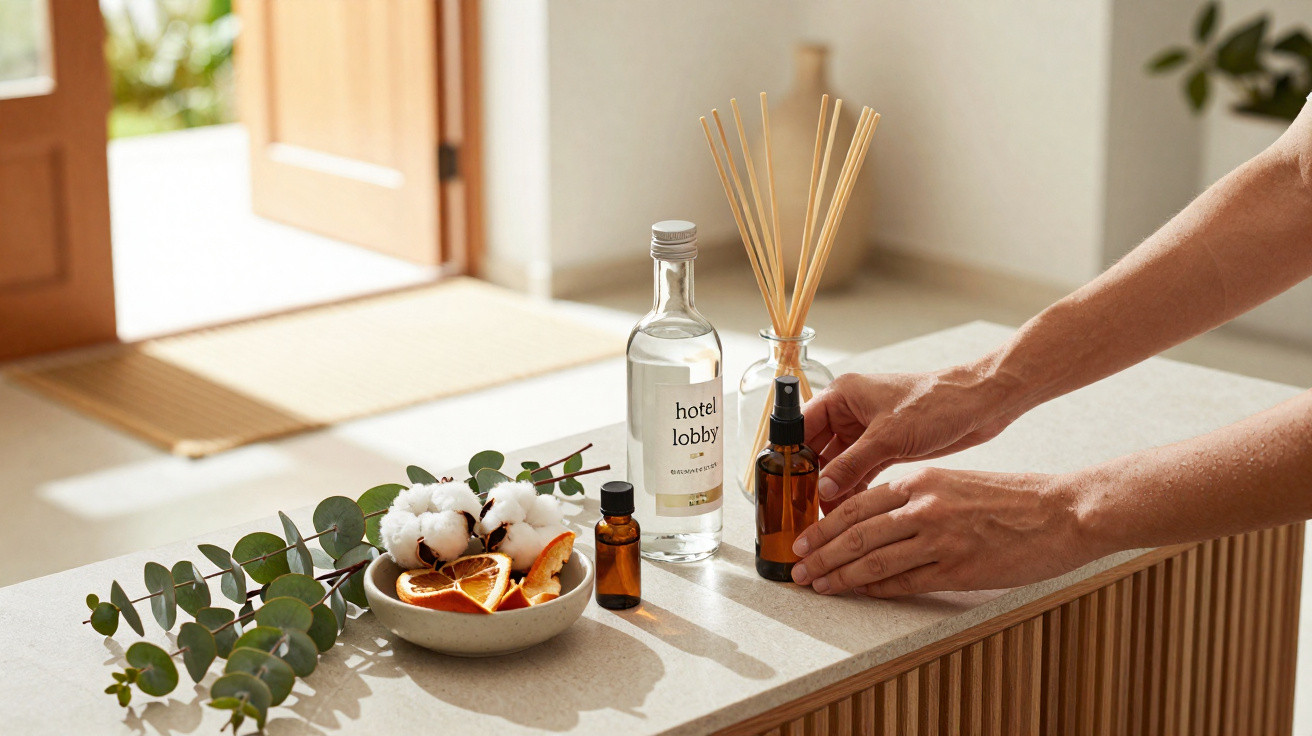
No stylish diffuser on the sideboard, no £40 boutique candle glowing in the corner. Just a small saucepan on the hob, gently simmering, sending thin ribbons of steam across the kitchen. In a matter of minutes, the flat stopped smelling like “we cooked pasta last night” and began to resemble the lobby of an expensive hotel in Milan.
When someone came in, they paused in the doorway and asked the question people always ask: “What is that smell?” Not “what did you spray?” but “what are you cooking?”. It’s not the same thing.
At first glance it looked like nothing much: a few leftover orange peels, a spoonful of spice, water from the tap. Still, the air felt brighter and cleaner - more deliberate, as though the room had a point of view. The surprising part is that the effect isn’t down to oranges on their own.
Why your home never smells like a luxury hotel (until you do this)
In a high-end hotel, you register the scent before you take in the furniture. It isn’t loud or synthetic; it settles around you, soft and “expensive”, as if the air itself has been freshly pressed. At home we tend to chase that feeling with plug-ins, sprays and candles - and often end up with a sore head and a whiff of bargain perfume.
The reality is that hotel fragrances are usually subtle and layered. There’s often a warm citrus note, a touch of spice, and sometimes something woody or musky underneath. It’s not a single aggressive blast of “ocean breeze” that belongs in the cleaning aisle. That’s why gently simmering orange peels with one specific spice gets unexpectedly close: it’s a shortcut using things you likely already have on the worktop.
On a wet Wednesday night in Manchester, I tried it in a tiny rented flat with thin walls and a permanent takeaway smell lingering in the corridor. Within 20 minutes, even the hallway outside the door felt different. One neighbour asked if I’d “got one of those posh diffusers”. Another simply said, “Your place smells… rich.” Not bad for something rescued from the bottom of the fruit bowl.
We all pay for scent marketing without labelling it as such. Supermarkets push bakery aromas towards the entrance. Clothing brands use a signature smell in fitting rooms. Luxury hotels commission bespoke blends guests associate with comfort and escape. Meanwhile, most supermarket air fresheners mainly cover odours rather than actually changing the character of the air.
When you simmer orange peels with a warm spice - and yes, we’ll get to which one - you’re not just masking a smell. You’re shifting the atmosphere. Orange brings brightness and familiarity. The spice delivers depth and that slightly mysterious warmth you notice in good hotel lobbies. It feels lived in, not sprayed on, and your brain interprets that as quality.
There’s also something quietly satisfying about turning leftovers into something genuinely lovely. What would have gone in the bin suddenly makes your home smell more like a five-star spa than yesterday’s rubbish bag. It’s a small change in how you occupy your space - and once you’ve smelled it, those plastic plug-ins start to seem a bit… flat.
The simple pan trick: orange peels and the one spice hotels would approve of
Here’s the method: skip the next air freshener, keep your orange peels, and gently simmer them with whole cloves. That’s all. No fussy recipe, no exact quantities, no specialist kit. Just a small saucepan, water, a couple of twists of peel, and five to ten whole cloves dropped in like tiny brown nails.
Half-fill the pan with water, add the peels and cloves, then bring it up to a low, steady simmer. You’re not after a furious boil - just enough heat for gentle steam. Within ten minutes, the sharp edge of cooking odours starts to fall away. By twenty, the room takes on a warm citrus-and-spice scent that feels oddly like a high-end lobby somewhere in Lisbon or Dubai.
Cloves are the “hotel” note. Orange on its own is pleasant but can read a little one-dimensional, like children’s sweets or a basic candle. Add cloves and you get depth: a trace of mulled wine, a nod to old bookshops, and something faintly exotic without tipping into full Christmas market. The peel releases essential oils, the cloves give off eugenol, and the steam carries everything around the room far more evenly than a single candle flame ever could.
People love the idea of simmer pots, then feel underwhelmed when the fragrance turns out either too weak or overwhelmingly heavy. Usually it’s because they use ground spices, turn the heat up too high, or wander off and let it all catch. Let’s be honest: nobody really does this every day. It’s meant to be effortless, not another task.
Use whole cloves rather than ground. Ground spice clumps, scorches, and leaves a film in the pan. Keep the heat low: a few bubbles at the edges, not a rolling storm. Add more water every 20–30 minutes so it never dries out. One small pan will scent an average flat; in a bigger home, two pans at opposite ends - both on low heat - can work better.
If you’re sensitive to fragrance, begin with fewer cloves (three or four) and only add more if you want it stronger. You can also open a window for a minute beforehand to clear stale air before you start simmering. And yes - keep an eye on the pan. This isn’t a slow cooker you can forget while you pop out. Treat it like making tea: brief, intentional, and rewarding quickly.
“I used to spend a fortune on candles that promised ‘hotel vibes’,” says Emma, 32, from Leeds. “Now I just keep a jar of dried orange peels and a bag of cloves by the stove. Ten minutes of simmering and my flat smells more expensive than my rent.”
A few small tweaks can make the ritual even more straightforward:
- Keep a tub in the fridge or freezer for clean orange peels so they’re always ready.
- Use a dedicated “scent pan” if you’d rather not mark your favourite saucepan with cloves.
- Add a cinnamon stick or a splash of vanilla occasionally for a softer, bakery-style variation.
- Do it in short sessions (15–20 minutes) instead of all evening to avoid nose fatigue.
- Leave internal doors open so the steam can drift into bedrooms and hallway corners.
Why this tiny ritual changes how your home feels
Once you’ve done it, you start clocking how much scent influences mood. Same living room, same sofa, the same half-folded laundry on the chair… but with a warm orange-and-clove haze, the whole place feels more considered. More like somewhere you chose, and less like somewhere you simply landed.
We tend to hunt for “hotel vibes” in big, pricey ways: new throws, oversized candles, expensive diffusers, endless scrolling for interiors inspiration. But sometimes what genuinely shifts the feeling is smaller. Steam carrying orange oils and clove warmth through a cold room on a grey afternoon can feel strangely luxurious - even in an older rental with mismatched plates.
Psychologically, it’s a signal to yourself that your home deserves to smell good even when nobody’s coming round. That tiny choice can make it easier to focus, to unwind after work, and to feel less self-conscious if someone drops by unexpectedly. Practically, it’s inexpensive, low-waste, and easy to adjust. Not every social-media trick earns a second go - this one usually does.
You may even find yourself saving peels without thinking, like dropping coins into a jar: quiet little promises of future cosy evenings when your home smells like a calm, expensive corner of the world - no plug-in required.
| Key point | Detail | Benefit for the reader |
|---|---|---|
| Orange peels + cloves | Simmer leftover peels with 5–10 whole cloves on low heat | Transform how your home smells using kitchen scraps instead of chemicals |
| Hotel-style depth | Cloves bring warm, sophisticated notes to bright citrus | Creates a “luxury lobby” feel rather than a cheap spray effect |
| Simple, low-cost ritual | Short simmer sessions, topping up with water, no special tools | Easy to repeat, budget-friendly, and kinder to the air you breathe |
FAQ:
- Can I use lemon or other citrus instead of orange peels? Yes - lemon, lime, or grapefruit peels all work, although orange tends to give the warmest, most hotel-like aroma. Lemon with cloves smells fresher and sharper, while grapefruit brings a slightly bitter, more grown-up edge.
- How long should I let the orange and cloves simmer? Start with 15–20 minutes on low heat. If you like it, you can continue for up to an hour, topping up with water as needed. When the peels look pale and spent, it’s time to stop.
- Is it safe to leave the pan unattended? No. Treat it like any pan on the hob: stay close, keep checking the water level, and switch it off if you leave the room for more than a few minutes. Safety first, luxury vibes second.
- Can I reuse the same orange peels and cloves? For fragrance only, you can usually re-simmer them once on the same day with fresh water. The second round will be weaker. After that, compost or bin them - there isn’t much aroma left.
- Will this get rid of strong odours like smoke or fried food? It can soften and replace lingering smells, but it isn’t magic. If you can, air the room first and then simmer the peels and cloves. It works best as a “finishing touch” rather than a complete odour eraser.


Comments
No comments yet. Be the first to comment!
Leave a Comment