
In a nutshell
- Radiators gently “roast” built-up debris via convection, releasing VOCs and causing mild pyrolysis-which is why you get that familiar musty, slightly burnt whiff at the first switch‑on.
- That stale odour often indicates airborne PM2.5 and allergens (dust mite debris, pet dander) being stirred up, which can aggravate asthma and sensitivities-particularly in damp UK homes.
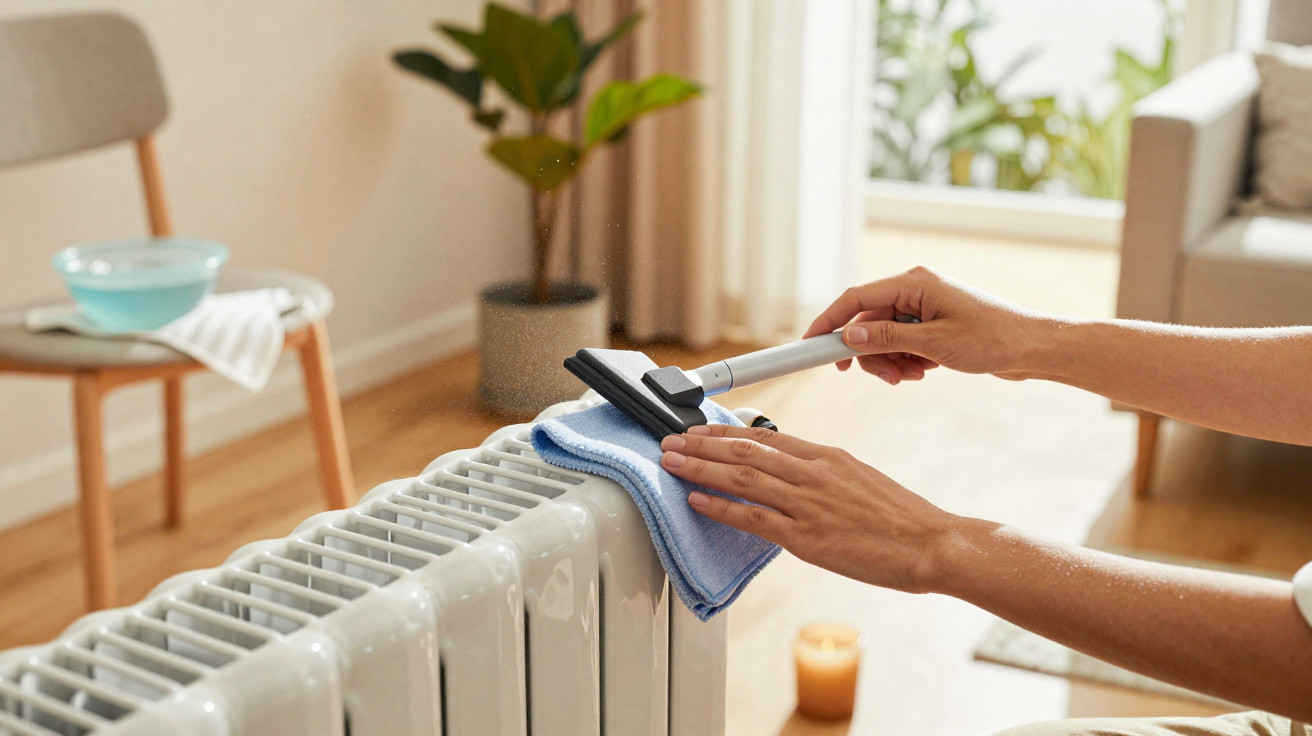
- The most reliable prevention is hands-on: remove dust before first heat using a vacuum, a radiator brush and a lightly damp microfibre cloth-clean the fins, panels and the space behind the unit, then keep on top of it with quick regular cleans.
- Scented sprays aren’t a fix; they contribute extra VOCs. Instead, ventilate sensibly, bring heat up gradually, and consider a quiet HEPA purifier during the first 48 hours of the heating season.
- Useful realities: radiator covers come with Pros vs. Cons (safety/aesthetics versus reduced output and dust trapping), and a Leeds case study found a quick pre‑season clean reduced odours from days to roughly an hour.
When the first chilly spell of a British autumn hits, you turn the valve, hear the pipes hum, and then notice a musty, faintly greasy smell drifting through the room. It’s not “stale water” and it’s rarely a mysterious leak. What you’re smelling is radiator warmth meeting months of settled dust-skin flakes, fabric fibres, pet dander, candle soot and tacky cooking residues. As the layer heats up, it releases compounds that your nose interprets as “old house” or “burnt toast”. Dusting radiators before switching them on prevents that cocktail from volatilising and circulating. Below is what’s happening chemically and physically, what it can mean for indoor air, and the straightforward steps-used in British homes-that help keep the heating season clean, efficient and free of odours.
How Radiators Roast Household Dust
Most radiators in the UK work as convectors: hot water warms the metal, air is pulled up through the fins, and that constant airflow quietly draws fine dust into the unit. After a summer with the heating off, a grey, felt-like mat can build up inside the fins and in the gap behind the panels. When you fire the system back up, radiator surfaces commonly reach about 60–75°C-nowhere near glowing, but easily hot enough to release volatile organic compounds (VOCs) and begin gentle pyrolysis, the heat-driven breakdown of organic material. That’s where you get aldehydes from oxidised oils, slightly plasticky notes from warmed fibres, and the singed edge of carbonised crumbs. It’s less “flames” and more “slow roast”, but the effect is the same: odours, particulates, and a dust plume rising on the convection stream.
From reports across London rentals and northern terraces, caretakers repeatedly said the “first‑day smell” does ease off-yet it reappears every October because the cause hasn’t changed: dust compacted in the fins and behind the radiator. There’s nothing mysterious about the remedy; the job is simply to remove the material before heat reaches it.
| Dust Component | On Hot Metal | Likely Odour/Risk |
|---|---|---|
| Skin flakes & pet dander | Dries out, lightly chars | Stale, “old room” smell; allergen recirculation |
| Cooking oils & soot | Oxidises and releases VOCs | Oily, sharp notes; eye/throat irritation |
| Synthetic fibres | Softens and may depolymerise | Plasticky aroma; microfibre fragments |
| Dust mite debris | Dries and becomes airborne | Allergen exposure for sensitive occupants |
The Health Angle: What’s in That Stale Smell
That early-heating pong is more than an annoyance-it’s a hint about what’s in the air. Heated dust can release VOCs (from fragranced cleaners, aerosols and cooking residues) and increase PM2.5-fine particles small enough to travel deep into the lungs. For most people the exposure is limited; for anyone with asthma, allergies or long‑COVID sensitivities, it may be enough to bring on a tight chest or irritated eyes. If your throat catches when the heating clicks on, the radiator’s dust load-not the boiler-may be the culprit.
Allergens, including dust mite proteins, readily attach to airborne particles. In damp properties-still widespread in Britain’s older housing stock-mites can flourish over summer and leave behind microscopic debris that autumn convection then redistributes. Add candle soot and nicotine residue and the chemical mix becomes more unpleasant. This isn’t medical advice, but air-quality research consistently points to a basic principle: lowering indoor dust reduces exposure to irritants. The upside is that the biggest gains don’t require specialist equipment. A proper clean before the first heat, then quick micro‑dusting each week, keeps the burden down. If you’re particularly sensitive, running a quiet HEPA purifier in the living room for the first 48 hours of the heating season can help reduce the initial spike.
Prevention That Actually Works
Before reaching for anything scented, focus on the mechanics. The surest way to stop radiator odours is to remove the fuel-dust-before it meets heat. Work with the heating off and the radiator fully cool. On panel convectors, lift off the top grille and side panels, then:
- Vacuum using a crevice tool and brush attachment: work top‑to‑bottom and front‑to‑back, covering the fins and the gap to the wall.
- Use a radiator brush: push a long flexible brush through each fin channel to loosen compacted lint.
- Wipe with microfibre: use a cloth that’s barely damp (water plus a drop of mild detergent) on reachable metalwork, then dry straight away to avoid rust.
- Clean behind the rad: a flat duster, or a folded microfibre cloth on a ruler, works well for the rear cavity.
- Finish the skirting and floor: vacuum thoroughly, because anything that drops will otherwise be lifted back into the convection stream.
Timing makes a difference. Do one deep clean before the first switch‑on, then a quick once‑over every fortnight during heavy use. Thinking about a radiator cover? Pros vs. Cons:
- Pros: conceals dust, a child‑safe edge, and a handy shelf.
- Cons: may trap debris and reduce heat output unless well ventilated; it also makes cleaning more awkward.
Case study: In a Leeds flatshare, we tracked odours using a basic notes app. A 20‑minute pre‑season clean reduced the “burnt” smell from three days to one short hour, and the living room heated more quickly-less fluff was blocking convection.
Why Scented Sprays Aren’t a Solution
When the first whiff arrives, it’s easy to reach for a room spray. Fragrance doesn’t fix a physics problem; it overlays it. Plug‑ins and aerosols add additional VOCs-including terpenes and solvents-which can react indoors and create secondary pollutants. The result can be a stronger overall odour and more particulates. And candles? The soot they leave behind over summer is exactly the sort of residue radiators end up “roasting” in October. If you do want fragrance, use it only after cleaning, and keep it minimal.
Better, cleaner tactics:
- Ventilate smartly: open windows on opposite sides for 10 minutes after the first heat to clear odours without dumping all your warmth.
- Dry dusting is out: it simply throws particles into the air-use microfibres that are slightly damp and wrung almost dry.
- Kitchen habits matter: run the extractor when frying; sticky cooking aerosols settle on fins all summer.
- Don’t overheat: turning radiators to maximum won’t “burn off” dust safely and can intensify off‑gassing-warm the system up gradually.
For homes with pets or lots of soft furnishings, placing a compact HEPA purifier near the radiator for the first week of heating can be a quiet, effective helper-without masking the air with perfumed compounds.


Comments
No comments yet. Be the first to comment!
Leave a Comment