
Dust, fingerprints and invisible germs quietly build up on your TV screen, dulling colours and straining your eyes every day.
When that greyish haze appears, plenty of people instinctively grab a strong spray, only to end up with smears - or, worse, lasting harm. Increasingly, tech owners are choosing a simpler alternative from the kitchen cupboard, avoiding detergents and disinfectants entirely.
Why your TV screen needs gentler care
Although modern televisions look robust, the front panel is made up of sensitive layers of glass and plastic plus specialist coatings that enhance contrast and reduce reflections. Aggressive chemicals can wear those coatings away, and abrasive wipes can create tiny scratches that only show up when the light catches them.
As TVs evolved from chunky CRT models to slim LED, OLED and QLED sets, everyday cleaning routines didn’t always change with them. It’s still common to use products intended for windows or bathroom surfaces, despite manufacturer warnings tucked away in the small print.
Most TV brands advise: no alcohol, no ammonia, no classic glass cleaner, and no paper towels on the screen.
And it’s not only dust that ends up on the display. It also picks up:
- Fine airborne particles from cooking or candles
- Skin oils from fingerprints and accidental touches
- Micro-droplets from sneezes and coughs
- Residues from household sprays used nearby
Together, this creates a faint oily film that dims brightness, makes the picture seem less sharp, and can harbour bacteria. Keeping up with regular, careful cleaning helps maintain a crisp image and a more hygienic surface - particularly in busy living rooms and shared spaces.
The one ingredient that actually does the job
Cleaning “hacks” on social media can be overhyped, but one suggestion keeps appearing for good reason, backed by hygiene specialists and echoed by many TV owners: plain white vinegar, used in the correct dilution.
Because white vinegar is essentially acetic acid mixed with water, it’s effective at cutting grease and loosening light mineral traces without leaving a heavy residue. Used properly - diluted with distilled water and applied with the right technique - it can brighten up a screen without scratching it or damaging coatings.
The key is not just “vinegar”, but the right mix: low concentration, soft cloth, and zero direct spray on the screen edge.
Distilled water matters because tap water contains minerals that can dry into spots or faint rings. With those minerals removed, distilled water evaporates more cleanly and helps minimise streaking.
| Component | Role in the mixture | Risk level for the screen* |
|---|---|---|
| White vinegar (diluted) | Degreases, helps dissolve light grime | Low, if used in small amounts and not pure |
| Distilled water | Dilutes vinegar, avoids mineral spots | Very low, if not over-applied |
| Microfibre cloth | Lifts dust without scratching | Very low, if clean and not abrasive |
*Risks increase if liquid seeps inside the frame or the mixture is too strong.
How to clean your TV with vinegar and no detergents
The technique is just as important as the solution. If you’re careless, even plain water can make its way into electronics; if you’re methodical, the whole job is quick and low-risk.
Step 1: Power down and unplug
Switch the television off and, ideally, unplug it. With the panel dark, marks stand out more clearly, and the screen has time to cool. Cleaning while it’s warm can make liquid dry too quickly, leaving uneven streaks.
Step 2: Mix the solution
In a clean spray bottle, make a gentle mixture:
- 1 part white vinegar
- 1 part distilled water
Give it a light shake. There’s no need to make it stronger; even a mild mix will lift skin oils sitting on the surface.
Step 3: Never spray the TV directly
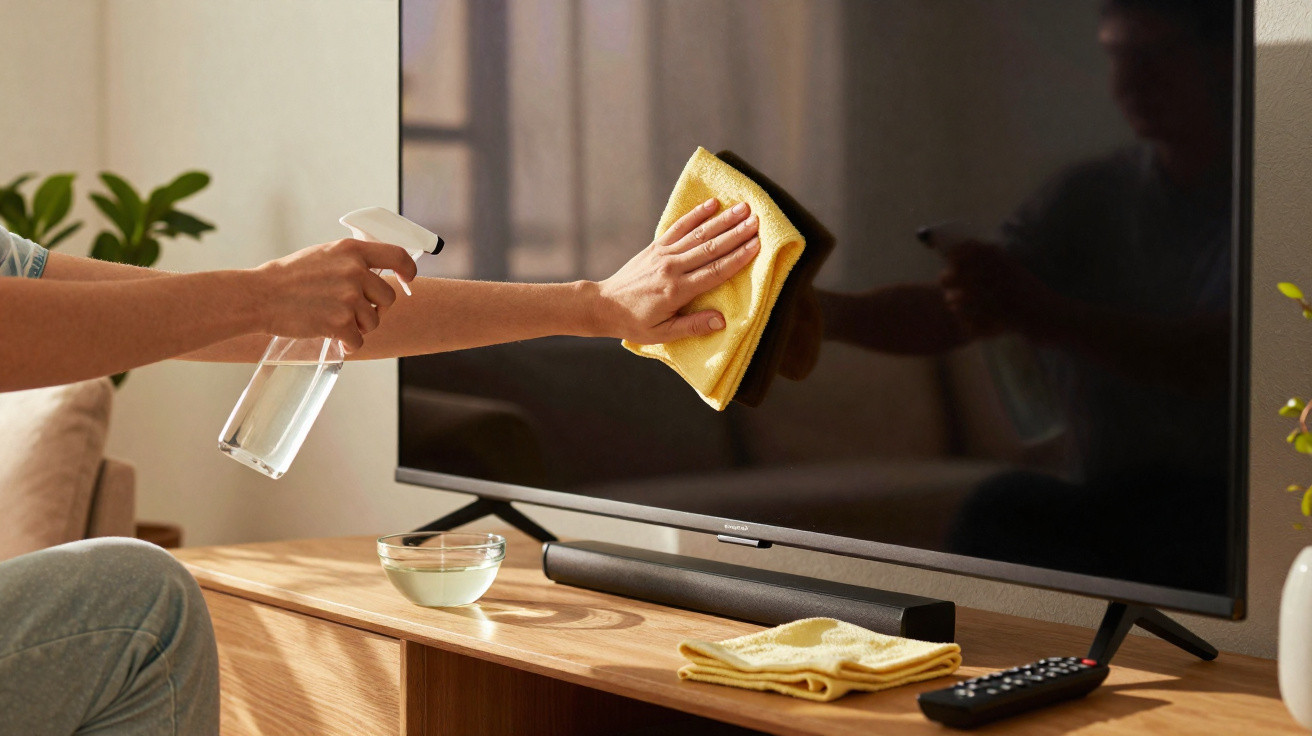
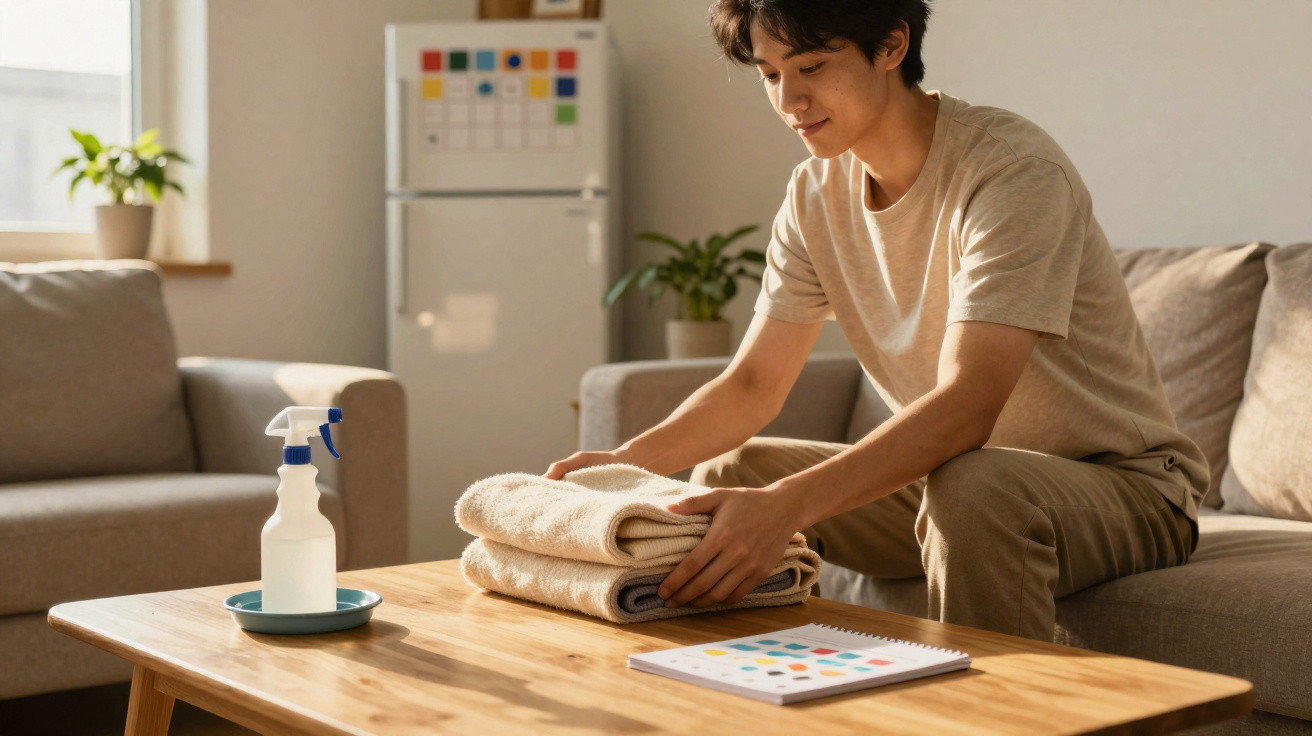
Spritz the solution onto a clean microfibre cloth - not onto the TV itself. The cloth should be just slightly damp rather than wet. If you can squeeze it and droplets fall, you’ve used too much.
Liquid that runs down into the bezel or ports can cause damage long before the screen shows any visible problem.
Step 4: Wipe with light, controlled movements
With minimal pressure, wipe in straight passes or wide circles, working from the top of the screen downwards. Don’t scour at stubborn spots; instead, allow the vinegar a moment to loosen the residue rather than pressing harder.
If you’re dealing with fingerprints, briefly rest the damp part of the cloth on the mark and then wipe away. That short pause helps soften oily build-up so it lifts off more easily.
Step 5: Dry and polish with a second cloth
Finish with a second microfibre cloth that’s completely dry, buffing away lingering moisture and any faint smears. Inspect the panel from an angle under a light source, as fine streaks often only appear from the side.
Why you should skip disinfectant sprays and classic cleaners
During the pandemic, many households relied heavily on disinfectant sprays - including on remotes and, in some cases, on TV panels. Even if that became routine, it’s not a good fit for today’s screens.
Alcohol, ammonia and other strong solvents can degrade anti-glare and anti-reflective coatings. With repeated use, this may lead to hazy patches, rainbow-like marks, or permanently dulled areas where the finish used to look smooth and rich.
Paper towels and kitchen roll can also be problematic. They may feel soft, but the fibres are slightly abrasive and can act like extremely fine sandpaper on delicate surfaces.
Swapping one harsh spray and a roll of paper towels for diluted vinegar and a microfibre cloth can extend the life of your TV’s finish by years.
How often should you clean your TV?
How frequently you should clean depends on your environment. A family living room with children, pets and snacks will typically need more attention than a guest room that’s rarely used.
- Light dusting: once a week with a dry microfibre cloth
- Vinegar-and-water clean: every 2 to 4 weeks, or when you clearly see smudges
- Deep check: every couple of months, including frame, stand and ports (without liquid)
If you dust gently on a regular basis, you’ll need damp cleaning less often. Less rubbing also reduces the chances of pressing too firmly or getting moisture where it doesn’t belong.
Beyond the screen: a quick hygiene check for your setup
The panel isn’t the only surface worth thinking about. Remote controls, soundbars and games controllers can carry more bacteria than many people expect because they’re handled constantly and seldom cleaned.
Those items usually benefit from a different approach: a slightly damp cloth with a tiny amount of mild soap for plastic surfaces, plus a cotton bud to reach gaps and seams. Avoid heavy disinfectants on rubberised finishes, as they can turn tacky or start peeling.
When vinegar is not the right choice
A diluted vinegar-and-water solution is generally tolerated on the outer surface of many LED and LCD TVs, but there are exceptions. Some OLED manufacturers recommend sticking to a dry cloth or a cloth very lightly moistened with plain water.
If your TV is brand new or particularly expensive, checking the manual or the brand’s support page can save you from an expensive mistake. If you’re unsure, begin with distilled water only. It removes more grime than you might expect, and you can reserve vinegar for occasional deeper cleans if your manufacturer permits it.
Practical extras to protect picture quality
Cleaning helps, but a few small changes to placement and day-to-day use can make maintenance easier and keep the picture looking consistent:
- Keep the TV away from direct sunlight to prevent UV damage and visible streaks
- Avoid placing scented candles or diffusers directly under or behind the screen
- Use an air purifier in dusty rooms to cut deposit on the panel
- Teach children to point at the picture, not touch it
For anyone who watches lots of sport or uses the TV as a second monitor while working from home, a spotless display can also reduce eye strain. When there’s no haze, no lingering fingerprints and no patchy residue affecting brightness, your eyes don’t need to work as hard.
With streaming hours continuing to rise and screens getting ever larger, keeping that big sheet of glass and plastic clean becomes a simple weekly habit. In many homes, plain white vinegar, distilled water and two microfibre cloths are enough to keep the screen clear - without using a single detergent or disinfectant.

Comments
No comments yet. Be the first to comment!
Leave a Comment