
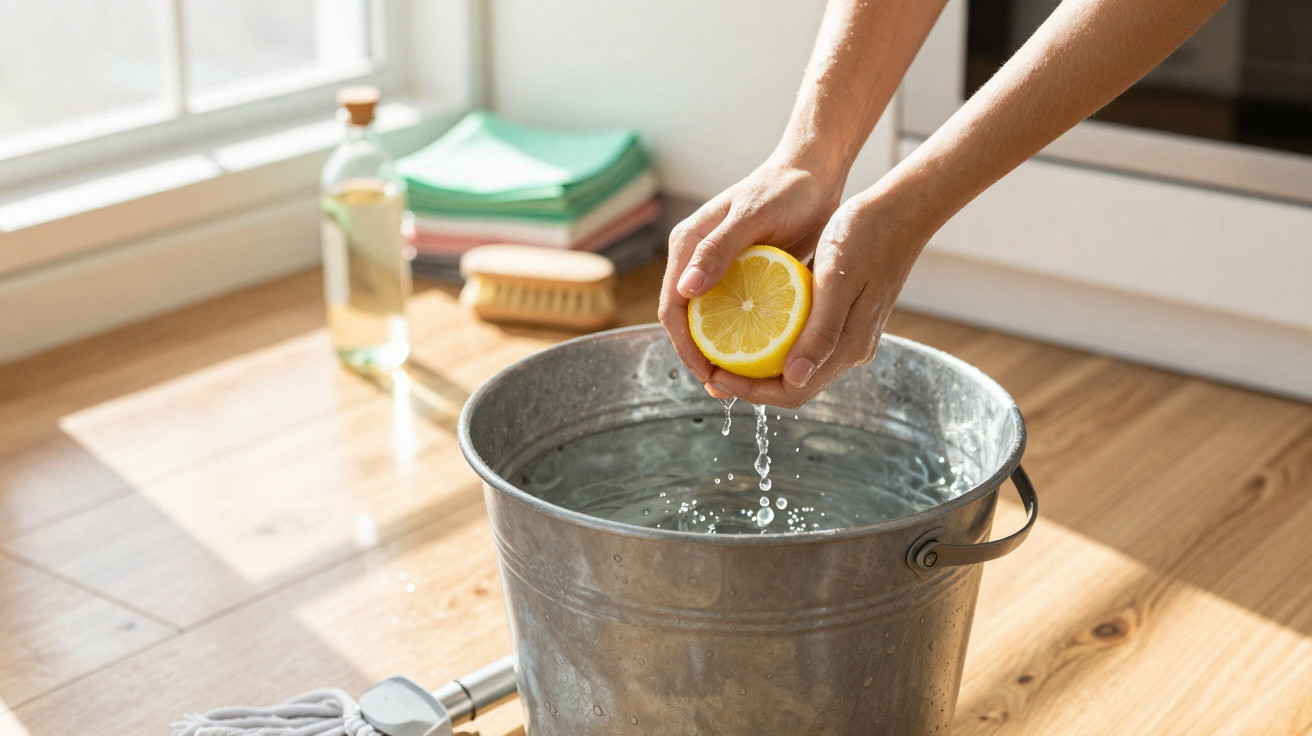
A single everyday cupboard item can transform the way you wash your floors, helping to tackle germs and ground-in dirt without filling the house with harsh chemical fumes.
As more households step back from heavy-duty cleaning products, a quieter shift is taking place at floor level: people are adopting methods that still deal with grime and bacteria, but with fewer downsides for health and indoor air.
Why so many people are rethinking floor cleaner
Floors act like collection trays for almost everything-dust, pet dander, dropped food, pollution tracked in from the street, and even small traces of pesticides. With every footstep, some of that material is stirred up again, which is why floor cleaning is about more than appearances. It influences the air you breathe indoors.
For years, many households have depended on ammonia and bleach. They dissolve grease, knock back a broad range of microbes, and leave the familiar “disinfected” scent many people associate with cleanliness. The drawback is that these products can come with real compromises, particularly in smaller rooms or homes with limited ventilation.
Ammonia may sting the eyes and irritate the throat and lungs. Bleach gives off vapours that can react with other substances in the air. If misused-or combined with an incompatible product-these cleaners can generate toxic gases. People who live with asthma or allergies are often the first to notice the impact.
Floor cleaners do not just touch surfaces. They shape indoor air quality, especially for children and pets close to the ground.
There is also a wider cost beyond the home. Wastewater from frequent bleach use ends up in rivers and coastal waters, adding to chemical burdens in ecosystems that may already be under strain. It is no surprise that more people are looking for options that still clean effectively, without feeling like they are handling something from a lab.
The pantry ingredient that upgrades your mop bucket
Sitting quietly near the olive oil or jars of pickles is an unexpectedly capable helper: plain white vinegar. Diluted with water, it can loosen mineral build-up, cut through soap scum, reduce lingering smells, and disrupt the growth of many common household microbes.
Vinegar works because of acetic acid. It helps break up the bonds that allow dirt to cling. On sealed tiles, vinyl, and many laminate floors, a gentle vinegar mix is often enough for day-to-day grime-and it is less likely to leave behind a tacky residue.
For most sealed hard floors, a bucket of warm water with a splash of white vinegar is often all you need for regular cleaning.
How to use vinegar safely on floors
- Use cold or lukewarm water, not boiling hot, to protect floor finishes.
- Start with a mild ratio: about 120 ml of white vinegar in 4 litres of water.
- Wring the mop well to avoid soaking the floor, especially on laminates.
- Test on a discreet corner first, especially on coloured grout or old sealants.
Used this way, the solution can lift light staining, everyday splashes in the kitchen, and the dull grey haze that builds up in busy hallways. Because vinegar dries quickly, it often leaves fewer streaks than heavily fragranced products.
When vinegar is not the best choice
Not every material tolerates acidity. On natural stone-such as marble, limestone, travertine-or on unsealed concrete, the same acidic action that helps dissolve limescale can etch the surface or take away its sheen.
With repeated use, acidic mixes can gradually roughen these more delicate finishes, leaving them more porous and, in the long run, more difficult to keep clean. In those situations, some people turn to another familiar kitchen option: lemon.
Lemon water, the softer alternative for delicate floors
Fresh lemon juice contains citric acid, which can help with degreasing and deodorising. When it is diluted much more than vinegar, it becomes a very gentle mix that many homeowners prefer on areas where they want to avoid stronger acids and synthetic fragrances.
For everyday mopping, some cleaning specialists recommend a blend such as one tablespoon of lemon juice in 4 litres of water. It tends to smell brighter than vinegar, while still helping to shift light grease and small food residues.
Lemon water, used in very small amounts, offers a calmer middle ground between harsh detergents and plain water.
Lemon water can also be combined with a tiny dash of neutral washing-up liquid for sticky patches in the kitchen. If you do this, it is best to rinse afterwards with clean water so you do not leave a film that attracts more dust.
Choosing between vinegar and lemon
| Ingredient | Best suited for | Main benefits | Key cautions |
|---|---|---|---|
| White vinegar | Sealed tiles, vinyl, many laminates | Degreases, deodorises, limits limescale | Avoid on natural stone, terrazzo, waxed wood |
| Lemon water | Light cleaning on sealed floors, quick refresh | Mild, pleasant scent, plant‑based | Use highly diluted, can still damage stone if too strong |
Why terrazzo needs special attention
Terrazzo has returned to fashion in new builds and renovations, appearing everywhere from bathroom floors to modern kitchen islands. It is made by combining chips of marble, quartz, granite, and other materials with a binder, then polishing the surface to create that speckled, stone-like finish.
Because terrazzo often contains marble fragments, it is vulnerable to acids. So even though it can look tough, both vinegar and lemon may gradually dull it-particularly if acidic spills are left sitting on the surface.
Professionals usually advise keeping it simple. For routine upkeep, they tend to recommend a soft broom, a microfibre dust mop, or a vacuum cleaner fitted with a hard-floor head. The aim is to remove grit that could scratch the polished layer.
With terrazzo, mechanical cleaning – sweeping and vacuuming – matters more than strong chemicals. Gentle products help preserve the shine.
When damp mopping is needed, specialists generally favour pH-neutral products that are clearly labelled as safe for stone or terrazzo, mixed with water as directed. Here, restraint helps: using a barely damp mop and drying carefully reduces water marks and protects the binder that holds the chips in place.
Matching cleaner to floor type
There is no universal cleaner that suits every surface. Choosing the wrong approach can reduce the lifespan of an expensive floor, so it pays to check the manufacturer’s guidance before you start.
- Ceramic or porcelain tiles: often cope well with diluted vinegar, provided the grout remains properly sealed.
- Vinyl and most laminates: generally tolerate mild vinegar or lemon water, but they should not be left with standing water.
- Engineered and solid wood: are usually better with dedicated wood cleaners; excess water can cause swelling.
- Natural stone and terrazzo: require pH-neutral, non-acidic products and frequent gentle sweeping.
Whatever you are cleaning, strong perfumes and vivid colours in a bottle are rarely signs of improved hygiene. They are typically marketing choices. In practice, cleanliness comes from friction, clean water, and consistent routine.
Health, cost and environmental angles
Moving away from ammonia or bleach towards vinegar or lemon water changes more than the scent in your home. It can lower the amount of volatile compounds released during mopping, which is particularly relevant for children who play on the floor and for pets that lick their paws after walking over freshly cleaned areas.
Financially, white vinegar is often cheaper than branded disinfectants and can last through dozens of mop buckets. Lemons can also be cost-effective, especially if you make use of fruit left over from cooking.
Environmentally, these diluted pantry acids tend to break down quickly in wastewater. They still need sensible handling-tipping pure acid into the drain is not helpful-but their longer-term footprint is generally lighter than many chlorine-based formulas.
When you still need something stronger
Some situations genuinely call for a higher level of disinfection: following a sewage back-up, during outbreaks of particular infections, or in workplaces where strict procedures apply. For typical household floors, that level of strength seldom provides a clear advantage.
Many public health bodies now stress that the first step is cleaning with detergent and water. Disinfection comes afterwards and only when needed, rather than being the default. Regular sweeping combined with a well-timed mop using a mild solution can remove a substantial portion of the microbial load before you reach for a disinfectant.
Going a step further: building a low‑tox cleaning routine
Changing what you put in the mop bucket can prompt a broader rethink of cleaning products around the home. Some households narrow their cupboard to a small set of basics-such as baking soda, vinegar, citric acid and a neutral soap-and build most tasks around them.
This kind of approach can reduce plastic packaging, make storage simpler, and lower the risk of accidentally mixing chemicals that should not combine. It also nudges people to read labels more closely. Once you start looking, the ingredient lists on standard floor cleaners can seem surprisingly long next to a jug of diluted vinegar.
For those who react to fragranced products, the difference can be noticeable. The smell of vinegar usually fades once dry, while lemon brings a scent from real fruit rather than blended synthetic perfumes. A modest change to your floor-cleaning routine can subtly alter how your whole home feels.

Comments
No comments yet. Be the first to comment!
Leave a Comment