
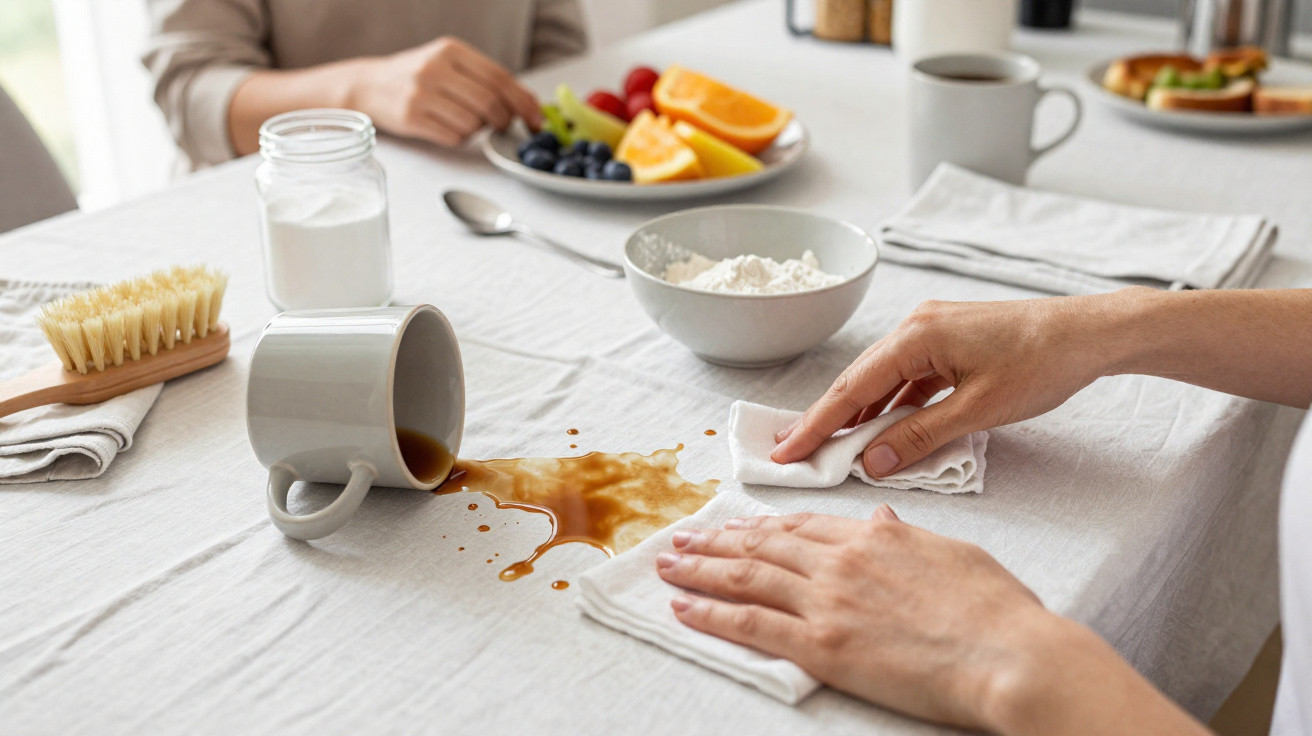
A coffee mug nudges an elbow, the elbow catches the table edge, and a slow, unhelpful arc of coffee sails on to a white cotton tablecloth just as guests reach for the fruit. The whole room seems to stop for a beat - that shared intake of breath - while someone fumbles for napkins and the host looks ready to give up on brunch and surrender straight to the washing basket.
This is the moment expensive “miracle” sprays try to sell you: panic, a harsh scent, and the feeling you must overreact. What people often miss is far simpler: baking soda can shift coffee stains quickly, treat fabric gently, and spare you another bottle that smells like a laboratory.
Back in the kitchen, the tap runs with a sharp hiss. A spoon taps the rim of a jar. Baking soda meets cold water and turns into a smooth, pale paste. The stain doesn’t lose because of a brand label; it loses because of a basic cupboard habit. The solution was already on the shelf.
With a little patience, the brown smear loosens and lifts. The table goes back to being a table rather than a crime scene. It’s a small rescue that teaches a larger point: one straightforward method can outdo an entire aisle of products - the sort of trick you remember when the next cup wobbles, and the sort you end up passing on.
It really does work.
Why baking soda wins against coffee stains
Coffee marks settle into fabric like a story that won’t let go. Because they’re tannin-based, they grip the fibres more tightly as the spill cools and dries. Baking soda is mildly alkaline and gently abrasive, which helps break that hold without roughening the weave. It’s more about persuading the stain than attacking it.
That “minor disaster” feeling is familiar. In one home I visited, the host automatically grabbed a pricey stain stick - and ended up with a ring. The very same cloth, a week later, was treated with a baking soda paste and a light rinse: no ring, no fuss. Better still, the tablecloth stayed soft rather than developing that crunchy, over-processed feel you often notice after aggressive cleaners.
The reasoning is straightforward. A small lift in pH helps neutralise tannins and makes them easier to dissolve in water, so they release when you rinse. Meanwhile, the fine grit helps raise surface pigment, a bit like seawater washing sand off your skin. If you add a tiny touch of washing-up liquid, the paste spreads and slips across fibres more smoothly. It’s basic chemistry that behaves like common sense.
Step-by-step: the baking soda method that actually works
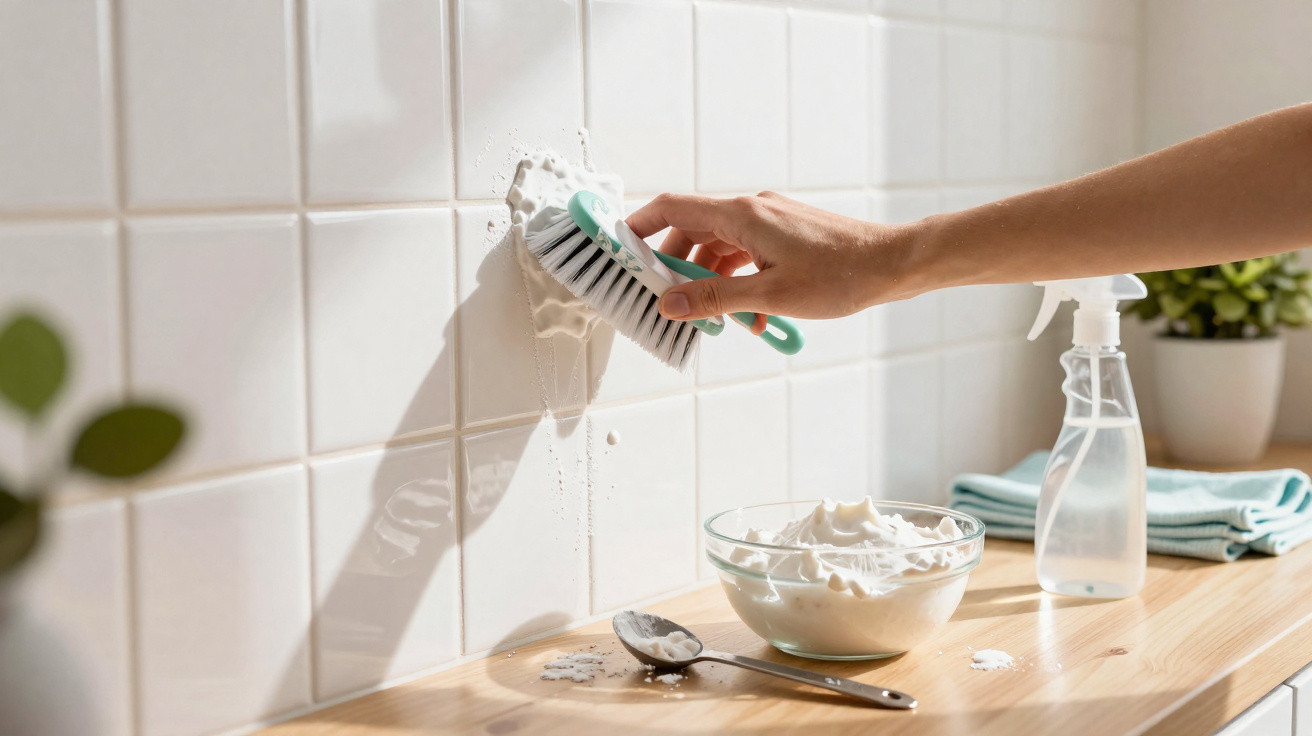
Start by blotting the spill with a clean cloth - don’t rub it in. Next, flush cold water through the stain from the back of the fabric so you push the coffee out rather than driving it deeper. Stir together two parts baking soda and one part cold water until you have a paste you can spread. Smooth a thin layer over the mark and leave it for 10–15 minutes.
Then work the area very lightly with your fingertips or a soft brush for about 10 seconds. Rinse with cold water and examine the fabric under bright light. If you can still see a faint shadow, either repeat once or mix a single drop of mild washing-up liquid into the paste. Wash as you normally would in cool to warm water. Dry it on the line or air-dry it indoors first so you can confirm the stain has fully gone. Let’s be honest: hardly anyone does this every day, but when you do, you protect both your linens and your wallet.
Most problems come from basic mistakes. People scrub too hard, reach for hot water immediately, or leave the paste until it dries solid. Heat can set tannins. Rubbing can roughen the surface and create a halo. If you’re worried about colour on dyed linens, try the method on a hidden seam first. Cold water and a bit of patience beat panic and elbow grease.
“Baking soda gives you time to breathe,” said a café manager who treats table linens as inventory. “It’s cheap margin protection in a jar.”
- Quick kit: small bowl, spoon, baking soda, cold water, clean white cloth, soft brush.
- Optional helpers: a drop of mild washing-up liquid, white vinegar for lingering odours.
- Timing sweet spot: 10–15 minutes for fresh stains, up to 30 for stubborn marks.
- Check in bright light before drying to avoid setting any faint shadow.
Smart habits that save money and fabric
Turn it into a simple routine: blot, flush with cold water, apply paste, wait, rinse, then wash. When the stain is older, dampen the area first, dust on dry baking soda, mist lightly, and give it longer before the gentle massage step. For white cotton or polyester, an oxygen-based bleach in the wash can complete the job after the baking soda stage. Not every mark needs the most aggressive option.
The wrong habits can ruin a tablecloth. Don’t stack four products on top of each other; you’ll only overwhelm the fabric (and your sense of smell). Keep away from steam or hot cycles until the stain has disappeared. Avoid stiff brushes that raise pilling. If you’re working with vintage linen, handle it carefully - it’s stronger when wet but doesn’t tolerate wringing. A 20-second test on a corner can prevent a colour change you can’t reverse.
There’s also a cost point most people ignore. Premium sprays often promise miracles in a perfumed mist, get used twice, and end up forgotten under the sink. Baking soda costs pennies, stays within reach, and pairs well with other simple staples.
“Good cleaning is mostly timing and calm,” my grandmother used to say. “Tools help, but habit wins.”
- Watch water temp: cold first, warm only after the stain fades.
- Use light pressure; let chemistry do the lifting.
- Air-dry to confirm, then press with a warm iron if the care label allows.
- Keep a small jar of baking soda near the sink for spill season.
A small switch that changes how you host
There’s a quiet satisfaction in rescuing a tablecloth. You keep a memory intact and avoid that sinking feeling of throwing money at a problem that didn’t require it. Baking soda nudges you to pause and work with the fabric rather than against it - and its lack of flash is exactly why it’s so useful.
This isn’t only about stains. It’s a way of thinking that reduces waste and builds confidence. Once you feel that brown bloom lift under your fingertips, you stop dreading the mess and start handling it calmly. You also begin to question the crowded shelf of cleaners - what they do to the air in your home and what they do to your budget.
Teach the method to someone else. Pass it on. Ask a friend what they swear by and compare notes over a cup that might spill again. The next stain will happen. The calm can, too. And the baking soda jar will still be there on the counter, like a quiet promise.
| Key point | Detail | Benefit for the reader |
|---|---|---|
| Cold-first approach | Blot, rinse from the back with cold water, then apply paste | Prevents setting tannins and speeds removal |
| Baking soda paste | 2 parts baking soda, 1 part cold water, 10–15 minutes dwell | Gentle lift without damaging fibres or colour |
| Final checks | Rinse, air-dry, inspect in bright light before heat | Avoids permanent halos and repeat washing |
FAQ:
- Can baking soda remove old, set-in coffee stains? Yes, although you may need a couple of attempts. Moisten the area, sprinkle on baking soda, and leave it for 20–30 minutes. Work it into a paste and rinse with cold water. On white cotton, follow up in the wash with an oxygen-based bleach. Avoid chlorine on natural fibres.
- Is baking soda safe on coloured tablecloths? In most cases, yes. It’s non-chlorine and non-enzyme, and it typically won’t strip dye. Test the hem or a hidden seam first. If colour transfers on to a white cloth, reduce the dwell time and rinse sooner.
- Should I use hot or cold water on coffee stains? Begin with cold water so the tannins stay mobile. Once the stain has faded, warm water is fine. Leave heat until last - such as a warm iron - and only if you’re certain the mark has gone.
- Can I mix baking soda and vinegar for stains? Use them one after the other, not at the same time. Combined, they neutralise each other and you’re left with salty water. If you want vinegar for odour, rinse off the baking soda first, then use a light vinegar solution and rinse again.
- What about delicate fabrics like linen or silk? Linen generally copes well if you keep your touch gentle. Silk is more sensitive: spot test, keep the dwell time very short, and don’t scrub. If the label says dry-clean only, blot the spill and leave deeper treatment to a professional.

Comments
No comments yet. Be the first to comment!
Leave a Comment