
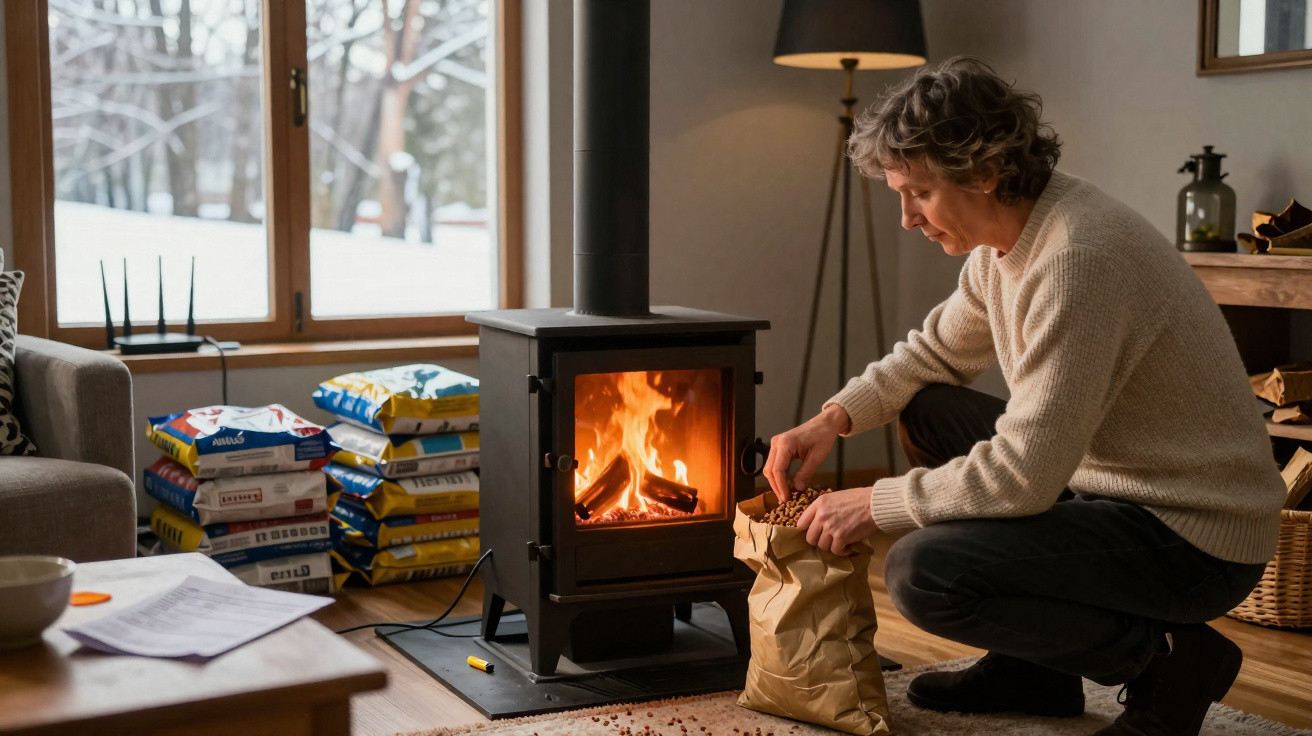
With electricity networks under strain and energy prices still unpredictable, a growing number of households in France are reassessing home heating. A surprising favourite is the non-electric pellet stove: it burns wood pellets yet needs no mains connection, no electronics and no digital display.
Back to basics: a heater that works when the lights go out
In recent years, pellet stoves in France have largely meant “smart” heating: programmable thermostats, powered fans and app-based controls. The non-electric alternative takes a very different approach, depending instead on gravity feed, manual lighting and natural airflow.
The operating idea is straightforward. Pellets sit in a hopper positioned above the firebox. As the fuel is used, fresh pellets fall down under their own weight into a small burn pot. There is no motor, no auger screw and no control board to manage.
"When the power fails, a non-electric pellet stove continues to run exactly as before, with no change in comfort or safety."
You light the fire manually, typically using a firelighter or a small piece of kindling. After ignition, the pellets burn at a slow, even rate to maintain a stable flame. Heat output is managed through mechanical air controls, which regulate both the burn speed and the warmth delivered.
Rather than pushing warm air with an electric fan, the stove relies on convection: heated air rises naturally, pulling cooler room air in behind it and creating a gentle circulation. At the same time, the stove’s casing radiates warmth, heating nearby surfaces such as walls and furniture as well as the people in the room.
Why French households are choosing the non-electric pellet stove
Energy security in an uncertain grid
France has repeatedly been warned about tight electricity supply in winter, particularly during cold snaps and periods of nuclear maintenance. In smaller towns and rural communities, power cuts are still a familiar worry.
Against that backdrop, many families are looking for practical back-up heating. A non-electric pellet stove functions as an “insurance policy” when the lights go out.
- It helps keep key living areas above freezing during an outage.
- It lowers reliance on electric radiators and heat pumps.
- It gives reassurance that at least one room can be kept warm in almost any situation.
For people living in remote locations, or in older stone homes that are hard to upgrade, that dependability matters. The stove’s operation is not tied to Wi‑Fi, electronics or the stability of the grid.
Less to break, less to repair
Conventional pellet stoves typically include multiple electronic elements: control boards, sensors, fans and motors. Any of these can fail, often requiring specialist intervention and sometimes lengthy waits for replacement parts.
Non-electric versions remove much of that complexity. In many ways, they resemble a classic wood-burning stove, with far fewer moving components.
"The simpler the mechanism, the lower the risk of sudden breakdowns in midwinter and the lower the long-term bill for maintenance."
A number of French installers say that homeowners frustrated by frequent error messages on ageing pellet stoves are deliberately opting for “low-tech” replacements. For those intending to remain in the same property for decades, durability can be as important as maximum efficiency.
Cutting the energy bill, not just the emissions
Because they operate without electricity, these stoves remove one small but real item from the monthly household spend. Even though a standard electric pellet stove does not draw huge power, the cost accumulates over several heating seasons.
Pellets themselves are often competitively priced compared with heating oil or direct electric heating, particularly in well-insulated properties. They are commonly made from sawmill residues and forestry by-products, aligning with France’s broader move towards more local, renewable energy sources.
| Heating option | Needs electricity to run? | Main fuel | Typical use in France |
|---|---|---|---|
| Non-electric pellet stove | No | Wood pellets | Back-up or main heat in rural homes |
| Electric pellet stove | Yes (fans, motors, controls) | Wood pellets | Main heat with automation and programmability |
| Traditional wood stove | No | Logs | Supplementary heat, atmosphere |
Silence in the living room
Anyone who has lived with a fan-assisted heater will recognise the steady hum from motors. It may be subtle, but it becomes far more noticeable when the television is off or you are reading in the evening.
A non-electric pellet stove is almost silent mechanically. Beyond the soft crackle of pellets burning and the natural movement of air, there is little sound-something many owners describe as cosy rather than distracting.
"For bedrooms, open-plan living rooms or home offices, the absence of a fan can make the difference between tolerated heating and genuinely comfortable heating."
The trade-offs buyers need to understand
Regular cleaning, not a “set and forget” device
Non-electric pellet stoves require more hands-on attention. Ash accumulates in the burn pot and needs to be cleared regularly to keep combustion clean. The flue also needs sweeping, much like a log stove.
The glass tends to blacken more quickly than on some fan-driven stoves, because there is no directed air curtain washing across it. If you like a clear view of the flame, you will usually need to wipe it more often.
Slightly lower efficiency on paper
Many non-electric models achieve efficiencies in the region of 80–85%. Some of the most advanced electric stoves can exceed that, aided by controlled airflow and more precisely managed burn cycles.
In day-to-day use, the difference is not always decisive. When a non-electric stove is operated properly in a reasonably insulated room, running costs can still be very competitive. For some households, ruggedness and independence matter more than gaining the final few percentage points of theoretical efficiency.
No app, no timer, more hands-on control
A non-electric pellet stove cannot be programmed to start at 6am, nor can it be adjusted from a smartphone on the way home. The user must light it, fine-tune the air settings and refill pellets as required.
For households that prefer technology-led convenience, this can feel like a backwards step. Others see it as a welcome return to a more direct, understandable way of managing heat-without software glitches, firmware problems or connectivity failures.
Where these stoves fit best in French homes
Across France, non-electric pellet stoves are especially common in mountain regions, isolated villages and holiday chalets, where outages are more frequent and winters can be long. They often act as the main heat source for one or two principal rooms, with electric radiators or existing systems covering the rest of the property.
They also attract environmentally conscious homeowners who want to move away from oil boilers but are not ready to take on the full cost of a modern heat pump. Pellets offer renewable, comparatively clean combustion, while generally requiring less handling and storage space than log fuel.
"For many users, the sweet spot is a hybrid strategy: a main system like a boiler or heat pump, backed up by a non-electric pellet stove for resilience and comfort."
Key terms buyers often ask about
Two labels come up repeatedly in product literature in France:
- Autonomy – the number of hours the stove can run on a full hopper before it needs refilling.
- Efficiency – the proportion of energy in the pellets that is converted into usable heat, shown as a percentage.
A typical non-electric model may run for eight to twelve hours at a moderate setting. The real-world figure varies significantly depending on the air control position and the hopper’s capacity.
Practical scenarios: who gains the most?
Imagine a family living in a 110 m² stone house in central France. They keep their oil boiler for the coldest spells, but add a non-electric pellet stove in the main sitting room. On autumn nights and on milder winter days, they heat largely with pellets, cutting oil consumption. If the power goes out, the living room can remain warm enough for working-and even sleeping-if necessary.
A second example is a city resident with a rural second home. That property might be empty for weeks at a time. With a non-electric stove, there is less risk of returning to frozen pipes after a storm-related outage. A neighbour can drop in, light the stove and maintain basic warmth without needing to rely on the house’s electrical system.
Risks and points of attention
As with any appliance that burns fuel, safety requirements apply. Adequate room ventilation is essential, and the flue must be correctly sized and installed by a qualified professional. Carbon monoxide alarms are strongly advised, and regular flue servicing remains a legal requirement in many parts of France.
Pellet quality also matters. Low-grade pellets can create more ash and soot and may increase the risk of build-up. Choosing certified pellets and storing them somewhere dry is a simple way to keep the stove operating reliably while reducing cleaning time.
For households comparing options, this decision is less about trend and more about managing risk: how independent they want to be from the grid, how comfortable they are with manual operation, and how they weigh upfront spend against long-term resilience.




Comments
No comments yet. Be the first to comment!
Leave a Comment