
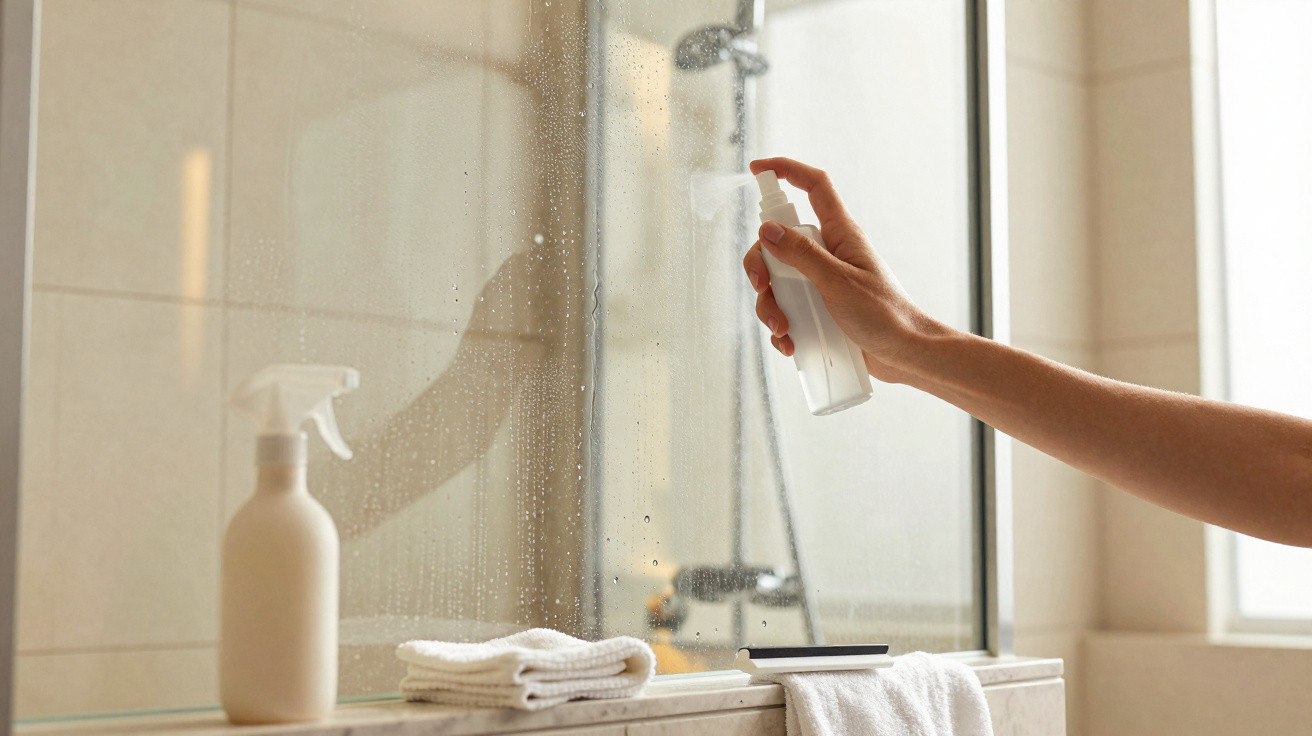
A truly clear shower can feel like a little luxury - until hard water and soap film turn the screen cloudy again in no time. Hotels aren’t somehow scrubbing it spotless every morning. They rely on a simple method that helps water slide away so the glass stays almost invisible for weeks. It isn’t a gadget, and it isn’t a miracle - it’s something you can use at home.
I once watched a supervisor take out a tiny, label-free bottle from her cleaning caddy and gently dab the shower glass with a soft cloth, the way a watchmaker might oil fine mechanisms. There was no heavy scrubbing. She was applying a finish to the glass.
You’ll recognise the frustration: the shower looks fine while it’s wet, but as soon as it dries the glass turns… hazy. She was done in minutes. When she ran the tap, the water gathered into neat beads and rolled away as though the screen had been waxed. No smears. No chalky film. And the “secret” wasn’t a cleaner.
The five-star trick, explained: a hydrophobic coating
Here’s what’s really going on: high-end hotels don’t battle limescale every day - they stop it bonding to the glass in the first place. They apply a hydrophobic layer, similar to what you’d use on a car windscreen or with a specialist bathroom sealant. The secret is not a cleaner - it’s a coating. With the surface treated, water forms beads and runs off, carrying minerals with it. That means less residue, far less elbow grease, and a shower that can look newly fitted for weeks.
In a Knightsbridge property, a head housekeeper walked me through a routine that takes under ten minutes per suite: clean the glass, dry it completely, then put a few drops of dishwasher rinse aid or a pro-grade glass repellent onto a microfibre cloth and buff until you can’t see it. That’s the whole routine. In a city where over half of homes contend with hard water, it’s a quiet lifesaver. This coating can push the gap between deep cleans from days to weeks - and, honestly, most people aren’t doing a deep clean daily.
The science is pleasingly straightforward. Hydrophobic molecules reduce the surface energy of glass, so water can’t spread out into a clinging sheet that dries into a chalky layer. Instead, droplets form and slide away, giving minerals far less time to set. It’s the same idea as rain beading on a waxed car bonnet. Rinse aids work with non-ionic surfactants; car-style repellents often use silicones that bond for longer. Both are safe on glass. Just keep them off floors and natural stone, where they can make surfaces dangerously slippery or cause staining.
How to keep shower glass clear for weeks at home
Do it properly once, then enjoy the easy weeks that follow. Start by cleaning the glass thoroughly using a limescale remover or warm white vinegar with a soft pad. Rinse well, then dry until it squeaks - including the edges and corners.
Now for the key step: lightly mist dishwasher rinse aid diluted 1:1 with water, or apply a silicone-based rain repellent or a bathroom glass sealant. Wipe it on with a microfibre cloth in overlapping passes, then buff until completely clear. Dry first, then coat. If you choose a professional sealant, follow the curing time stated on the label. One coat can give you weeks of clarity.
Ongoing upkeep is minimal. After a shower, a quick cool rinse helps, or a swift pass with a squeegee when you remember. If you don’t manage that, the coating still reduces build-up dramatically. The usual mistakes are using too much product, reaching for an abrasive sponge, or letting it run onto tiles and the shower tray. Use a light touch. Ventilate the room while you apply it. If you have natural stone, cover it with a towel before you start. That bit of care prevents slippery, unpleasant surprises.
Housekeepers often describe this like an inside tip: you do the work once, and then you enjoy the payoff every morning. A small habit that delivers a five-star finish at home.
“We don’t chase shine, we set it up,” a London head housekeeper told me. “Treat the glass like a windscreen and the shower cleans itself.”
- Microfibre cloths (two: one for applying, one for buffing)
- Dishwasher rinse aid or a rain repellent/glass sealant
- Spray bottle for the 1:1 rinse-aid dilution
- Small squeegee for quick after-shower passes
- Nitrile gloves and a towel to protect stone and floors
Keep the routine simple, keep the glass clear
Once you’ve watched water pearl and slip off the screen, it’s difficult to return to constant scrubbing. The shower feels calmer, and the glass stops stealing light from the room. You’ll settle into your own pattern - one coat every three to six weeks depending on your water and how often the shower is used, supported by quick rinses when you have time. And if a hectic week rolls in, the coating still holds up. Tell a friend who can’t stand scrubbing. Share it with whoever keeps things running at home. Keep it off the floor. The hotel trick isn’t “secret” because it costs a fortune; it’s “secret” because it’s straightforward.
| Key point | Detail | Benefit to the reader |
|---|---|---|
| Hydrophobic coating | Apply dishwasher rinse aid, rain repellent, or a dedicated glass sealant to clean, dry glass | Weeks of clear, transparent glass with very little effort |
| Preparation matters | Deep-clean and fully dry before coating; buff to a clear, invisible finish | Better bonding, longer-lasting protection, fewer streaks |
| Safety and where to use it | Avoid floors and natural stone; ventilate; test a small area first | Results without slips, stains, or nasty surprises |
FAQ:
- Is dishwasher rinse aid safe on shower glass? Yes - on plain glass it’s fine if used sparingly and buffed dry. Keep it away from natural stone, painted metal, and floors.
- How long does a coating last? Usually three to six weeks. Steam, hard water, and shower frequency can shorten or extend that.
- Can I still use vinegar for maintenance? Yes, lightly - but not on the same day you apply the coating. Never mix vinegar with bleach, and be gentle so you don’t strip the layer too quickly.
- Will this stop my mirror fogging? That’s a different problem. For mirrors, a wipe of shaving foam or a dedicated anti-fog product works well. Some hotels also use heated mirrors.
- What if my screen is acrylic, not glass? Use a small amount of rinse aid on a soft cloth and avoid solvent-based car products. Test an out-of-sight corner before doing the whole screen.



Comments
No comments yet. Be the first to comment!
Leave a Comment