
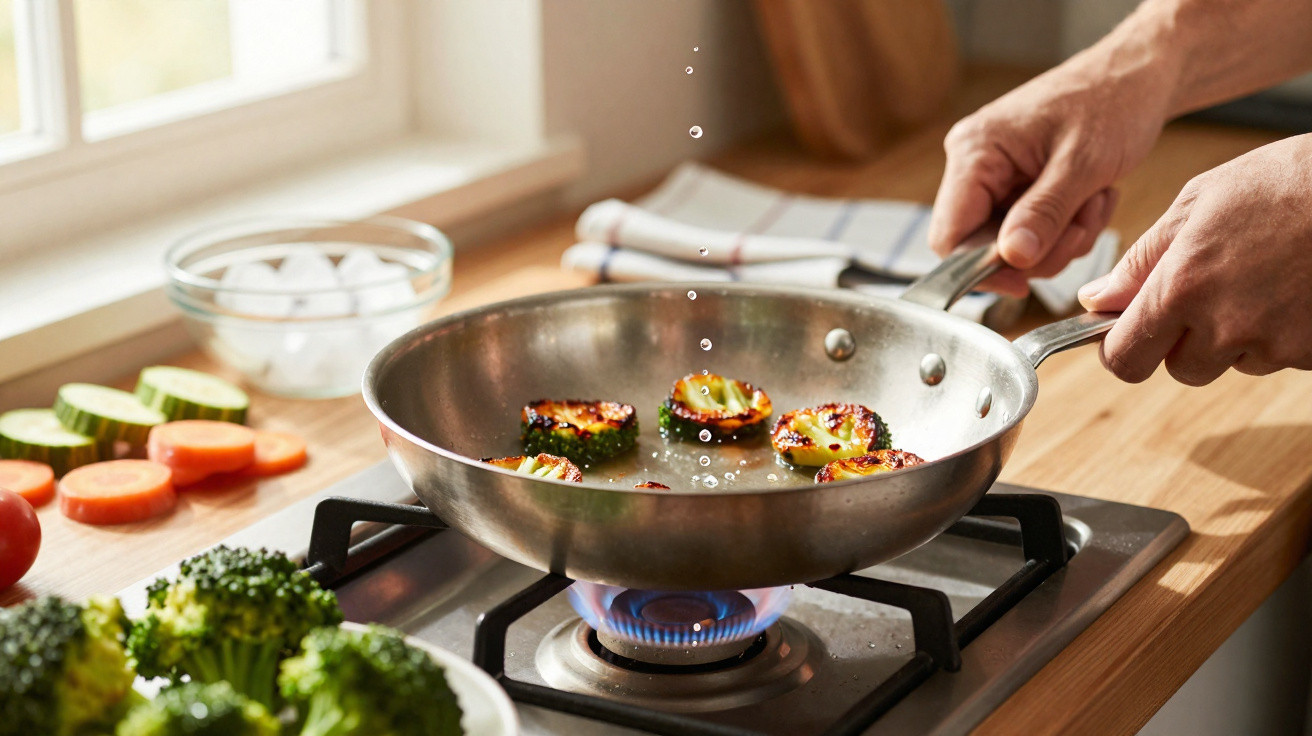
Getting vegetables beautifully golden at home comes down to accuracy and proper heat control. A common mistake is adding food to a cold pan, which often leads to limp results. Once you understand how the right temperature affects cooking, your everyday recipes in the kitchen change completely.
How does the ice test help in cooking?
Placing a small ice cube on a preheated surface works like a practical, natural thermometer. This quick visual check shows whether the pan has reached the ideal point to sear food without sacrificing important nutrients during the process.
If a stainless-steel pan is still too cool, vegetables start cooking in their own steam and quickly soften. Higher heat is essential to trigger the well-known chemical reaction that caramelises the outside, delivering that crisp texture and a far tastier finish.
What happens when you rub garlic on a hot frying pan?
This straightforward trick releases aromatic oils that form an impressive, natural non-stick layer, helping prevent your grilled vegetables from sticking… Read more
What is the Leidenfrost effect in the kitchen?
This physics phenomenon happens when a liquid touches a surface that is far hotter than its boiling point. A thin layer of vapour forms instantly beneath the droplets, creating a surprisingly effective thermal barrier.
Rather than evaporating straight away, the moisture glides around as tiny, floating beads over the metal base. That behaviour is a clear sign the frying pan has reached the perfect temperature to add food without it sticking, making your work at the frying pan more efficient.
Below is a video from the MinuteFood channel on YouTube that explores the points discussed in this topic in more depth:
How can you tell when the pan is at the ideal temperature?
By watching what water does, you can judge the pan’s temperature range before you begin any home recipe. If droplets simply vanish quickly with a hiss, the metal is not yet hot enough to guarantee proper searing of your vegetables.
On the other hand, when the liquid turns into little beads that skitter around the surface, the temperature has climbed beyond about 175°C (around 350°F). That is the precise moment to add the oil and then the vegetables, achieving excellent culinary results with real practicality.
Temperature Guide
Pan heat levels - see the three water reactions as the metal heats up:
- 1 Below 100°C, the water sits still on the surface.
- 2 Between 100°C and 190°C, it evaporates quickly with a hiss.
- 3 Above 200°C, small beads form and slide freely.
Why do vegetables go limp in the frying pan?
When the pan is not hot enough at the start, vegetables release water before the surface can sear them. Instead of browning, they end up cooking in their own liquid, losing their firm bite and bright colour in your kitchen.
Keeping the frying pan at the correct temperature prevents too much moisture building up and allows the Maillard reaction to happen properly. As a result, the vegetables’ natural sugars concentrate on the outside, forming an intensely flavourful and very attractive crust.
To get the best results when browning your food, follow these important steps:
- Heat the stainless-steel frying pan thoroughly before adding any ingredients.
- Test with a few drops of water to confirm the physical effect.
- Only add the oil after you have verified the ideal heat level.
What precautions should you take when grilling vegetables?
Try not to cram the frying pan full with lots of vegetable pieces at once while cooking. Too many ingredients at the same time sharply drops the metal’s temperature, ruining the whole perfect caramelisation process and producing unwanted results.
Cooking the vegetables in smaller batches helps keep the heat steady and evenly distributed across the surface. Following these simple recommendations will reshape your daily cooking routine, giving you dishes that are healthier, better-looking, and extremely appetising for the whole family.


Comments
No comments yet. Be the first to comment!
Leave a Comment