
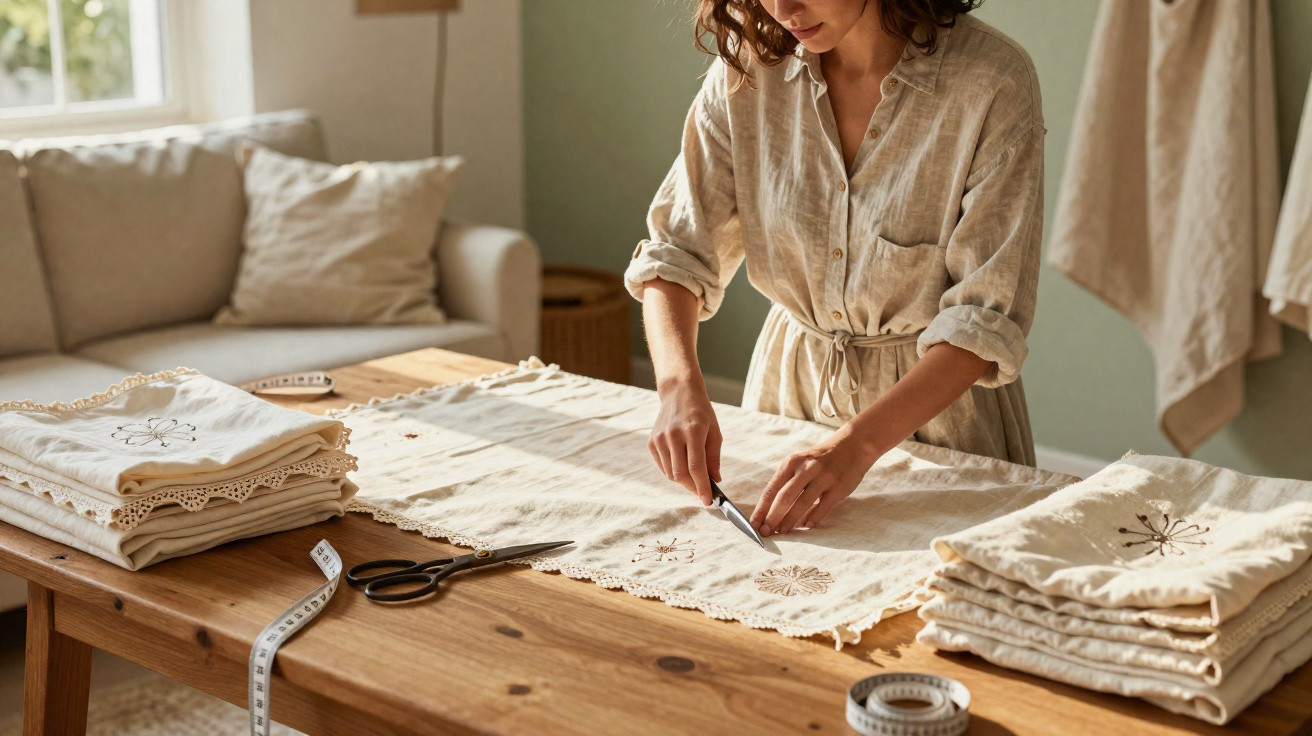
For decades they sat folded away at the very bottom of the wardrobe. Now they are at the heart of a major interiors and sewing trend: old linen sheets and embroidered bedding from family inheritances. If you can identify them properly, care for them well and rework them intelligently, you’re not only holding a small piece of history-you’re turning it into high-quality one-off pieces for the sofa, bedroom and wardrobe, often with a surprisingly luxurious feel.
Why old linen sheets are suddenly in demand
In many homes looking ahead to 2026, long-forgotten household linen is coming back into view. Instead of brand-new, uniform fabric, more and more people are choosing textiles with a past: weighty linen sheets, old monogrammed covers, pillowcases with delicate embroidery. They’re showing up on sofas, beds and tables, and even being used as curtains.
This surge in interest is closely tied to the appetite for long-lasting interiors. Textiles that have already endured for decades are a clear signal of quality-and that’s exactly what appeals to décor lovers as well as hobby sewists and professionals.
"Old linen sheets offer something modern mass-market goods rarely do: weight, texture and hems that are often already finished to perfection."
Working with them can also remove whole steps from a project. The hems are already there, embroidery creates instant focal points, and the generous width suits larger makes such as throws, curtains or bed runners. What looks like leftover old stock can quickly become pieces that resemble small-batch, atelier-style collections.
How to recognise high-quality old linen
The key factor is the fabric itself. Many sheets made before the widespread shift to synthetics are slow-processed linen, or linen-cotton blends, with a high fabric weight. They feel compact and substantial, while still being breathable.
Typical features of good vintage household linen
- Weight in your hand: it feels dense and heavy rather than flimsy.
- Fibre type: linen, linen blend, or very tightly woven cotton, often with a slightly grainy texture.
- Workmanship: neat, durable hems, often with hemstitching or decorative stitching.
- Monograms and embroidery: initials, borders and drawn-thread inserts.
- Age patina: a yellow cast or small storage marks, but few genuine holes.
If you’re unsure, hold the fabric up to the light. Thin, worn areas in the centre panel are easy to spot. The stronger edge sections are often the real prize, as they frequently look almost like new.
Cleaning and refreshing old sheets gently
To turn aged fabric into something ready for everyday living, it needs a thorough-but careful-refresh. Many sheets yellow over time or develop storage marks. With the right approach, the weave can look clear and strong again.
Step-by-step care for old linen
- Check against the light: mark any weak, thin areas in the centre so you can avoid them later or cut them away.
- Soak: make up a very warm bath with an oxygen bleach such as sodium percarbonate and leave it to work for a few hours.
- Wash cycle: choose a long programme at around 60°C, keeping the spin speed fairly moderate.
- Treat stains: for rust-like marks, sprinkle with lemon juice and salt, then lay the fabric in the sun.
- Iron while slightly damp: when the cloth is still noticeably moist, it presses flatter and hangs with a better drape.
A well-preserved bundle of linen from the 1930s can provide several square metres of usable fabric. Buying comparable linen new can quickly run into the two- to three-figure euro range, so it’s worth taking a proper look in the family linen cupboard.
From bedsheet to designer piece: popular projects
Right now, old linen tends to be turned into decorative pieces for living rooms and bedrooms. The appeal is that each item looks individual thanks to monograms, the slightly irregular weave and subtle tonal variations.
A refined throw for sofa or bed
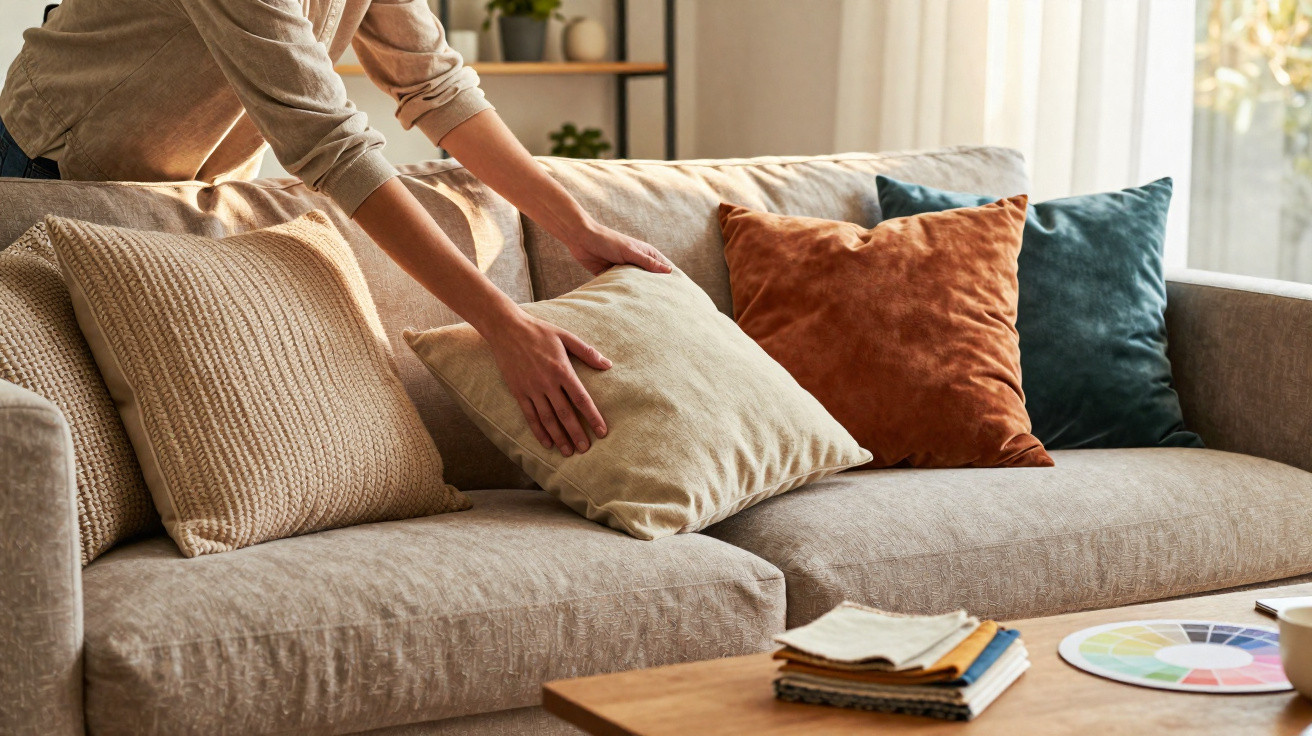
One common make is a dyed throw. Slightly yellowed sheets are ideal for this, as richer or earthier shades disguise unevenness while adding warmth to a room.
- Wash the fabric thoroughly and prepare it while it’s still slightly damp.
- Fold, gather or tie it as desired to create a more lively pattern.
- Dye with fabric dye in the washing machine, often with added salt or a fixing agent.
- Dry in the shade so the colour doesn’t fade.
Warm earth tones, soft greens and deep, shaded blues are especially popular. Small offcuts and leftover pieces can be turned into matching cushion covers-often with a simple envelope opening rather than a zip.
Curtains, bed runners and headboard coverings
Because many old sheets are generously long, they’re ideal for full-length curtains or relaxed room dividers. Existing hems often form a decorative edge by default. A monogram can be positioned deliberately near the bottom or placed centrally, where it reads as a purposeful design feature.
If you prefer simple cutting, stick to straight panels: a bed runner at the foot of the bed, a taut fabric panel as a soft headboard covering, or a wrap for a divan base. Linen’s heavy drape gives these pieces an instantly premium look.
Linen becomes fashion: simple cuts with big impact
Linen that started life on a bed can work remarkably well for clothing. It’s hard-wearing, breathable, and tends to look a touch more elevated on the body than many standard cottons.
Suitable garments to make from old sheets
- Wrap dress in heavy linen: clean lines, a tie belt and dropped shoulders.
- Midi skirt with button front: use the existing selvedge as a finished hem.
- Pinafore dress or crossover apron: cut practical pockets from sections with monograms.
- Large shopper or bread bag: reinforced handles, ideally featuring visible vintage decorative seams.
It’s important to watch the grain and plan around existing details. A beautifully worked drawn-thread hem can become the edge of a skirt; an embroidered border can sit on a shoulder seam or form a feature facing on a top.
Where to find old linen sheets-and what to check before buying
Even without family linen, you can still stock up on historic fabric. Flea markets, charity shops and specialist vintage stores often have piles of old household linen that look unremarkable at first glance.
Shopping tips for good vintage linen
- Test it with your hands: grip it firmly-it should feel dense and supportive.
- Don’t be put off by yellowing; it can often be washed out or overdyed.
- Watch for large holes; small areas can be worked around creatively.
- Factor in monograms and fine embroidery-they add perceived value later.
- Choose a sheet that’s slightly larger than you think you need, so you have room for cutting.
Prices range from just a few euros to much higher sums, especially for rare pieces with very fine embroidery. For beginners, though, an inexpensive, slightly yellowed sheet is often enough to test out first projects.
How sewing beginners can start sensibly
If you’re new to working with old linen, it’s best not to begin with complex garments. The fabric is forgiving in many ways, but it does show wonky stitching clearly. Projects built around long, straight seams are ideal at the start.
Easy first projects
- A large throw or bedspread, optionally dyed.
- Two to four simple cushion covers with an envelope closure.
- A plain curtain with a rod pocket or hidden loops.
- A wall panel that highlights a lace edge or a drawn-thread hem.
As you gain confidence, you can move gradually into clothing or more elaborate home textiles. The perceived value rises sharply once seams are tidy, edges are precise and panels are properly pressed.
Why the effort pays off over time
Linen is naturally hard-wearing, temperature-regulating and becomes a little softer with every wash. Old sheets that have already lived through decades often show this quality most clearly: they don’t feel scratchy, they hang beautifully, and they still stand up to heavy use.
From a sustainability point of view, reuse has obvious appeal too. Every metre of fabric you don’t buy new saves water, energy and transport emissions. Many people only realise, once they start sewing, just how much substance there is in a thick, old sheet.
Anyone who has watched a forgotten stack of household linen become a relaxed sofa throw, an airy summer dress or a curtain with a story starts seeing cupboards differently. Suddenly, every box of yellowed cloth looks less like clutter-and more like a hidden fabric stash with very real luxury potential.



Comments
No comments yet. Be the first to comment!
Leave a Comment