
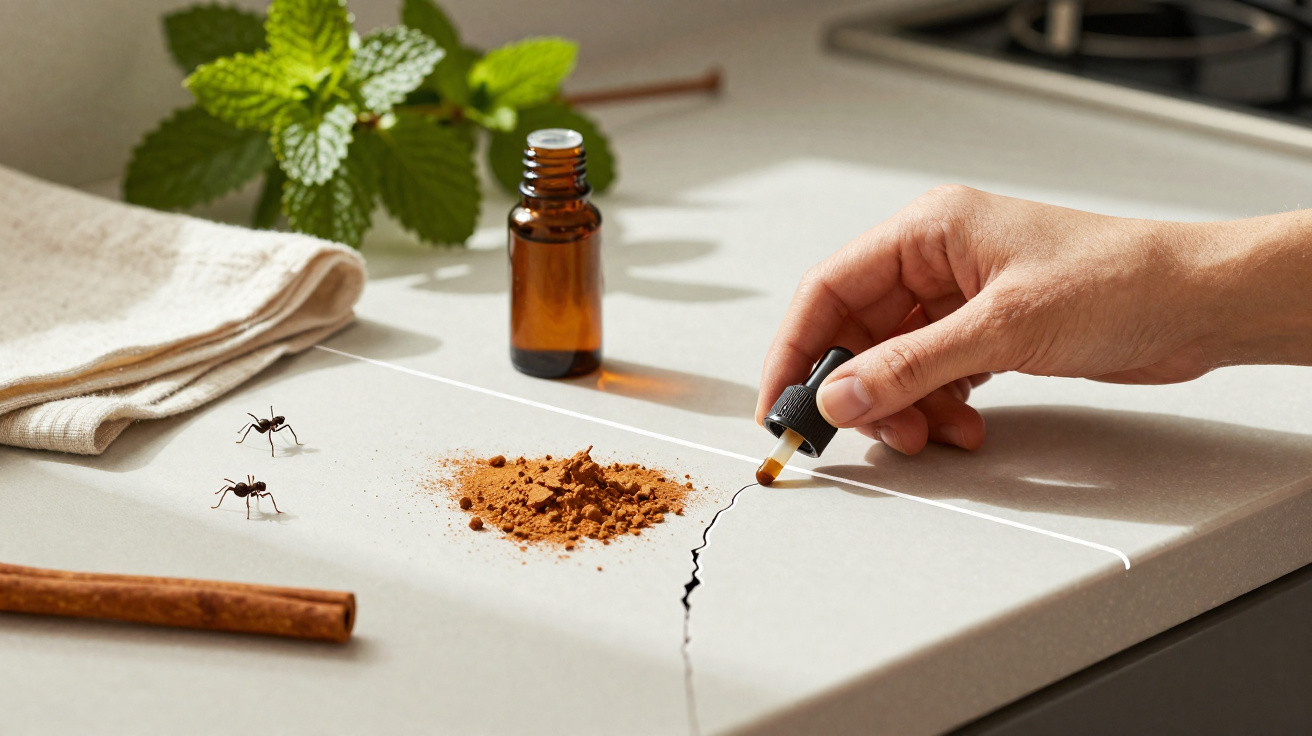
Most people only notice ants once they’ve already charted every crumb, crack and sticky patch. Chemical sprays might kill on contact, but the same line of ants often turns up again the next day-just a few tiles away-like a stubborn commuter choosing a new route.
Why ant trails keep coming back
An ant problem usually doesn’t begin with a sudden flood. It starts with a single scout. That first ant wanders in looping routes, following faint scent cues while it searches for food or moisture. Once it finds something worthwhile-a smear of jam, a pet bowl, the kitchen bin-it returns to the nest and lays down a chemical breadcrumb trail on the way.
Other ants then pour onto that unseen “motorway”. Each trip strengthens the route with fresh pheromones. If you only remove the ants but leave the scent behind, the pathway remains in place. More workers keep arriving, even if you think you “cleaned everything.”
To stop an ant trail for good, you have to do two things at once: erase the scent map and break the road with a barrier they refuse to cross.
That’s exactly what a straightforward combination of chalk, cinnamon and essential oils is designed to do: interfere with the ants’ navigation rather than simply attacking their bodies.
How a natural ant barrier works
It helps to picture ants as tiny, walking noses. Smell matters far more to them than sight. Bold powdery and oily aromas can muddle their guidance system, making them turn back or drift off-course.
Chalk: the dry line they hate to cross
Ordinary white chalk-the sort used on blackboards-is largely calcium carbonate. To us it’s just a dusty mark. To ants, that fine dust becomes a gritty, drying hurdle that disrupts the chemicals on their legs and antennae.
If you draw one continuous chalk stripe, you create a dry “moat”. Many ants will stop at the edge, mill about, then retreat. Leave a break in the line and they’ll locate the gap within minutes.
The chalk line doesn’t poison your home. It simply tells the ants, “road closed.”
Cinnamon: spice that scrambles the trail
Ground cinnamon adds a second layer of defence. The powder grips to surfaces and gives off a strong, lingering smell rich in cinnamaldehyde. That scent can overpower the delicate pheromone signals ants rely on to stay on course.
When used properly, cinnamon does more than slow the trail-it effectively overwrites it. Ants that step into it often pause, groom themselves repeatedly, or abruptly turn away, disrupting the steady flow that turns a few scouts into a full invasion.
Essential oils: concentrated confusion for ants
A number of essential oils are widely used as ant deterrents, including:
- Peppermint oil
- Tea tree oil
- Lemongrass oil
- Clove oil
- Eucalyptus oil
These oils contain compounds that interfere with ant communication and help mask food odours. A small amount is usually enough, especially when you apply it along cracks, windowsills, or beneath appliances-places where chalk and cinnamon are awkward to use.
Used together, chalk, cinnamon, and essential oils create a layered defence: a dry barrier, a scent barrier, and a long-lasting invisible shield.
Step-by-step: building your ant barrier
1. Track the trail to its entry point
Before you apply anything, spend a few minutes observing the ants. Trace their line back to where they vanish. Common entry points include:
- Gaps under skirting boards
- Cracks in tiles or floorboards
- Edges of window frames and door thresholds
- Gaps around pipework under sinks
Keep those locations in mind-they’re the pinch points your barrier needs to cover.
2. Erase the pheromone highway
Wash the active trail with warm water mixed with either vinegar or a little mild washing-up liquid. This helps break down the scented chemicals the ants have laid.
Don’t stop at the visible line. Wipe at least 30–50 cm beyond it on both sides, because ant “roads” often extend past where you can currently see insects.
3. Lay down the chalk line
After the surface has fully dried, use plain white chalk to draw a thick, uninterrupted line around the entry area, for example:
- Along the bottom of a door frame
- Across a windowsill
- Around a pipe cut-out inside a cupboard
Trace over it twice to leave a heavier dusting. On slightly uneven surfaces, add a second line a few millimetres away to catch any ants that wander.
4. Add a cinnamon “no-go” zone
Sprinkle a slim strip of ground cinnamon just inside, or directly on top of, the chalk line. A teaspoon helps you keep it neat. In cupboards or under appliances, you can put the cinnamon on a strip of paper or foil so it’s easy to remove later.
| Ingredient | Main role | Where it works best |
|---|---|---|
| Chalk | Physical, drying barrier ants dislike crossing | Doorways, thresholds, windowsills, dry floors |
| Cinnamon | Strong scent that masks pheromone trails | Along walls, behind bins, around pet bowls (not touching food) |
| Essential oils | Longer-lasting scent shield in cracks and gaps | Under sinks, skirting boards, behind appliances, window frames |
5. Seal cracks with essential oils
In a spray bottle, combine 10–15 drops of your chosen essential oil with about 250 ml of water and a splash of mild liquid soap. Shake well, then spray:
- Into visible gaps where the ants appeared
- Along skirting boards close to the trail
- Around window and door frames
For very fine cracks, dip a cotton bud into undiluted oil and run it directly along the gap. Avoid contact with bare skin and keep oils away from pets’ sensitive areas.
The goal is not to perfume the whole house, but to create narrow, high-impact scent zones exactly where ants need to pass.
Keeping the barrier permanent, not temporary
A single chalk line rarely fixes an ant issue permanently. Cleaning, weather and everyday foot traffic gradually wear it away. The reliable approach is to treat upkeep as routine.
Refresh schedule that actually works
People often underestimate how quickly ants adjust. A simple schedule makes a big difference:
- Chalk line: redraw every 3–5 days or after mopping.
- Cinnamon band: top up weekly, or if you notice it thinning.
- Essential oil spray: reapply every 10–14 days in warm months, monthly in winter.
If a new trail shows up close by, treat it as information rather than defeat. The colony has changed its approach. Extend your barrier to cut off the new route, then clean the fresh trail in the same way.
When natural barriers beat chemical sprays
More households want to reduce routine exposure to synthetic pesticides, particularly around children, pets and food preparation areas. Natural barriers won’t deliver the dramatic, instant “everything dies in seconds” effect. What they offer instead is slower, steadier deterrence through disruption.
With consistent use, chalk, cinnamon and essential oils push ants to shift their foraging paths back outdoors, where they still serve a useful role. Ants help aerate soil, break down organic debris and provide food for birds. The aim isn’t total eradication-it’s re-establishing a clear boundary between your kitchen and their territory.
Common mistakes that keep ant problems alive
A few everyday habits can quietly undo your efforts:
- Leaving pet food out all day, particularly overnight.
- Letting overripe fruit sit on the worktop.
- Missing sticky spills on bin lids and cupboard doors.
- Cleaning the floor but ignoring the underside of appliances and worktops.
Ants need a payoff to brave your chalk and cinnamon. Remove the easy food source and the barrier often feels far more effective overnight.
Beyond trails: when to worry and what else to try
Most indoor trails come from common garden species hunting sugar or fat. However, some scenarios warrant closer attention. For example, wood-nesting ants around window frames may indicate damp timber and potential structural problems. Large mounds building up against foundations can suggest ongoing pressure at the edges of your home.
In those situations, the chalk–cinnamon–oil method can still act as a first line of defence, but it works best alongside broader steps such as drying damp areas, repairing gaps and, at times, speaking to a professional who understands local species behaviour.
If you have strong allergies, pets that may lick powders, or very young children, you can modify the approach. Chalk plus diluted peppermint oil alone is often enough to reduce most trails. Cinnamon can also be kept in jars with perforated lids, functioning as small scent markers rather than loose powder.
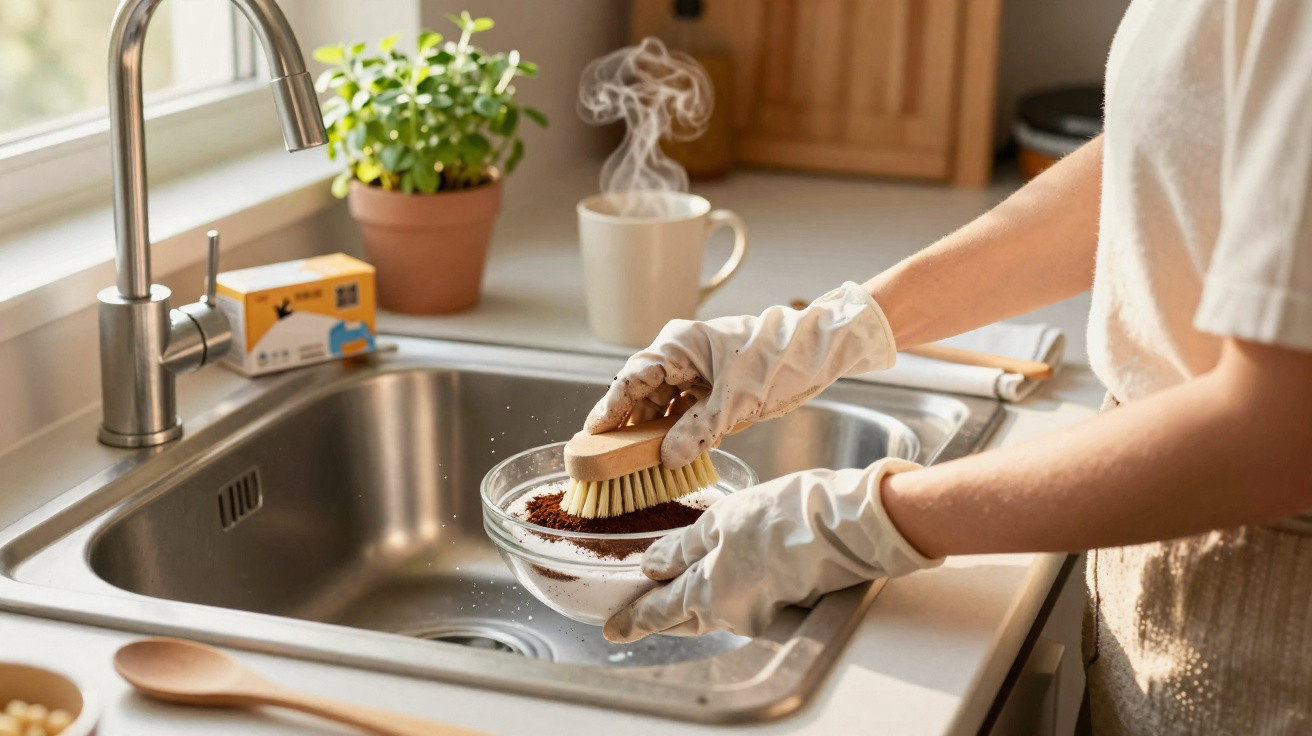
Some households apply the same idea outside, swapping chalk for builders’ chalk or finely crushed eggshells, cinnamon for coffee grounds, and essential oils for strong-smelling herbs in pots. The underlying principle remains unchanged: disrupt the scent map, make the route inconvenient, and ants usually choose an easier path that doesn’t cut through your living room.





Comments
No comments yet. Be the first to comment!
Leave a Comment