
Unless you have health problems or your home is simply unliveable.
As May draws to a close, France is experiencing an exceptional weather event: a blistering heatwave. With temperatures soaring, many people are considering fitting air conditioning at home. Should you give in? There is no simple yes-or-no answer - it is a decision that calls for careful nuance.
Air conditioning during a heatwave: prices and practicalities
BFM recently referred to a 2025 study by Que Choisir reporting that air-conditioning installation prices rise by 10% during heatwave periods, which is why it may be wiser to wait until the peak passes.
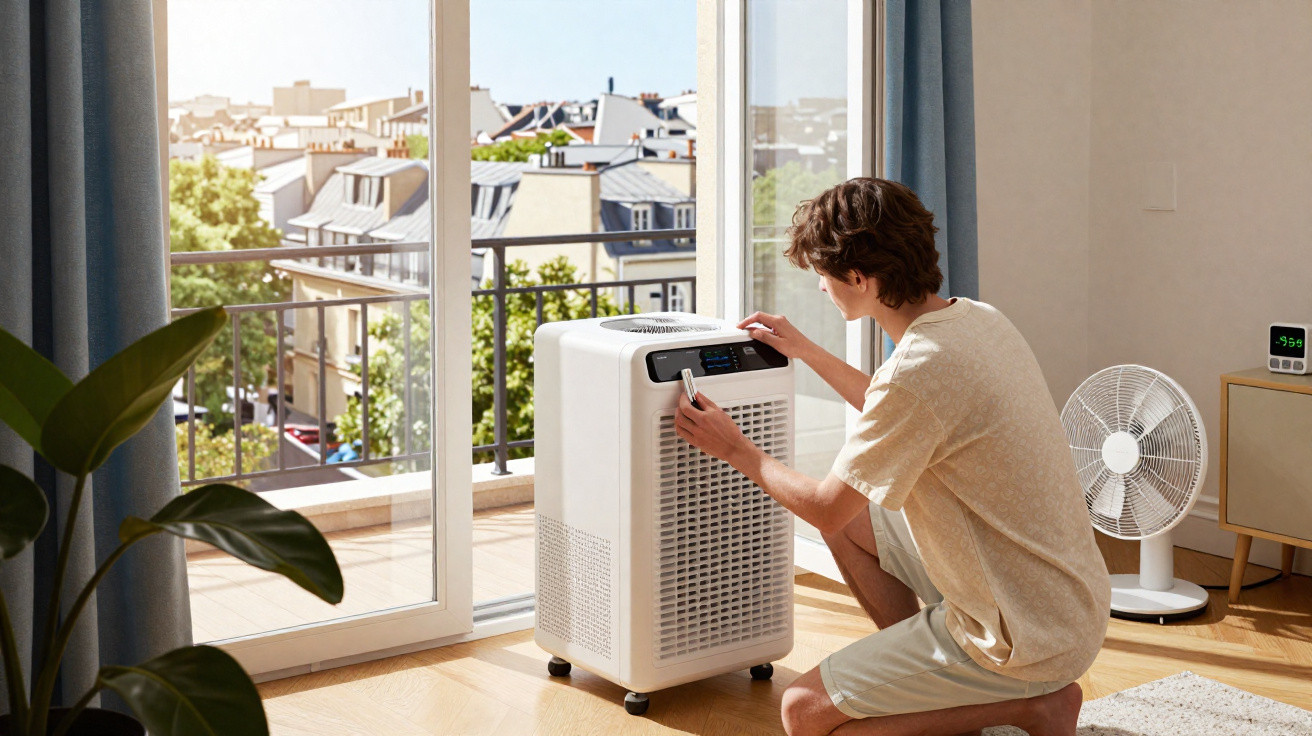
A portable single-unit air conditioner can look like the most straightforward option and, overall, relatively affordable. You should still expect to pay between 300 and 600 euros, but it can lower the indoor temperature by five degrees within minutes.
That said, energy use becomes significant when the outside temperature is very high. According to the same report, you should budget around 4 euros per day on your electricity bill - which adds up to a substantial cost across the whole summer.
Fixed systems: higher costs, stronger performance
Another route is a fixed air-conditioning system with both outdoor and indoor units. Installed by professionals, these setups are far more expensive but also more effective. In 2024, based on figures reported by Le Monde, the equipment alone (excluding installation and taxes) typically cost between 4,800 and 8,700 euros - even if some people report much lower prices, in particular thanks to financial assistance.
The Intergovernmental Panel on Climate Change (IPCC) has already addressed these technologies in its reports and observes that “air conditioning can reduce risks for the individual, but is poorly suited at societal level”.
Alternatives to air conditioning
On an individual level - whether for comfort, health, or even survival - installing air conditioning can be a rational choice. The difficulty is that, collectively, widespread air-conditioning use brings a set of fairly negative knock-on effects.
Electricity demand, emissions, and France’s energy mix
One issue highlighted is electricity consumption, which drives greenhouse-gas emissions. According to the IEA, rising air-conditioning use made a major contribution to the increase in emissions from the energy sector in 2024, particularly in India, China, and the United States, where thermal power plants were called upon to meet demand. The situation is somewhat different in France, where the energy mix relies largely on nuclear power.
Refrigerants and urban heat islands
In France, concern focuses more on refrigerant fluids. These gases have a very high warming impact and can sometimes leak from appliances, contaminating the atmosphere. Improvements have been made through tighter regulation and changes in practice. Even so, they accounted for 2.4% of national emissions in 2022, with 82% attributed to the combined refrigeration and air-conditioning sector.
Lastly, air conditioning worsens the urban heat-island effect. Cities already retain more heat than rural areas because of dense construction and sealed surfaces, resulting in noticeably higher temperatures - especially at night. These systems only intensify the problem.
In response to these harms, organisations such as the Foundation for Housing the Disadvantaged advocate alternatives, including fitting all homes with air circulators (ceiling-mounted fans). Their advantage is far lower electricity use while still reducing the perceived indoor temperature. Similarly, thermal renovation of buildings can greatly improve comfort in both winter and summer by limiting heat gain and heat loss.





Comments
No comments yet. Be the first to comment!
Leave a Comment