
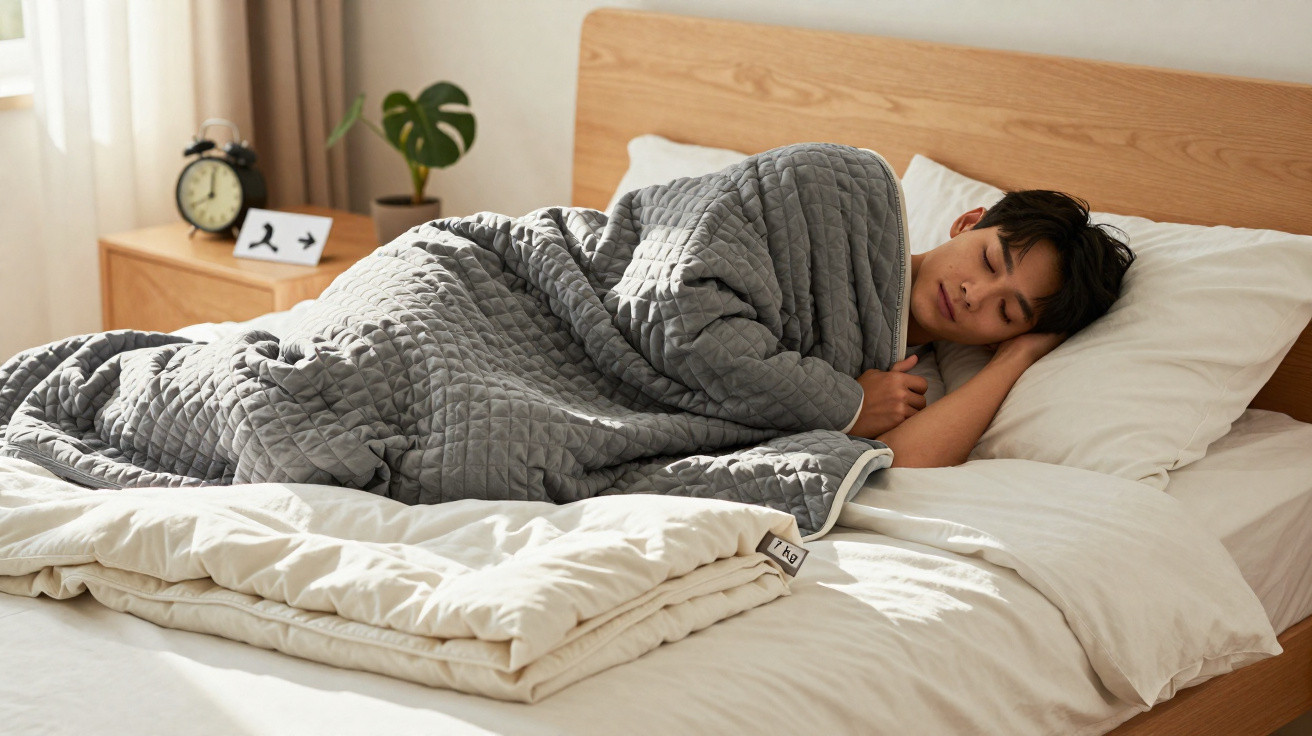
Across Europe, increasing numbers of shoppers are trading the classic duvet for something weightier, cheaper and strangely reassuring: the weighted blanket. It is now appearing in discount retailers such as Action at a price that feels almost too low to be true.
From fluffy duvets to heavy blankets: why sleep habits are shifting
For years, bedding was fairly predictable: lighter layers in summer, a thick duvet for winter, and perhaps an extra throw when the cold really set in. The duvet became a fixture-seldom questioned and even less often washed-because it is large, fiddly and takes ages to dry.
At the same time, sleep complaints have surged. People talk about minds that will not switch off, night-time anxiety, and light, broken sleep. Many try switching pillows, adding a mattress topper, or spending a lot on a new bed. Far fewer consider the one layer that sits on them for hours: what they cover themselves with.
More and more sleep specialists point to “sleep pressure” on the body surface as a simple way to calm the nervous system and deepen rest.
This is the gap weighted blankets are designed to fill. Rather than focusing solely on warmth, they add steady pressure. The aim is not just to keep you cosy, but to alter how your body-and your brain-settles once you are in bed.
What exactly is a weighted blanket?
At first glance, a weighted blanket resembles an ordinary quilt, but inside it contains heavy material secured in small stitched compartments. Depending on the version and who it is meant for, the total weight typically sits somewhere between 3 and 13 kilograms.
The outer material can vary widely, from breathable cotton to synthetic polyester. The key difference is the filling: weight is commonly created with tiny glass beads distributed evenly across the blanket, sometimes paired with extra padding to soften the feel.
A weighted blanket applies gentle, even pressure over the body – a bit like a steady hug that does not move during the night.
How deep pressure may help sleep
Researchers associate this “deep pressure stimulation” with a handful of possible effects:
- It may reduce cortisol levels, the stress hormone that can rise when you feel anxious at night.
- It may encourage the release of serotonin, a neurotransmitter linked to calm and wellbeing.
- It can prompt melatonin production, which helps manage your sleep–wake cycle.
- It can lessen restlessness, especially for people who fidget, toss and turn, or struggle to settle.
Smaller studies indicate that some adults with insomnia, anxiety or ADHD report improved sleep quality and less night-time agitation when using a weighted blanket. Evidence is still limited, but user experiences often sound similar: the first night feels unexpectedly heavy, then quickly comforting.
The Action weighted blanket: bargain or false economy?
Weighted blankets are often sold as premium items. In many European shops, a typical adult blanket can cost around 70 euros, while higher-end options in organic cotton or luxury textiles can approach 200 euros. That is why the 7 kg weighted blanket at Action for around 19.95 euros has attracted so much interest.
At 7 kg, it sits in the middle of the usual range: not the heaviest you can buy, but far more substantial than a light throw. For many average-sized adults, 7 kg matches the commonly cited guidance of roughly 8–12% of body weight, although shorter or lighter sleepers may find that level of pressure too strong.
A 7 kg blanket for under 20 euros brings a trend once seen as a niche “wellness” buy straight into budget territory.
Materials and comfort: polyester vs cotton
At this price, it is sensible not to expect organic fillings or premium fibres. The Action version is reported to use a polyester outer with glass microbeads to create the weight. Polyester helps keep costs low and tends to be hard-wearing, but it is generally less breathable than cotton or bamboo and can hold onto heat and moisture.
If you sleep warm, that can translate into more sweating or a damp, clammy feel-particularly in bedrooms that are well heated. A practical fix is to treat it as an insert: place the polyester weighted blanket inside a cotton duvet cover so you keep the pressure but get a softer, more breathable fabric next to your skin.
| Feature | Action weighted blanket | Typical mid-range model |
|---|---|---|
| Approximate price | ~€19.95 | €60–€100 |
| Weight | 7 kg | Varies, often 5–9 kg |
| Outer fabric | Polyester | Cotton or bamboo blend |
| Filling | Glass beads | Glass beads or plastic pellets |
| Breathability | Moderate to low | Moderate to high |
How to know if a weighted blanket suits you
Sleeping under several extra kilograms is not for everyone. Some people adore the cocooned sensation; others feel boxed in. Before you ditch your duvet altogether, it is worth considering your body size, how you sleep, and how warm your room tends to be.
Picking the right weight for your body
A common recommendation from specialists is a blanket weighing about 8–12% of your body weight.
- If you weigh 60 kg, that works out at roughly 5–7 kg.
- If you weigh 80 kg, that comes to around 7–10 kg.
- If you weigh under 50 kg, a 7 kg blanket could feel overpowering.
These figures are a starting point, not a strict formula. Comfort matters more than calculations. Some people want a gentler pressure so they can move easily; others prefer something heavier and more grounding.
Who should avoid heavy blankets?
Some people should be careful with weighted blankets, or seek medical advice first:
- Anyone with significant breathing issues, such as severe sleep apnoea or chronic lung disease.
- People with circulation problems or advanced heart conditions.
- Very young children, older adults with limited mobility, or anyone who cannot remove the blanket without help.
- Anyone recovering from surgery affecting the chest or abdomen.
The blanket must never feel like a trap. You should always move, turn and uncover yourself without effort.
Can a budget blanket really replace a duvet?
For plenty of shoppers, the question is straightforward: can a 20-euro weighted blanket stand in for the trusty old duvet, at least in the colder months?
When it comes to warmth, a polyester-based weighted blanket can retain heat effectively, particularly when paired with a cotton cover and a fitted sheet. In smaller bedrooms or well-insulated flats, it may even make it easier to lower the heating overnight.
Comfort is where the change is most noticeable. Instead of a lofty, fluffy layer, you feel an even, continuous pressure across your shoulders, torso and legs. Some describe it as a prolonged hug, or like a pet curled up on the bed-only spread more evenly.
Price is central to the appeal. Replacing an ageing duvet with an expensive, high-end weighted model can feel like a risky punt. A low-cost option from a discount chain gives people a way to try this sleep style without committing a significant chunk of the household budget.
Taking care of a weighted blanket without ruining your washing machine
Duvets are already infamous for being awkward to wash. Weighted blankets introduce another practical concern: can your washing machine cope with the extra kilograms, and how often should it be cleaned?
Many domestic machines are built for loads of roughly 7–10 kg, sometimes slightly more. A 7 kg blanket plus water can push a machine near its limit. For that reason, many manufacturers suggest spot cleaning the blanket itself and relying on a removable cover that can be washed frequently.
- Choose a cotton or bamboo cover that fits closely around the blanket.
- Wash the cover every one to two weeks, as you would with normal bedding.
- Air the weighted blanket during the day so it stays fresh and dry.
- Read the care label closely before putting the blanket in any machine.
The quiet trick is to treat the weighted part as an insert, and the washable cover as your real “duvet” layer.
Beyond Action: what this trend says about how we sleep
The appearance of inexpensive weighted blankets in discount chains points to a broader change. Products that once belonged mainly to niche wellness circles or therapeutic settings are now sold in big-box aisles, stacked alongside scented candles and seasonal bits and pieces.
Beneath the sales pitch, two forces are meeting: rising public attention to mental health and a cost-of-living squeeze that encourages people to try cheaper solutions. A heavy blanket can feel like a tangible, one-off purchase that might ease anxious nights without appointments, apps or lengthy routines.
Weighted blankets are not a substitute for proper medical support if you have chronic insomnia or an anxiety disorder. Still, they can sit alongside other small, practical adjustments-dimmer lighting in the evening, fewer late-night screens, cooler rooms and calmer bedding. No single tweak transforms sleep on its own, but together they can make the bedroom feel more restful.
If you keep waking up exhausted, a budget weighted blanket from a shop like Action will not fix everything. It could, however, start a useful test: what happens when weight replaces fluff, when pressure takes the place of volume? Your response can shape what you do next, whether that means investing in a better-quality model or rethinking the rest of your night-time routine.




Comments
No comments yet. Be the first to comment!
Leave a Comment