
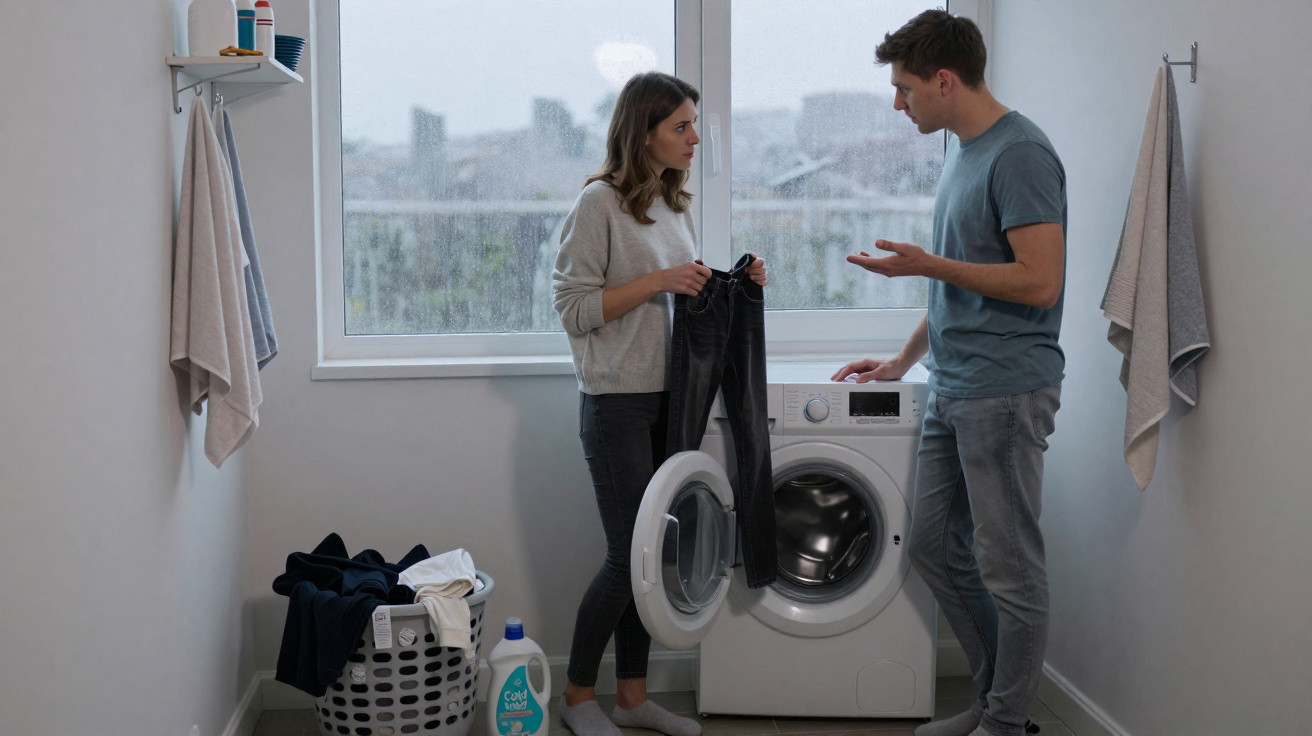
The washing machine finished with its usual beep, yet the real jolt came when Emma lifted out her favourite black jeans.
They were barely two months old and already looked as if they’d been dragged through three festival summers. The deep black had slipped into that flat, washed-grey no filter can disguise. She hadn’t swapped detergent or changed brands. The only new variable? Her boyfriend had turned the dial to “hot” to “clean them better”.
She looked from the jeans to a heap of T-shirts that now seemed a shade dimmer and gave that small, soundless sigh reserved for minor domestic disasters. Everything was still wearable, but it all felt older - less like her.
That was the moment she noticed the little cold-wash symbol on the care label: a detail she’d been overlooking for years.
Sometimes the hottest setting is exactly what wears through your wardrobe quickest.
Cold water, the quiet hero of your wardrobe
Open any laundry cupboard and you’ll see the familiar line-up: premium detergent, softener that promises a meadow-fresh scent, maybe fragrance beads guaranteeing “freshness for 12 weeks”. Yet the thing doing the most unnoticed work is often the temperature dial.
Hot water feels comforting - steam, warmth, the sense that germs are being annihilated. For clothing, though, that heat behaves like a gentle oven: fibres are warmed and stressed until they lose their shape, softness and colour. Cold water, dull by comparison, is simply kinder to fabric.
We spend plenty of time talking about “better quality” buys, capsule wardrobes and mindful fashion. The unglamorous reality is more straightforward: how you wash your clothes largely determines how long they stay looking good on the rail.
On a wet Tuesday in Manchester, a young couple I spoke to were hovering over their machine, debating a 30°C cycle. She’d been raised by a mum who washed everything hot “to really clean it”. He’d moved to cold washes at university to cut his electricity bill.
They tried a small test at home: two white T-shirts, same brand, same detergent. One went through a 60°C wash each week, the other was washed cold, for three months. By the end, the “hot” T-shirt had become thinner, the collar slightly misshapen, and there were areas that looked almost see-through. The “cold” one still fit properly, with cotton that felt springy in the hand.
It wasn’t a laboratory study - no microscopes, no graphs - just everyday wear. Still, the contrast was enough to change their routine. Lower energy costs were a nice perk; keeping clothes looking newer felt like they’d reclaimed time.
Textiles are built like tiny cities. Cotton has natural twists and pores. Wool is layered with scales. Synthetics are long, smooth strands. Raise the temperature and you accelerate the small processes happening inside those structures.
Dyes release more quickly. Fibres swell and relax repeatedly until they stop rebounding. Elastane - what gives leggings their stretch - especially suffers with frequent high heat and starts to fail, which is why waistbands sag and knees lose their shape.
Cold water slows all of this down. Modern detergents are designed for low temperatures, using enzymes that tackle stains without relying on near-boiling heat. Your clothes still get clean, but without that quiet, cycle-by-cycle ageing. Less drama, more lifespan.
How to switch to cold without sacrificing cleanliness
The easiest change is to move your routine washes to cold or a 20–30°C programme. Everyday shirts, jeans, sportswear and children’s clothes that aren’t plastered in mud usually do brilliantly in cooler water. Most care labels even hint at it with small symbols we tend to ignore.
Sort by fabric type as well as colour. Put delicates, stretchy sports pieces and dark items into cold-wash loads. Choose a detergent marked as “effective in cold water”, and avoid cramming the drum so water and detergent can move freely.
Save hot or very warm cycles for the items that truly benefit: bed linen when someone’s been unwell, towels that have started to smell a bit too “well used”, and cloth nappies. Those are the exceptions. Most daily clothing isn’t.
The concern people often admit is predictable: “If I wash cold, it won’t be properly clean.” That anxiety comes from older habits, back when detergents depended far more on heat than on chemistry.
Now, the enzymes in modern liquid detergents start working at surprisingly low temperatures. They break down protein-based stains - sweat, blood and food - without needing a hot soak. When marks don’t shift, it’s often less about the water being cold and more about the stain sitting for days, or the item going in without any quick pre-treatment.
Let’s be honest: nobody diligently scrubs every stain in the sink every day. That’s where tiny routines make the difference. Notice a mark on a shirt? Dot a little liquid detergent onto it before it goes in the laundry basket. That ten-second habit lets a cold wash finish the job later.
A textile scientist I spoke to put it in a single line:
“Heat cleans faster, cold cleans smarter.”
Those five words capture a quiet wardrobe shift. Cold water is gentler on elastic fibres, kinder to printed logos, and helps black jeans stay black - not “mysteriously charcoal” after three weekends.
A quick mental cheat-sheet for next laundry day:
- Treat cold as the default; use warm for the special cases.
- Follow the care label unless you have a clear reason not to.
- If you’re unsure with mixed fabrics, pick the gentler setting.
Once you see a favourite hoodie make it through season after season without fading, the theory starts to feel like simple common sense.
Keeping your clothes - and your stories - alive longer
On a quiet Sunday, most wardrobes read like diaries. The shirt from a first big interview. The dress you wore when you met someone important. The hoodie that’s been there for every rough day and every late-night call.
Cold water doesn’t only protect “fabric”; it also preserves those stories by reducing shrinkage, fading and distorted seams. Seen that way, the temperature dial becomes less of a technical setting and more like a small act of care.
We all know that moment of opening the machine and feeling a little stab of regret about what we’ve just done to a favourite item. The reassuring part is you don’t need a new washer, a spreadsheet or a chemistry qualification to avoid it. You just need a repeatable habit: start low, and only turn the heat up when it genuinely helps.
| Key point | Detail | Benefit for the reader |
|---|---|---|
| Cold water protects fibres | Reduced swelling, shrinkage and fibre fatigue at lower temperatures | Clothes hold their shape and softness for much longer |
| Colours stay richer | Less dye bleed and fading in darks and brights | Favourite pieces look “new” rather than tired and washed-out |
| Modern detergents work in cold water | Enzymes remove stains effectively without high heat | Laundry feels just as clean, with lower energy use and less damage |
FAQ:
- Can cold water really kill germs on clothes? For everyday wear, cold water with a good detergent is usually sufficient. If someone’s been ill, or for towels and nappies, use a hot or sanitising cycle occasionally.
- Will stains come out as well in cold washes? Fresh stains often will. Pre-treat visible marks and try not to leave them sitting for days before washing.
- Is 30°C still considered a “cold” wash? Strictly speaking it’s cool rather than icy, but it’s much gentler than 40–60°C and works well with modern detergents.
- Can I wash jeans in cold water every time? Yes. Turning them inside out and using cold cycles helps maintain colour and fabric strength.
- Do I need a special detergent for cold water? Not strictly, but detergents designed for cold or “low temperature” washing typically perform better at those settings.






Comments
No comments yet. Be the first to comment!
Leave a Comment