
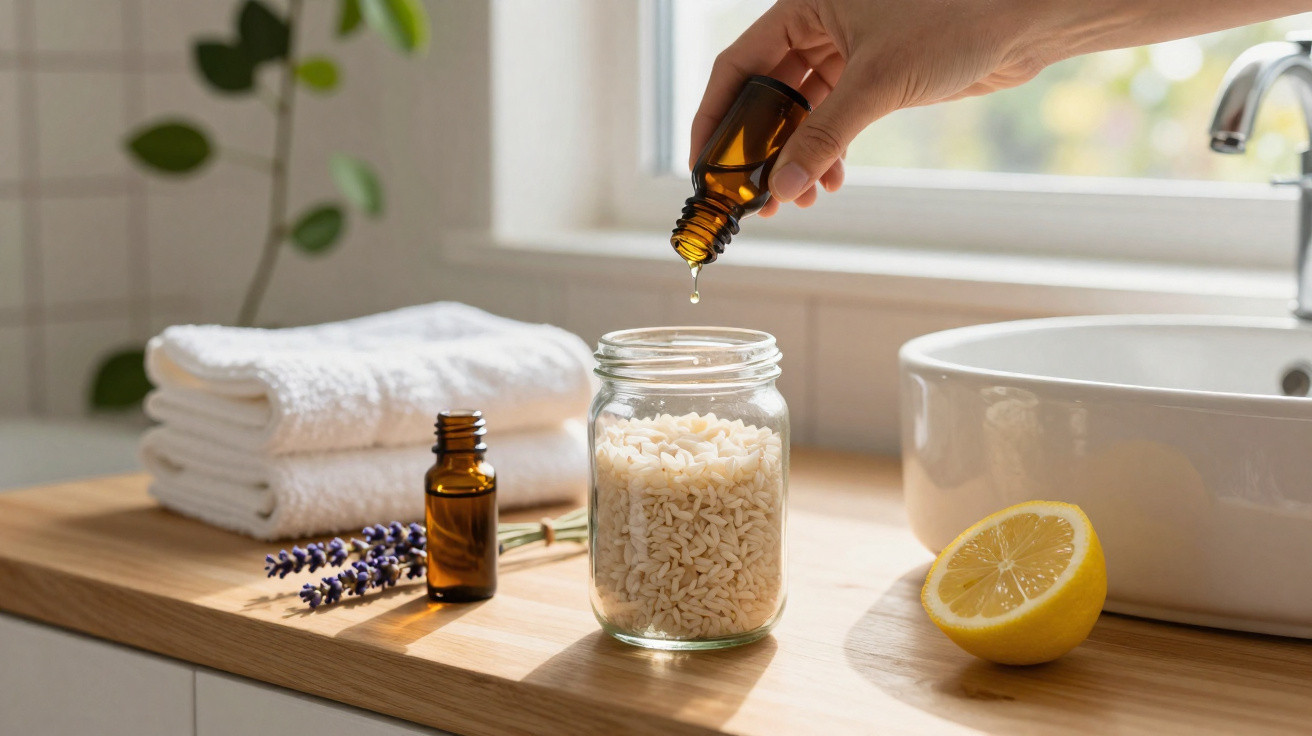
Across Europe, households are gradually swapping aerosol cans and plug-in diffusers for an option that appears almost implausibly basic: a glass jar, some rice and several drops of scented oil. This modest change is driven by a combination of tighter budgets, health worries and frustration with products that run out well before the next supermarket visit.
The hidden cost of “fresh bathroom” sprays
Italian consumer figures indicate that about two thirds of homes use air fresheners at least weekly, with annual spending on fragrance alone at roughly €45. Comparable patterns can be seen in the UK and US, where bathroom sprays, gels and reed diffusers have become standard items on many shopping lists.
A 250 ml aerosol air freshener commonly costs €3 to €7, yet in a busy household it generally lasts only 10 to 15 days. Reed diffusers may last somewhat longer, although replacement reeds and refill bottles continue to add to the expense. Across a year, a household could readily spend the equivalent of a small appliance simply to stop one small room smelling musty.
In many homes, fragrance has become a subscription you never signed up for: month after month, a quiet direct debit from the bathroom shelf.
Health bodies in Europe and North America have also questioned certain volatile organic compounds (VOCs) found in fragranced products. Packaging frequently lists “parfum” or “fragrance” without identifying the precise ingredients, leaving buyers uncertain about what they contain. Those with asthma, allergies or migraines report irritation, while the fragrance can fade within hours and prompt another spray.
DIY rice air freshener: how the jar method works
The alternative making the rounds on social media and lifestyle websites is strikingly straightforward. A small jar is filled with plain white rice, a little neutral vegetable oil is added, and then several drops of essential oil are mixed through. Placed on a shelf or beside the sink, the jar can give off fragrance for weeks.
- Rice: takes in moisture and provides a slow-release base for scent.
- Vegetable oil: reduces evaporation, helping the fragrance remain for longer.
- Essential oil: adds personality, ranging from bright citrus to gentle floral aromas.
Rather than a sudden aerosol burst, the method creates a mild, consistent scent. As air circulates around the jar, the rice surface slowly dries and releases fragrance. Once the aroma weakens, the mixture can be stirred or topped up with a few more drops of oil.
The idea is not to mask odours with an overpowering cloud, but to lift the background atmosphere of the room over time.
Money, chemicals and time: comparing the options
Household budget specialists identify three main considerations for families: the monthly outlay, the longevity of the fragrance and the quantity of synthetic additives involved.
| Solution | Average monthly cost | Estimated duration | Added synthetic chemicals |
|---|---|---|---|
| Commercial spray air freshener | €4.50 | 10–15 days | Yes |
| Industrial reed diffuser | €6.00 | 20 days | Yes |
| Homemade rice + oil mixture | €0.80 | 3–4 weeks | No, when using pure essential oils |
These figures indicate that a home-made blend comes in at less than one euro each month, while reducing exposure to propellants and artificial fragrances. For households already dealing with energy bills and food inflation, even this small saving can be meaningful.
Seasonal fragrances and bathroom “mood setting”
Italian essential oil producers have recorded retail sales growth of around 25% in recent years. Home fragrance is partly behind this increase, as people increasingly regard the bathroom not only as a practical space but also as an area for creating a particular mood.
Combinations for warm and cold weather
- Autumn and winter: orange, cinnamon and clove offer a warm, bakery-style fragrance that makes a cold tiled bathroom feel less stark.
- High summer: lemon, grapefruit and peppermint provide a crisper, fresher effect that helps with heavy air.
- Windowless bathrooms: lavender and eucalyptus can be useful where odours persist, helping neutralise smells instead of merely covering them with perfume.
The jar may also serve as a decorative feature. The mixture can be placed in old jam jars, ceramic containers or slim vases. For a homemade spa-style finish, some people wrap ribbon around the top or scatter dried petals over the rice.
The bathroom has quietly become a test lab for low-waste habits: small experiments with low risk and quick feedback.
Air quality, children and pets
Public health guidance in several countries now recommends regular ventilation and fewer indoor VOCs. A rice-and-oil jar is not a substitute for opening windows, but it aligns more closely with this advice than a powerful aerosol spray.
As the mixture contains food-grade ingredients, routine exposure presents a lower risk than synthetic aerosols. However, excessive use of some essential oils may irritate pets or very young children. Tea tree oil, for example, can cause problems for cats, and potent menthol oils may affect infants.
Specialists advise a few simple measures:
- Keep jars beyond the reach of children and pets.
- Use small quantities of oil, particularly in compact rooms.
- Do not allow undiluted essential oils to come into direct contact with skin.
From a single jar to a new household routine
Environmental organisations monitoring Italian homes state that almost half of families have already reduced their use of industrial sprays in favour of simpler alternatives. Bathroom trials are central to this development, with people experimenting with natural approaches before using them in other rooms.
People who have switched to rice-based air fresheners report fewer headaches and less throat irritation. The fragrance also appears to remain steadier throughout the day, without the intense initial hit produced by aerosols immediately after spraying. This gentler level works particularly well in small spaces and for sensitive noses.
The recipe can readily be adjusted. In damp rooms, some users mix in coarse salt to increase moisture absorption. Others select tea tree or eucalyptus oil in an effort to limit mould in older bathrooms. A decorative glass jar or small ceramic bowl can make the blend a subtle design element rather than another plastic can on the shelf.
A practical adjustment that strengthens the effect
One frequently shared suggestion is to add two teaspoons of bicarbonate of soda to the rice before incorporating the oil. Baking soda absorbs persistent odours from drains and laundry baskets, while supporting the release of essential oils. This can be especially suitable for bathrooms without windows, where stale smells accumulate more quickly.
Rice acts as the carrier, oil controls speed, and bicarbonate silently “erases” background smells that refuse to leave.
How to make your own bathroom blend
For households considering the approach, the preparation is uncomplicated. Journalists covering the trend often call it a “coffee break project” rather than a full DIY task.
- Put dry white rice into a clean jar until it is half full.
- If odours are particularly strong, add one to two teaspoons of bicarbonate of soda.
- Mix in a teaspoon of neutral oil, such as sunflower or grapeseed oil.
- Add 10–15 drops of essential oil, stirring thoroughly so that the scent reaches every grain.
- Keep the jar uncovered, or use breathable fabric tied in place with string.
Stirring the contents briefly with a spoon each week helps revive the fragrance. After three to four weeks, many households either replace or refresh the mixture, changing the oil combination according to the season or their mood.
Beyond the bathroom: where the jar goes next
After the technique has worked in the bathroom, it is often copied in other awkward areas, including shoe cupboards, narrow hallways, laundry rooms and rental flats with restricted ventilation. The same basic blend can be kept in wardrobes, using softer scents such as lavender or vanilla to lightly fragrance clothes.
This practice has also generated a small but expanding cottage economy. At craft markets and on online platforms, makers offer pre-mixed jars and refill packs, sometimes containing dried herbs, citrus peel or locally sourced botanical oils. This creates separate issues around regulation and labelling, but demonstrates how quickly a kitchen solution can become a micro-business model.
For households managing allergies, energy costs and an overcrowded cleaning-products aisle, a jar of rice in the bathroom represents more than an answer to unpleasant smells. It suggests a broader rethink of what genuinely needs to arrive in a pressurised can, and what can be made from a cupboard ingredient, a bottle of oil and five calm minutes before dinner.
Comments
No comments yet. Be the first to comment!
Leave a Comment