

The sound began as a barely noticeable rattle on the spin cycle – the sort of thing you register briefly, then dismiss. Several weeks later, Laura in flat 4B was looking at a load of “washed” clothes that smelled as though they had been left overnight in a gym bag. The detergent had been used and the programme had completed, but the T-shirts felt weighty, the towels remained coarse and the white socks had taken on a rather miserable grey tint.
Like most people, she blamed the manufacturer, the budget detergent and “modern machines that don’t last”.
The actual cause only became clear when the repair technician knelt down, opened the filter compartment and pulled out a soggy mass of lint, coins and hairpins.
With a sigh, he quietly delivered the line technicians repeat all week.
We’re killing our washing machines by neglect, one rinse cycle at a time.
Why your “clean” laundry is no longer truly clean
Speak to any appliance repair technician and you will hear a familiar story. An increasing number of call-outs are not for washing machines that have failed, but for machines that “don’t wash like they used to”.
Everything appears normal from the outside. The drum turns, the indicators light up and the programme finishes. Still, clothes emerge looking dull, carrying a faint scent of sweat or cooking oil, while colours seem faded even after a “freshen up” cycle.
The hidden cause is seldom a major breakdown. More often, it is the gradual, unseen accumulation inside a washing machine – the part nobody gives much thought once the warranty label has worn away.
A technician in Paris told me about opening a three-year-old washing machine which looked almost new from the front. Behind its rubber seal, however, sat a sticky band of detergent paste, fabric conditioner residue and black mould marks.
Its owner had spent €40 on “better detergent” because her children’s sports clothes still smelled after a wash. The technician ran a high-temperature maintenance cycle and cleaned the seal and filter; afterwards, the very same detergent worked perfectly well.
Consumer association studies suggest that up to 60% of reports of “poor washing performance” are ultimately caused by inadequate maintenance rather than defective parts or poor-quality products. It is a great deal of expense and frustration for an issue that can often be resolved with a cloth and an empty cycle.
There is straightforward reasoning behind this gradual loss of performance. A washing machine is built to circulate water effectively, remove dirt and rinse chemicals away. When hair and coins block the filter, or detergent sludge coats the pipes, water cannot move as freely.
Reduced water flow leads to less effective rinsing and leaves more residue in fabrics. That residue holds on to odours, can irritate sensitive skin and provides bacteria with an inviting place to settle.
Meanwhile, low-temperature washes, liquid detergents and repeated “quick” cycles encourage biofilm and mould to develop in the drum and hoses. You may not see it, but you can smell it.
Cleaning performance does not suddenly disappear overnight. It gradually declines week by week, until you eventually notice that your “clean” washing does not seem clean at all.
The simple washing machine maintenance routines technicians want us to follow
The first item every technician raises is far from exciting: the filter.
Tucked behind a small flap at the foot of the machine, this component collects whatever was left in pockets: hair, coins, paper, pet fur and even small socks. Once it becomes blocked, water has difficulty circulating and draining away.
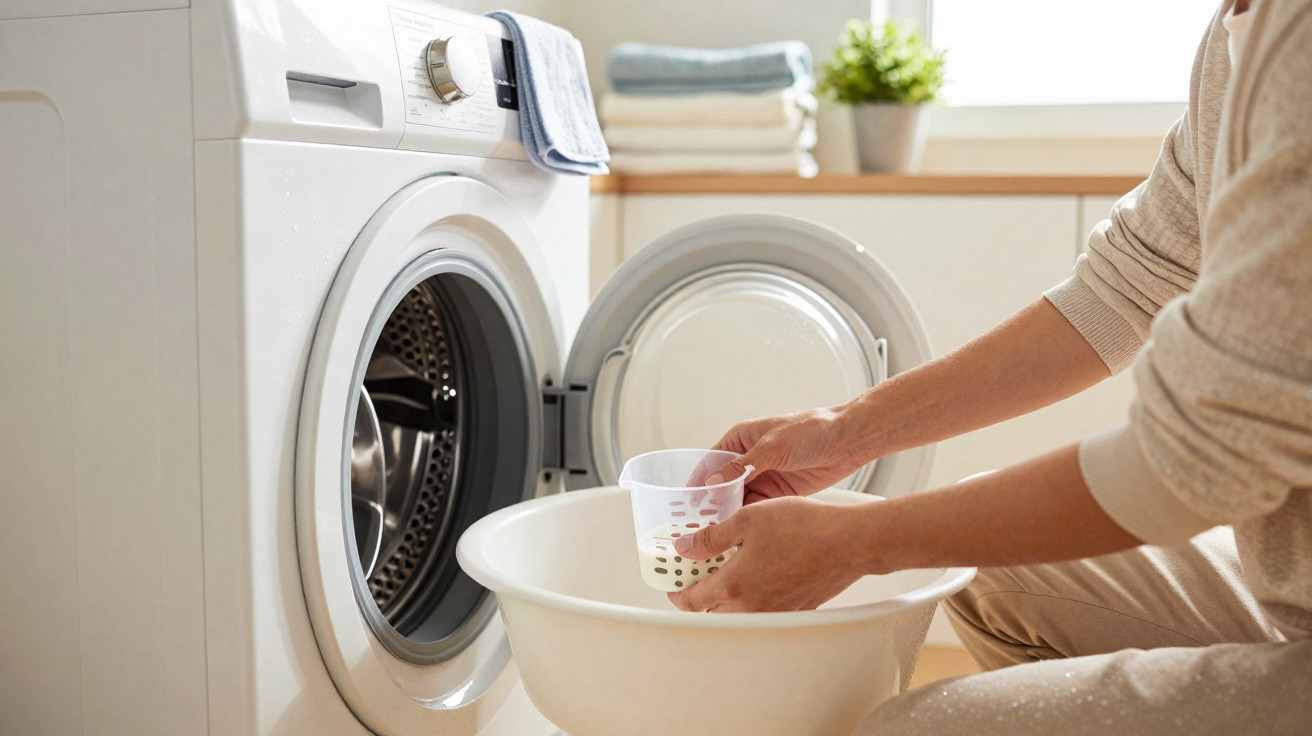
Most professionals advise opening this flap monthly. Put down a towel and a shallow tray, loosen the cap carefully and allow the water to run out. Pick out lint, buttons and other debris, rinse the filter beneath the tap and gently screw it back into place.
Ten minutes of slightly unpleasant work can immediately help your washing machine function properly again.
The next routine seems counterintuitive: operate the machine with nothing inside it. Technicians refer to this as a maintenance wash. Select the hottest available programme, add either a commercial washing machine cleaner or a cup of white vinegar with a little baking soda, and run the cycle without clothes.
This high-heat “deep clean” breaks down old detergent, clears the pipes and eliminates lingering bacteria.
Most homes never carry this out, apart from perhaps the one occasion when a serious issue arises. Let’s be honest: nobody really does this every single day.
Yet completing one such cycle every month or two can make laundry smell noticeably fresher, particularly in compact bathrooms or damp houses.
Then there is the rubber door seal: the soft grey ring you tend only to notice when it catches a sock. Clean it using a cloth dipped in warm, soapy water, carefully pulling back the seal to reach underneath, where moisture and grime gather.
Technicians also strongly recommend one admittedly unremarkable practice: leave both the door and detergent drawer slightly open between loads. That small amount of ventilation prevents trapped damp from becoming musty smells and mould.
A long-serving repairman in Lyon put it in a memorable way:
“I fix fewer ‘broken’ machines than ‘neglected’ machines,” he said. “People are shocked when I tell them: your machine is fine, it just can’t breathe or rinse properly anymore.”
He also gave the short weekly checklist he wished every customer kept on the fridge:
- Empty pockets before every wash
- Once a week: wipe the seal and leave the door ajar
- Once a month: clean the filter
- Every 6–8 weeks: run a hot maintenance cycle
- Use the right detergent dose for your water hardness
Moving from a chore to a quiet habit
We have all done it: crammed the washing machine full because there is room for just one more towel and you are fed up with seeing it on the chair. Overfilling it, rushing through the settings and adding “a bit more detergent just in case” may seem harmless at the time.
In the long run, though, these small shortcuts reduce a washing machine’s cleaning performance and cut short its lifespan. It is not merely an unfeeling white box, but a complex system reliant on water circulation, balance and chemistry. Treat it rough and it will quietly downgrade its performance without a word of complaint.
There is something almost reassuring about recognising that washing machines require routines, rather than simply instructions.
The next time you take out clothes that smell strange or feel heavy and sticky, perhaps the question should not be “Which new detergent should I buy?” but “When did I last tend to the machine itself?”
Technicians say consistent maintenance can extend a washing machine’s life by years while reducing energy use, because a clean appliance does not need to repeat programmes or work harder to spin out water.
That matters to families keeping a close eye on household bills. It matters equally to anyone hoping to purchase fewer clothes and keep the ones they own in better condition for longer.
This low-key, unglamorous kind of care lies where economy, hygiene and sustainability meet, even if it simply looks like you kneeling beside a humming appliance with a cloth.
| Key point | Detail | Value for the reader |
|---|---|---|
| Regular filter cleaning | Once a month, empty the lower hatch, remove lint and debris, rinse the filter | Restores water flow, better rinsing, fewer “dirty after washing” complaints |
| Hot maintenance cycles | Empty drum, hottest programme, machine cleaner or vinegar every 6–8 weeks | Removes buildup, fights odors, improves detergent effectiveness |
| Door, seal and detergent habits | Wipe seal weekly, leave door/drawer ajar, avoid overdosing detergent | Reduces mold, keeps laundry fresher, extends machine lifespan |
FAQ:
- Question 1 How often should I really clean my washing machine?
- Question 2 Does using more detergent make clothes cleaner?
- Question 3 Why do my clothes still smell after washing?
- Question 4 Can I use vinegar and baking soda without damaging the machine?
- Question 5 Are low-temperature eco washes bad for the machine over time?





Comments
No comments yet. Be the first to comment!
Leave a Comment