

The source of the problem is right in front of you, running every day.
Cleaning professionals say the grubbiest surface in the home may not be the floor or the bin. It is often the washing machine - particularly its gasket, drawer and filter.
Why your washing machine becomes a germ trap
Every wash leaves behind a light coating of detergent and fabric softener. This residue sticks to the drum, seal and detergent channels, while ongoing dampness encourages mould and bacteria to grow. That biofilm can then transfer to clothing during rinsing. The result is unpleasant odours - and they are coming from the appliance, not the cotton.
Front-loading machines are especially prone to this issue because their doors are designed to seal tightly. Their rubber rim gathers hair, lint and dampness; the detergent drawer remains dark and wet; and the drain filter retains sludge out of sight. This can leave towels smelling sour and looking dull, even after supposedly “clean” washes.
If your clothes stink, your washer stinks. Treat the machine like a bathroom surface: it needs a scheduled deep clean.
Overlooked areas that cause the greatest problems
Water collects in the creases of the door gasket, while the drawer can develop a slimy layer of fabric softener. The drain filter traps coins, fluff and soap residue. Keeping both the door and drawer slightly open after every wash allows them to dry. Wiping the gasket after the final load interrupts the damp cycle, and cleaning the filter monthly helps prevent stagnant, foul-smelling water and blockages.
The professional method from Begoña Pérez, known as “La Ordenatriz”
Spanish cleaning specialist Begoña Pérez, better known as “La Ordenatriz”, made a straightforward process popular for restoring a smelly washing machine. It uses chlorine bleach in the correct way and targets the most vulnerable areas. Suitable for front- and top-loading machines, the method requires less than an hour of hands-on work.
Step 1: Preparation and safety
Remove everything from the drum and unplug the machine. Wear gloves and open a window to ensure ventilation. Consult the appliance manual to confirm that bleach is compatible with your model. Choose standard chlorine bleach containing 5–6% sodium hypochlorite. Do not use splashless or fragranced versions, as these may leave deposits behind.
Step 2: Run a long cold cycle with bleach
Place the bleach in the designated bleach compartment. If your washing machine does not have one, add a small amount directly to the drum. Using cold water reduces fumes. Select a lengthy programme so the solution can travel through the appliance’s internal channels, loosening detergent build-up, limescale and biofilm along the way.
Use only cold water when dosing bleach, and never mix bleach with vinegar, acids, or ammonia-based products.
Step 3: Clean the gasket and filter in detail
Clean the rubber seal while the cycle is running. Pull back its folds and wipe them with a cloth moistened with diluted bleach. Remove any black marks and accumulated lint. Take out the drain filter, which is generally located at the lower front of the machine, then rinse it under warm water and brush away grit and hair. Reinstall it securely to avoid leaks.
Step 4: Rinse and air-dry
Follow with a second cold-water-only cycle to flush out any disinfectant that remains. Leave both the door and detergent drawer open afterwards so they can dry fully. This simple practice deprives mould of the moisture it needs and helps stop odours from returning.
Natural alternatives if you do not use chlorine
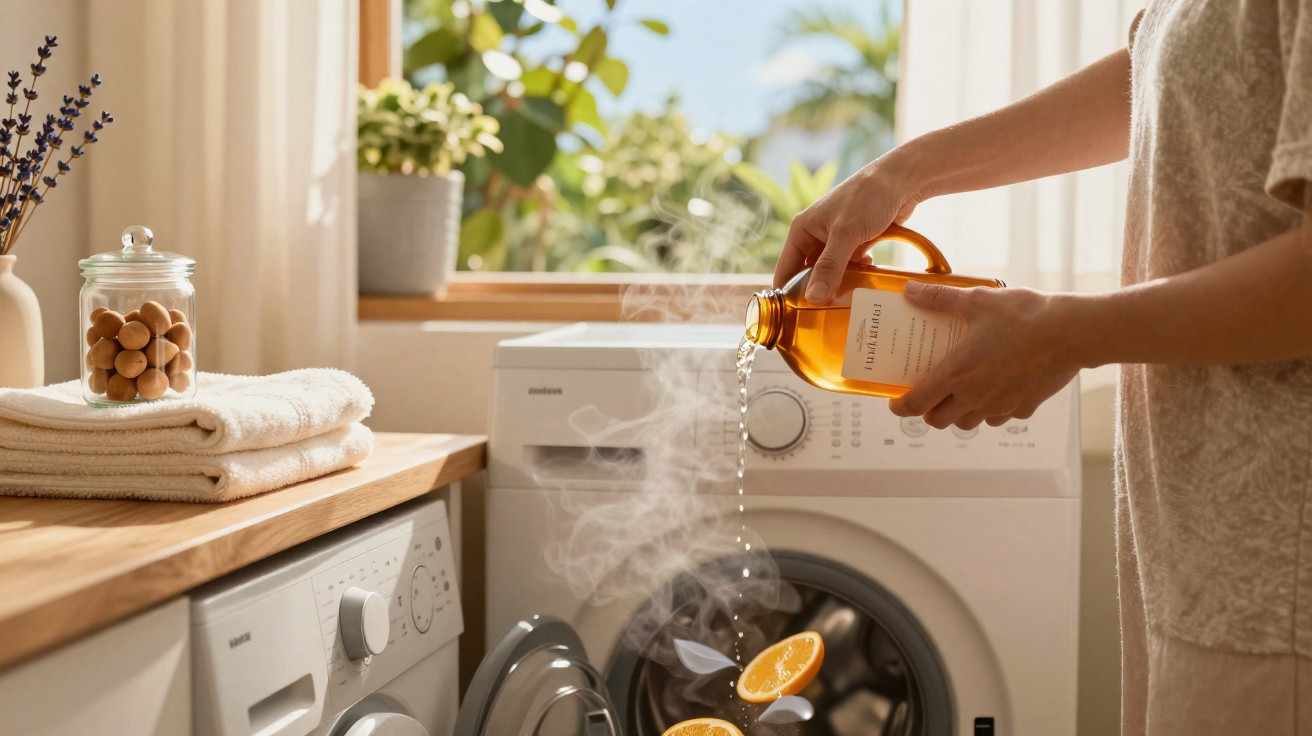
Common cupboard products can also be used to clean a washing machine. White vinegar helps break down mineral deposits and neutralise odours, while bicarbonate of soda lifts dirt with a mild abrasive action. When placed in separate compartments, they can freshen the drum and pipework without strong fumes.
How to clean with vinegar and bicarbonate of soda
- Put half a cup of bicarbonate of soda into the drum.
- Add one litre of white vinegar to the detergent drawer.
- Choose a long cycle at a medium temperature.
- Wipe the gasket and detergent drawer while the programme runs.
The gentle fizzing action can loosen fabric-softener slime, soap film and scale. The wash water then carries this released dirt into the drain. Finish by leaving the appliance open until completely dry. Never use vinegar in the same cycle as bleach.
Bleach versus a natural clean: which should you choose?
| Method | Best for | How to run | Notes |
|---|---|---|---|
| Chlorine bleach | Heavy mildew, strong odours, visible biofilm | Long cold cycle with bleach, followed by a cold rinse cycle | Ventilate; check the manual; safe on stainless steel; avoid mixing with acids |
| Vinegar + baking soda | Routine freshness, light scale, softener buildup | Baking soda in drum, vinegar in drawer, long medium-heat cycle | Gentle, low cost; may need repeat cycles on severe grime |
How often to keep your washing machine clean
A thorough clean once a month will usually control odours. Households that run the washing machine every day could benefit from doing it fortnightly. A few actions after each load can lengthen the time between deeper cleans: wipe the door glass, dry the gasket, leave the drawer open and use the correct amount of detergent. Excess detergent increases residue and can make clothes feel sticky.
Everyday habits that protect the machine and your clothes
- Adjust detergent quantities for the size of the load and your water hardness.
- Use HE detergent in high-efficiency machines.
- Occasionally run an empty hot cycle to dissolve grease and body oils.
- Avoid overfilling the drum, as water requires space to circulate.
- Check hoses and the drain line twice yearly for bends and slow drainage.
- Clean the lint filter if your model includes one; many front-loading machines do.
Solving persistent smells
When odours remain after two deep cleans, inspect the drainage system. A partly obstructed filter or a drooping drain hose may retain dirty water. Make sure the machine is level, clean the standpipe and use the manufacturer’s “tub clean” programme if your model provides one. In hard-water areas, powder detergents may be useful. Using a descaler every three months also limits the mineral film that can hold odours.
Odors often live in the places you cannot see: the drawer channel, the drain sump, and the hose loop behind the machine.
Health points to be aware of
Researchers have found household bacteria in washing machines, including species associated with skin and soil. Most laundry loads present minimal risk to healthy adults. However, baby clothing, gym kit and kitchen towels tend to introduce more microbes and oils. Together, these encourage residue and smells. A consistent cleaning routine reduces this build-up and can also help the appliance heat and spin efficiently, reducing wasted energy.
Extra measures that save time and money
Hard water creates scale on the heater and drum. This coating reduces heat transfer and provides a surface for film to cling to. If scale builds up quickly in your kettle, consider using a water softener or carrying out regular descaling cycles. Set a monthly phone reminder called “Washer deep clean” to maintain the habit. Many newer appliances monitor their cycles and prompt users to carry out a tub clean, so make use of this setting.
People with sensitive skin may reduce fragrance residue by avoiding fabric softener and using less detergent. For ordinary towel washes, pour half a cup of white vinegar into the fabric-softener compartment. It softens fibres and reduces residue. Before washing heavily sweaty clothing, rinse it in cold water to reduce the odour load entering the machine. These small habits ensure that “just washed” really means fresh, rather than merely fragranced.



Comments
No comments yet. Be the first to comment!
Leave a Comment