
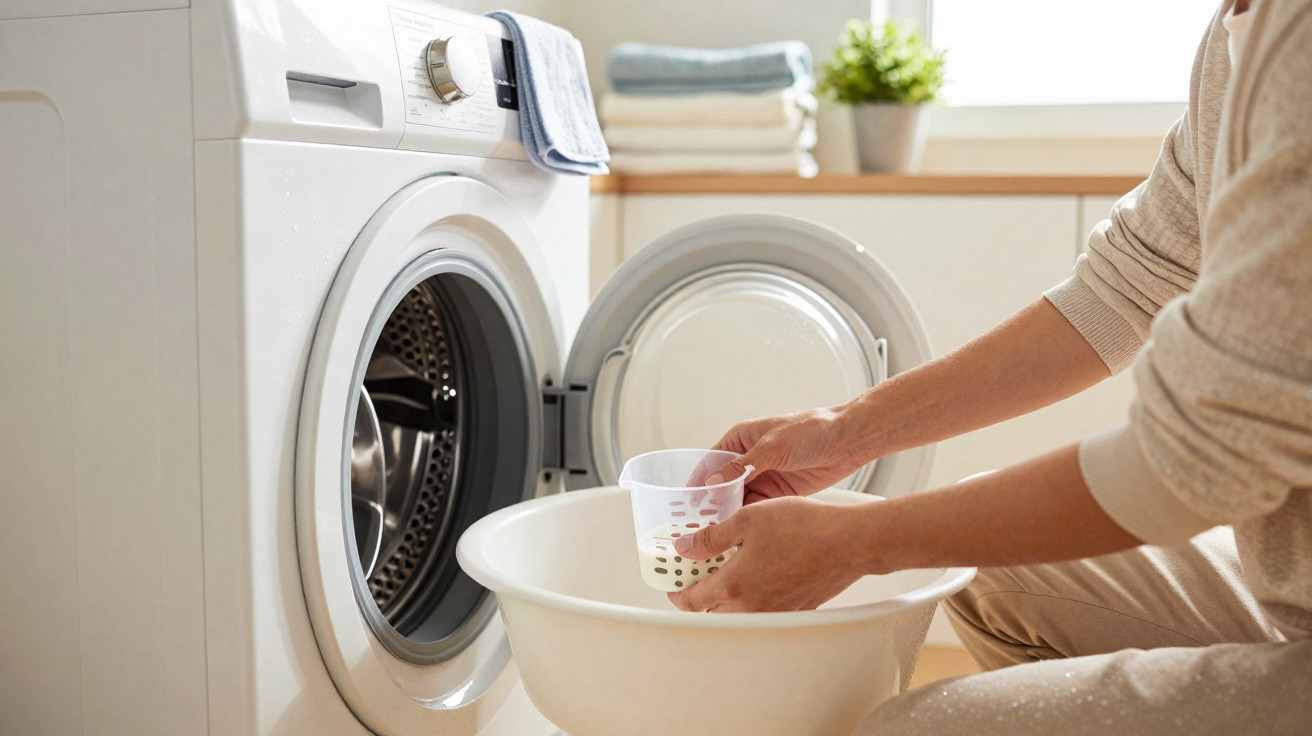
A few straightforward adjustments can alter that trajectory.
Homes throughout the UK and US are facing the cost of out-of-warranty breakdowns and increasing engineer call-out charges. Although a modern washing machine ought to work for ten years, early component wear, hard water and excessive detergent often reduce its lifespan. Fortunately, routine care can extend its service life, lower costs and cut e-waste without requiring specialist tools.
Hard water reduces washing machine lifespan
Limescale damages heating elements and makes pumps work more slowly. It sticks to sensors and constricts pipework. Numerous areas of England and the US Midwest have hard or very hard water throughout the year, causing minerals to accumulate more quickly.
Scale can push energy use higher, lengthen cycles and leave a chalky film that traps detergents and dirt.
What to do
- Once a month, run a hot cycle at 60 °C/140 °F using 150–200 g of food-grade citric acid or a purpose-made descaler.
- Reduce detergent in soft water and increase it only where water hardness has been confirmed.
- Consult your supplier’s water-hardness map or use paper test strips at home.
Use uncomplicated products. Citric acid removes carbonate deposits without producing harsh fumes. White vinegar can help when necessary, although citric acid is gentler on rubber seals.
The overlooked filter obstructs pumps
Normally found behind a small panel at the front, the drain filter collects coins, hair and loose threads. Once blocked, it prevents water from draining properly and puts the pump under strain. This single component is behind many call-outs, despite taking only five minutes to clean.
How to clean it safely
- Disconnect the machine from the mains and put a tray or towel beneath the panel.
- Loosen the cap gradually so that any remaining water can drain out.
- Remove lint, bobbles and grit, then rinse the filter beneath a tap.
- Turn the impeller with a finger to make sure it moves without resistance, then secure the filter back in place.
A clean filter restores drainage, prevents error codes and protects the pump from early failure.
Excess detergent causes genuine damage
Using extra detergent does not produce cleaner laundry. Too many suds interfere with water-level sensors and create a sticky coating that supports odours and biofilm. In time, seals and hoses deteriorate more rapidly.
Smarter dosing that actually cleans
- Follow the load-size markings on the cap or scoop; half loads require less detergent.
- Choose concentrated liquid or powder detergent, and measure every dose accurately.
- A perfume smell after the programme usually means that too much was used.
Enzymes in current detergents perform most of the cleaning work. They require sufficient time and an appropriate dose rather than large amounts of foam.
Cold cycles require a monthly hot reset
Eco programmes at 20–30 °C reduce electricity consumption, but they can also leave grease and residue inside hoses and on the drum. A regular hot maintenance cycle removes this build-up and helps control bacteria.
One empty 60 °C cycle each month reduces smells, cleans sensors and helps the machine maintain accurate timings.
Select the shortest hot cottons programme. In hard-water areas, add descaler. Its energy cost is low compared with paying for a service visit.
Seals and the door need ventilation and a quick wipe
Dampness caught behind the grey door seal encourages black mould to develop. The mould can mark clothes, damage rubber and create unpleasant smells. Most of it can be avoided with ventilation and a microfibre cloth.
A 60-second routine after each wash
- Wipe the door glass and the inside edge of the seal.
- Carefully lift the seal and clear away any lint or hair.
- Leave both the door and detergent drawer slightly open for ventilation.
Where mould is already present, use a paste made from bicarbonate of soda and a small amount of water. Rinse thoroughly afterwards. Do not use bleach on stainless-steel components.
Balanced loads safeguard bearings
Large, unbalanced loads place heavy stress on the drum and its bearings. Sheets can form a ball, while towels tend to bunch together. The resulting vibration causes a deep spinning rumble and reduces the machine’s lifespan.
Keep the spin smooth
- Combine bulky pieces with smaller garments to prevent clumps from forming.
- Stay within the cotton capacity; synthetic items weigh less but can still create an uneven load.
- If the machine begins to move across the floor, pause it and redistribute the washing.
Adjust the feet so the machine is level on a solid floor. Flexible floors increase vibration. Anti-vibration pads can assist on old floorboards, but they are not a complete solution.
Repair or replace: calculate rather than guess
Energy labels have advanced, as have motors and seals. Even so, keeping an existing washing machine running is often less environmentally damaging than purchasing a replacement. When a fault occurs, a simple comparison can guide the decision.
| Fault | Typical repair cost (US$ / £) | When repair makes sense |
|---|---|---|
| Drain pump | 90–160 / 70–130 | Machine under 8 years, no prior pump issues |
| Door seal | 80–140 / 60–120 | Mould, minor tears, rest of machine healthy |
| Bearings | 150–220 / 120–190 | High-quality model, drum accessible, parts available |
| Control board | 200–350 / 160–300 | Premium machine under 7 years with good casing |
If the repair is under 40% of a similar new model and the washer is under 8 years, repair often wins on cost and waste.
The seven-step checklist to add years
- Descale every month where water is hard.
- Clean the drain filter every 1–2 months.
- Measure detergent according to load size and water hardness.
- Run a 60 °C maintenance cycle monthly.
- Wipe the seals, and leave the door and drawer ajar.
- Distribute loads evenly and level the machine’s feet.
- Compare repair prices with the appliance’s age and replacement cost before choosing.
What these changes save in actual money
An empty 60 °C maintenance cycle in a modern washing machine consumes roughly 0.6–1.0 kWh. At standard tariffs, this costs about the same as a small weekly coffee. Avoiding just one pump replacement or call-out charge can fund years of maintenance cycles. Descaling can also cut minutes from later programmes, reducing yearly energy consumption.
Detergent, softener and the smell test
Fabric softener coats fibres and may also coat the drawer and valves. If you prefer to use it, cut the amount in half and apply it sparingly to synthetics. Powder detergent stores well and is effective on mud, whereas liquids dissolve more quickly in cold water. Choose one type, measure it properly and monitor the drum’s smell. A clean metallic smell with a light soap scent is normal; sour odours indicate biofilm and a need for the hot reset.
Additional support where water is very hard
In locations with persistent limescale, an in-line polyphosphate or ion-exchange filter fitted to the cold-water feed can slow mineral deposits. These units need replacement cartridges or salt at intervals. They do not remove the need for maintenance cycles; they merely slow scale formation and protect the heater and sensors.
Straightforward checks before calling a technician
- Washing machine will not drain: inspect the filter, check for a kink in the drain hose and confirm the standpipe height.
- Programme times keep changing: clean the pressure hose, run a hot cycle and use less detergent.
- Machine smells: wipe the seal, clean the drawer and run a hot cycle with citric acid.
- Noisy spin: check for overloading, level the feet and listen for bearing noise resembling gravel.
Two final extras that are worthwhile
Water-hardness test strips are inexpensive and make detergent dosing clearer. One pack will last a year and eliminates guesswork. An affordable watt-meter shows the real consumption of each programme and can help you select the most efficient options for your usual mix of fabrics.
Extended warranties also merit a brief review. With budget machines, saving the equivalent monthly fee usually covers typical repairs. For premium washing machines with sophisticated control boards, a manufacturer plan may be worthwhile in years five to seven, when parts are still obtainable and labour costs become expensive.






Comments
No comments yet. Be the first to comment!
Leave a Comment